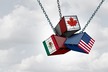
Debate over the future of the USMCA has intensified following Canada's recent engagement with China, although business groups and political leaders in Mexico and Canada have downplayed the risk of the trilateral agreement breaking apart. Representatives of AmCham Mexico and Canadian Prime Minister Mark Carney have stated that current rhetoric and tariff threats reflect negotiation dynamics ahead of the 2026 review rather than a shift away from the trilateral trade framework.
Consulting firm Ansley noted that political positioning by Washington, Ottawa, and Mexico City could reopen discussions around the structure of North American trade, including scenarios where the agreement becomes less integrated. However, AmCham Mexico rejected the feasibility of replacing the USMCA with bilateral agreements, citing legal and political constraints. According to the organisation, any structural change would require legislative approval in all three countries.
Pedro Casas, Executive Vice President of AmCham Mexico, said that renegotiating the agreement or replacing it with bilateral deals would be complex under current geopolitical conditions. During the webinar, Mexico–US Bilateral Relationship: 2026 Outlook, AmCham representatives said uncertainty is already influencing business planning. They added that Mexico faces domestic challenges, including water, energy, and technology, which could also become areas of investment focus.
"We do not see a realistic scenario in which the three countries abandon the agreement," Casas said. "Nor do we believe that bilateral deals would be optimal for Canada, Mexico, or the United States."
Carney has also stated that the agreement is expected to remain in place. He described recent tariff threats by U.S. President Donald Trump as part of positioning ahead of the USMCA review. "The president is an experienced dealmaker, and many of these statements need to be seen within that broader context," Carney said.
Over the weekend, Trump threatened to impose tariffs of up to 100 per cent on Canadian goods, following Ottawa's announcement of closer trade coordination with China. Carney clarified that Canada is not negotiating a full free-trade agreement with Beijing. Canada's Minister for US Relations, Dominic LeBlanc, said discussions are limited to resolving specific tariff disputes.
On 16 January, Canada and China finalised a preliminary arrangement covering selected products. The agreement allows up to 49,000 Chinese electric vehicles to enter Canada annually at a reduced tariff of 6.1 per cent. In return, China will lower tariffs on Canadian agricultural exports, including canola oil, from 85 per cent to 15 per cent starting 1 March 2026. Other products, such as canola meal, lobster, crab, and peas, will be exempt from additional duties until at least the end of 2026.
The USMCA review is scheduled for 2026. Business groups across Mexico, Canada, and the United States have called for maintaining the agreement's core structure while addressing regulatory and operational issues affecting cross-border trade and investment.
Source: Mexico Business News