Apple supply has tightened somewhat since projections earlier in the season. While preliminary estimates in August for the 2025 crop were for approximately 142 million boxes, forecasts now put total volume closer to 131 million boxes–about 8.4 percent below the original outlook.
Within this update are some variety-specific notes as well. "Despite the adjustment, Cosmic Crisp® and Envy™ have seen volume rise 20 percent year-over-year. These increases help support the tight supply of two of the categories' highest-demand varieties, Gala and Honeycrisp," says Joel Hewitt of CMI Orchards. "Gala has a 17 percent reduction in supply vs. last season and Honeycrisp is shaping up to the same supply situation as last season, with more than 30 percent less volume than the 2023-2024 crop."
That said, the overall supply remains well-positioned to support steady retail programs, particularly with premium varieties, including Envy and Cosmic Crisp.
At the same time, organic apples are still a key growth driver within the category, with volumes up 12 percent year-over-year. "Expanded organic supply across a range of varieties gives retailers greater flexibility to build promotions and merchandise organics alongside conventional offerings," says Hewitt, noting that organic shoppers remain one of the most loyal in produce who often prioritize organic options regardless of timing, store selection and sometimes even price. "This strong consumer commitment, paired with improved availability, creates a solid foundation for sustained organic sales and enhanced promotional activity throughout the year."
 © CMI (Columbia Marketing International)
Apple varietal notes
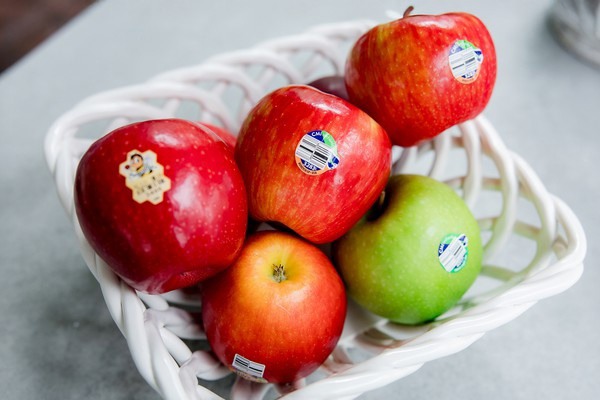
Within the category, high-flavor varieties continue to see strength. For CMI, that includes the SugarBee® apple which, with a Honeycrisp parentage, has high flavor and a crisp bite. Volumes have also increased on this variety and Rochelle Bohm notes that it offers a way to recover lost Honeycrisp volume and that it's also now offered year-round. "Premium selections such as Envy, KIKU®, and Kanzi® also remain important contributors to category success," says Bohm, noting that these varieties offer freshness, crunch and balanced flavor profiles. "Each brings a distinct taste experience—from Envy's refined crunch to Kanzi's bright tang—making them ideal for differentiated merchandising and flavor-forward promotions."
Of course, core varieties also remain widely available, including Cosmic Crisp®, Pink Lady®, and Granny Smith. That means that with steady supply of core and premium varieties, retailers can plan long-term merchandising strategies, execute seasonal features, and maintain steady, strong in-store visibility.
 © CMI (Columbia Marketing International)
Looking back at harvest
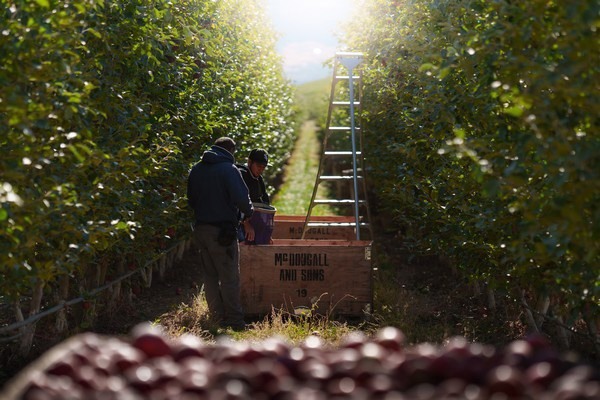
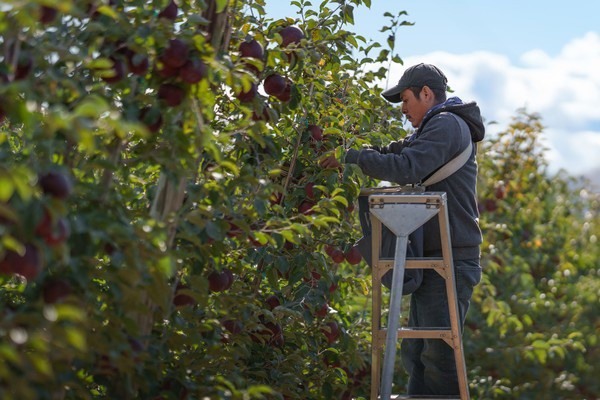
This is all from a Pacific Northwest crop last fall that saw an early start to harvest in August on early-season varieties. Harvest went into November for later-maturing apples and the overall timing of the season felt more in line with a typical harvest window for the region.
In the region, key apple-producing areas stretch along the Columbia River and its tributaries throughout Eastern Washington, including the Yakima Valley, Wenatchee Valley, Okanogan, Lake Chelan, and the Columbia Basin. "While each region offers unique microclimates and soil profiles, they all benefit from the dry summers, cool nighttime temperatures, and dependable irrigation that create ideal conditions for apple production," adds Hewitt.
For the 2025 season particularly, favorable growing conditions included warm daytime temperatures paired with cool nights and limited weather extremes. "This supported uniform fruit development, strong color, and healthy fruit set," said Hewitt. "These conditions also allowed for a well-paced, staggered harvest."
The state of apple consumption
Meanwhile, amidst this tightening crop and as overall produce consumption continues to trend upward, apple consumption in the United States has gradually declined over the past decade. That's led to both industry and company-led initiatives focusing on rebuilding apple consumption.
While industry efforts include the "Eat More Apples" campaign that recently launched to increase domestic consumption, for CMI, it's working with programs across digital, in-store, and family-focused channels. Most recently, it introduced Apple Crush™, a consumer engagement platform to help shoppers discover new apples based on their taste preferences. Via this digital engagement tool, shoppers answer questions to find their apple match.
This complements the company's proprietary Flavogram® merchandising, which provides flavor description of each apple variety with the goal of making the category easier to navigate. "Together, these tools encourage trial and cross-purchase of premium and emerging varieties such as Envy™, SugarBee, KIKU, Kanzi, and Ambrosia Gold™," says Bohm. After all, shoppers often default to familiar choices rather than explore new options.
The company also continues to invest in geotargeted digital advertising, data-driven promotions, and strategic partnerships–all of which are reinforced with targeted content, educational POS materials, and high-impact sampling programs. "These efforts reflect a renewed commitment to keeping apples relevant, exciting, and top-of-mind for consumers. By emphasizing flavor, freshness, and modern engagement strategies, the industry is adapting to evolving shopper behaviors and creating new pathways to grow apple consumption both in-store and online," says Bohm.
 © CMI (Columbia Marketing International)
Developments on pricing
As for pricing, it is strengthening as the season continues thanks in part to tighter supply in key varieties such as Gala and Honeycrisp, alongside steady consumer demand. However, even with the tighter supply compared to past seasons, good supply remains on hand and CMI is supporting ongoing Gala and Honeycrisp programs with the fruit available.
"Pricing is being shaped by more than volume alone, including strong fruit quality, favorable size profiles, evolving shopper demand, and retail promotional activity," says Hewitt. "In parallel, this season presents an opportunity to spotlight select premium apple varieties and organics to complement conventional core items. Highlighting these varieties can help shift demand toward higher-value offerings, drive incremental category dollars, and encourage repeat purchases—supporting long-term category growth."
Meanwhile, both bagged and bulk formats play an important role in this approach. "Bagged apples deliver consistency and strong value for shoppers, while bulk programs give retailers the flexibility to elevate the category and highlight a wider range of varieties at the shelf," says Hewitt.
This is all happening amidst the apple industry operating in an environment shaped by economic pressure, evolving consumer preferences, and increasing operational demands. That pressure includes rising costs for labor, packaging, transportation, and regulatory compliance impacting grower and shipper margins. "Labor availability remains a particular concern during harvest and packing seasons, making efficiency, automation, and streamlined logistics more critical than ever," says Hewitt.
 For more information:
Kaci Komstadius
CMI Orchards, LLC
Tel: (509) 888-0536
[email protected]
www.cmiorchards.com