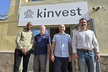
When three Canadians launched Kinvest in 2020, they weren't just chasing profits. "We quickly realized agriculture is the best way to create jobs and impact in rural communities in Africa," says Jesse Ratichek, Managing Partner, who's lived in Rwanda since 2016.
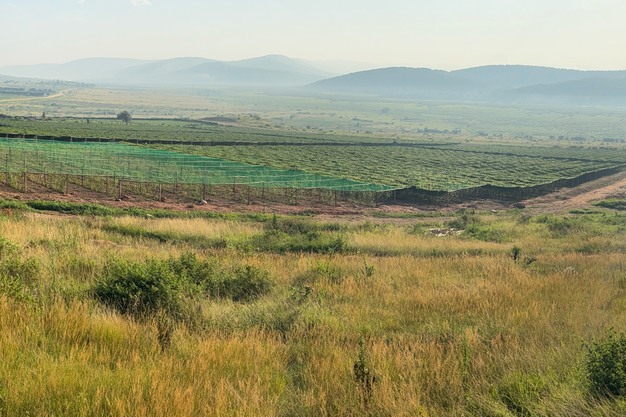
Jesse, together with Raymond Sawatsky (handling investor relations) and Reg Allatt (Executive Chairman and core investor), launched Kinvest as an "impact investment concept" aimed at merging venture capital with social change. What started as a modest 10-hectare pilot farm has now scaled to over 220 hectares under cultivation, with 500 hectares in total under ownership or lease. The company began exporting produce about two years ago.
 © Kinvest
Kinvest stands for "kinship investing", a name that reflects its founders' belief in shared humanity. "Investing in a way that we create jobs that are sustainable and change lives," Jesse explains.
Despite its mission-driven name, Kinvest is a for-profit company. The model targets market rate returns for investors. "If we don't make profits, we will not create a sustainable business that continues to build jobs for people," Raymond points out. To date, about $13 million USD has been invested in farm infrastructure and operations.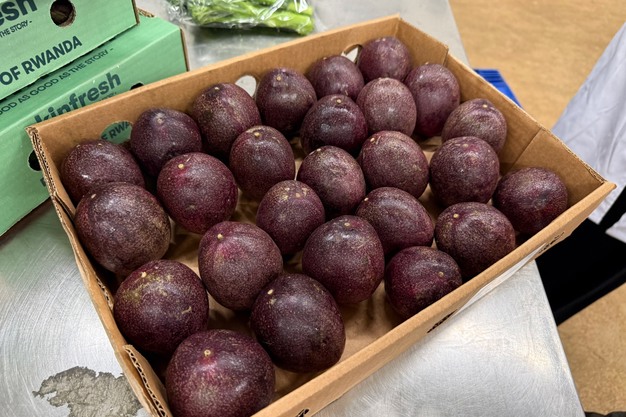 © Kinvest
Putting people first: a business model grounded in social impact
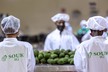
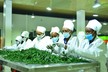
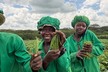
The heart of Kinvest's work lies in transforming rural communities. The farms currently employ more than 300 people from local communities, mostly women, on formal contracts, with wages 30-50% above market rates. But it's the consistency of the work that makes the biggest difference. "When you multiply that by the consistency, you end up making three to four times more wages per annum than what you would make in seasonal jobs," Jesse explains.
Many employees come from marginalized backgrounds, such as landless laborers or former refugees, for whom employment options are very limited. "In the rural communities, there are few jobs. That's why people come to the city. Kigali is growing like crazy. We want to slow that trend."
Beyond job creation, Kinvest supports outgrower schemes for smallholder farmers, providing inputs, training, and market access. There are also targeted programs for youth and women, encouraging leadership roles and long-term career development in agriculture. But perhaps the most unique aspect is their 10-year vision to transition majority ownership to employees through an employee trust.
 © KinvestFarming for export, and the long haul
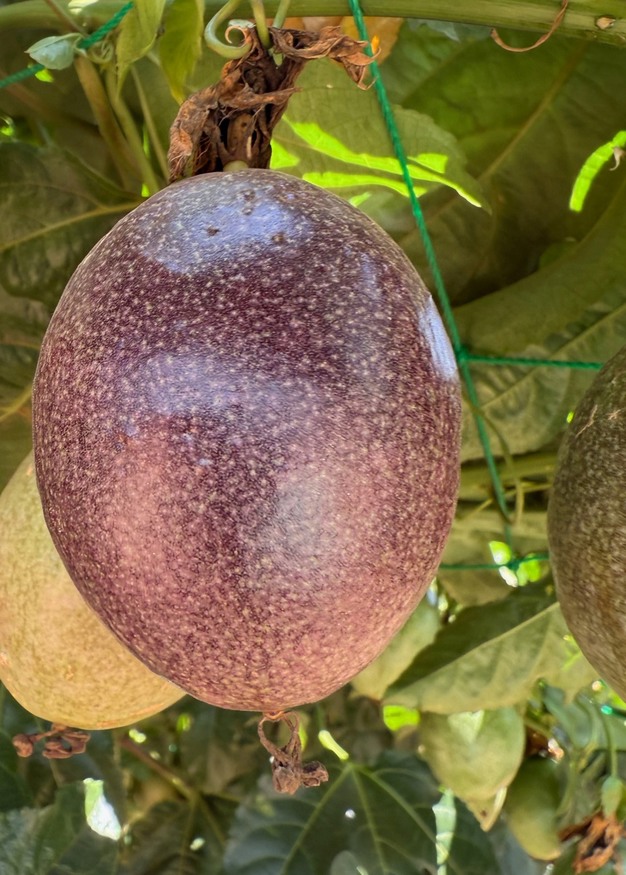
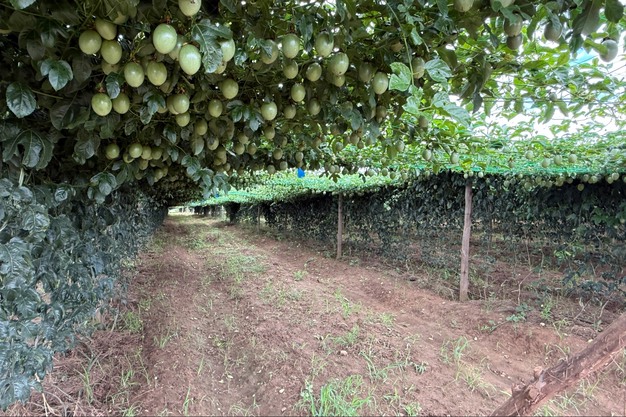
Kinvest currently exports passion fruit, bird's eye chili, and French beans, with Hass avocados and coffee on the horizon. Their star crop is the purple-skinned, yellow-fleshed Ester passion fruit variety imported from South Africa. It's high-yielding, up to 20 tons per hectare, and can be harvested almost year-round thanks to drip irrigation. "It has returns within nine months after planting, so that was a good crop for us to start with," explains Jesse.
The fruit is exported to the Middle East and Europe and also sold locally to juice makers. They've installed 55 beehives (aiming for 100) to improve pollination, after discovering early on that poor bee coverage led to deficient harvests. "We realized that we had too few beehives," Jesse recalls. "There was partial fruit development or undersized fruit development, more like 30-40 grams instead of 65-85 grams."
Recent achievements include completing a GlobalG.A.P. audit and initiating the SMETA certification process. Packaging is in 2-3 kg boxes and shipped via air freight within 24 hours of packing. Long-term, they hope to move to sea freight using controlled-atmosphere bags, which would dramatically cut costs and thus be a game changer.
 © Kinvest
French beans
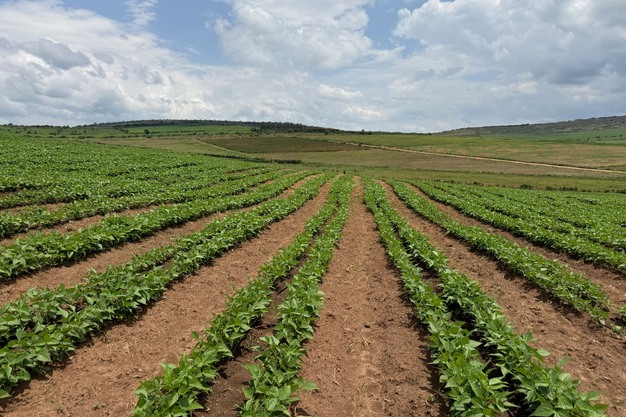
French beans are another key crop, albeit more labor-intensive. Kinvest plans to cultivate 8 hectares for a steady 5-10 tons of weekly exports, mainly to the UK. But there's a catch: "The issue with French beans is you have no secondary market," Jesse says. Second-quality beans are put to good use, though, as part of the company's lunch program for all staff. "Another issue is retailers' demand that the beans be cut with tops and tails, resulting in 30-40% waste. If we could even expand the length of the tops and tails, we would waste less on the bean."
Bird's Eye chili
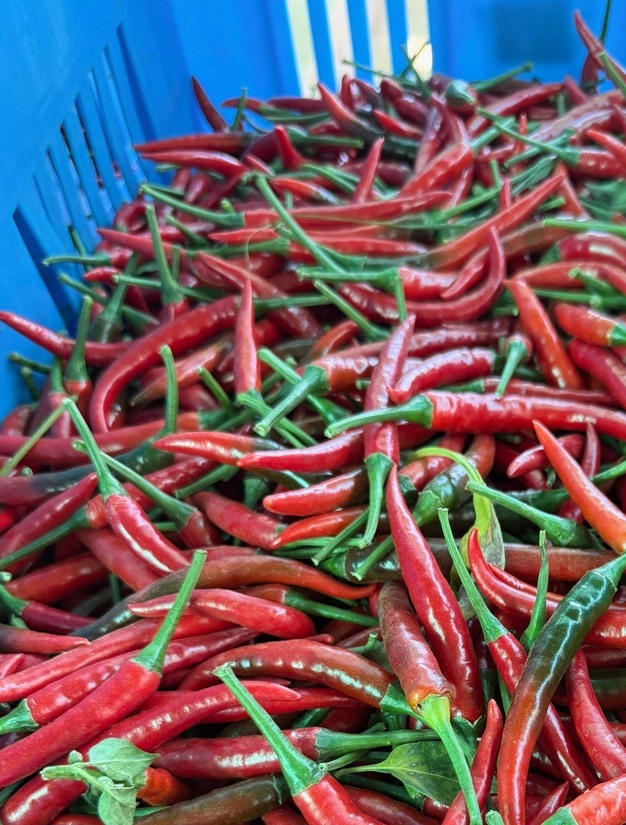
This spicy little export packs a punch. Kinvest grows a Thai hybrid that's harvested green (milder) or red (hotter). The red chilies are harvested about 70-75% ripe and continue ripening during shipment to Europe. Second-quality chilies are dried and exported to spice manufacturers in China, India, or South Africa. "One of the advantages of the tropics, at altitude here in Rwanda, is that the supply of most of our products can be year-round," says Reg. "We're seeing remarkable consistency between seasons."
 © KinvestAvocados and coffee
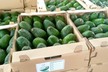
The future is fruit, avocados, and coffee, to be specific. Kinvest has planted 25 hectares of Hass avocados using grafted seedlings from South Africa. First harvests are expected within two years. Rwanda's high-altitude climate and irrigation systems offer potential for higher-than-average yields, with 15 tons per hectare as a conservative estimate.
"Our seasonal peaks will be late September, October, and November, and then again in February and March," explains Innocent Katabazi, who joined Kinvest a year ago as Senior Supply Chain Manager. "Because of the way our farm is planted and because of the facilities we have, we should be able to harvest and process a full container in just one day."
The avocados will be exported in 4 kg boxes via reefer containers from Mombasa. The coffee, intercropped with bananas, is also showing promise. "The coffee is brilliant," Raymond adds. "The prices of coffee have been going up dramatically recently."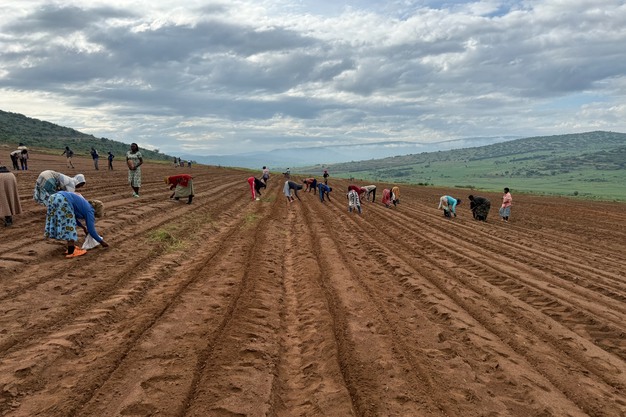 © Kinvest
To manage marketing complexities, Kinvest set up a separate export company, Kinfresh, which currently handles its own produce but could scale into a larger aggregator role.
Growing sustainably
Kinvest wants to be a model for climate-smart farming in East Africa. Therefore, the company has introduced drip irrigation and solar-powered systems to conserve water and energy, soil regeneration techniques, including composting and crop rotation, limited chemical use with aspirations for organic certification, and drainage systems to prevent erosion. "We're exploring regenerative agriculture techniques," says Innocent. "The goal is to combine productivity with responsibility."
The bumps in the road
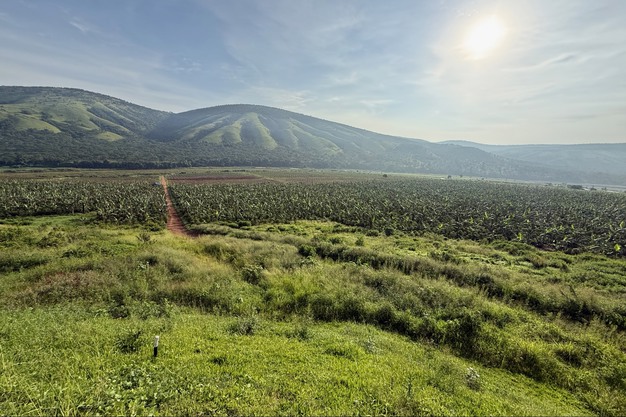
Success hasn't come without obstacles. Rwanda's landlocked geography presents a major logistics challenge. With limited cold storage and flight frequency out of Kigali, Kinvest relies heavily on costly air freight. "Land availability has exceeded cold storage capacity at the airport," Jesse notes. "We're on the sort of leading edge of commercial agriculture development and the rest of the value chain. When it lags behind, it is a limiting factor."
Land acquisition was another early headache. It took two years to secure leases and navigate Rwanda's land use systems. But things improved once Kinvest demonstrated its seriousness. "It's also about proving yourself," Jesse says. "Once you prove yourself, it gets easier from a government perspective."
 © Kinvest
Why Rwanda?
Despite the hurdles, the team agrees that Rwanda was the right place to start. "We don't have to worry about corruption here," says Reg. "The country's favorable business climate, transparent regulations, and strong support from institutions like the Ministry of Agriculture and NAEB (National Agricultural Export Development Board) make a real difference." Kinvest has also partnered with the Development Bank of Rwanda, noting that local currency interest rates are fair considering the risks and inflation.
Looking ahead: 10-year vision
Their long-term success isn't just about exports, it's about growing communities. "People start investing in their own assets, they start investing in their own homes, in education," says Jesse. "And that for us is the catalyst of change."
 © Kinvest
In fact, change is already underway. "We have actually seen in the communities adjacent to our farm that people are moving from other parts of the country, because they hear that you can get stable employment there."
In the long run, Kinvest wants to replicate its model in two or three other countries, potentially Uganda, Kenya, or Malawi, and expand to 3-4 times its current land footprint. They envision multiple impact funds, not just focused on production, but on the whole value chain. "This is the age of Africa, this is Africa's century," Reg concludes. "So we want to be here."
 For more information:
Jesse Ratichek (Managing Partner – Africa)
Kinvest
KG 599 House 18
Remera, Gasabo Kigali (Rwanda)
Tel.: +250 781 469 566
[email protected]
www.kinvestproduce.com
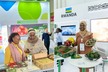
For more information on the Rwandan fresh produce export sector, please contact Charlotte Uwicyeza ([email protected]) of the National Agricultural Export Development Board (NAEB), which will also be present at the upcoming Fruit Logistica: Hall 26, Stand C-61. A joint booth with Rwandan companies can be found at Stand B-80 in Hall 26. Click here for an overview of Rwandan fresh produce exporters.