Florida citrus growers and shippers continue to be frustrated by a virtual lack of access in shipping citrus fruit to the European Union. "We still have this draconian non-tariff trade barrier imposed upon us by the EU that doesn't allow us to ship to the EU because of their requirements on citrus canker," says Dan Richey of Riverfront Packing Company. "Every other market we ship into has accepted the fact that it's shown scientifically that canker cannot be spread by fruit. Fruit is not a pathway to spread the disease and the EU refuses to accept this and are in protectionist mode of their primarily Spanish citrus industry."
In turn, that means Florida growers risk having loads of citrus sent back to the U.S. should there be a speck of canker found–even canker the size of a pencil point. "It has shut down the market because the risk is too great to even attempt it," says Richey. "We do all we can to inspect groves and the packing houses but canker can show up in a very small way. South Africa has the same issue with citrus black spot and the EU and they have taken it to the World Trade Organization to get a resolution. It's extremely frustrating. If it's scientifically based, you should be able to ship through to those markets."
 © Riverfront Packing Co.
Shipping difference
He notes historically it has shipped 9 million cartons to Europe. "This year we will ship a total of about 10,000 cartoons and we're the only one shipping. However I'm not taking the risk anymore," he says.
Florida growers say it particularly feels unfair given the start it had to its season this year. That start was a challenging one due to a surplus of imports–largely from South Africa–that was behind a very slow roll out for the Florida citrus season. "It was South Africa probably overreacting to the tariff threat that sent a lot of fruit here prior to the tariff taking effect. It flooded our market. Normally we would have a robust start to the season in October," says Richey.
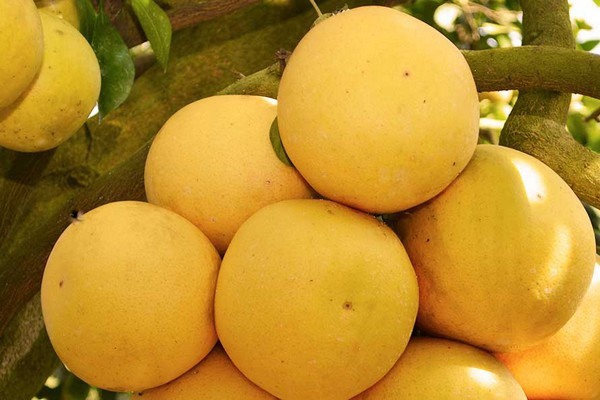
As for supply of grapefruit, it's good and the industry should have a sustainable volume March to mid-April. Supply is better than last year. "The estimate shows that we're down a little bit in volume, but the internal quality is much better. We're starting to see results of the therapies we're using to combat greening and the Brix and acid-ratio are all much more favorable," he says, noting that the tree health has also improved thanks to those therapies.
 © Riverfront Packing Co.
Improved sizing over last year
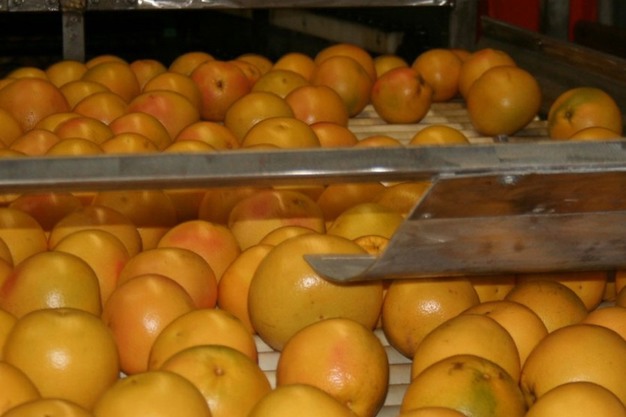
In addition to better internal quality, compared to last year which saw a lot of small fruit, this year there's a good distribution of size range and better external appearance.
This even with the state's recent cold snap, which had growers across Florida watch for it and employ preventative strategies such as microjet irrigation which uses warm water to create a layer of ice to insulate the fruit. "There was a little bit of frost in isolated places that we might see some burned leaves, but they'll drop off and that won't hurt anything," says Richey. "These kinds of colds are productive because it puts the tree into a state of dormancy. So if you have another cold front, which we have a couple more coming, the tree will be much more prepared for it and much more inclined to survive a cold event." He also adds that cooler temperatures, when followed up by warm weather, also ends up producing a very uniform bloom on the trees.
Meanwhile, following the challenging start to the season in the movement of citrus, demand has recently picked up. However pricing remains under pressure. "South African fruit basically arrives on a consignment basis. You really don't know what the price is. Due to that, a bit of a downward pressure on pricing remains," he adds, noting that he expects pricing to remain stable from this point forward.
 For more information:
Dan Richey
Riverfront Packing Company
Tel: +1 (772) 562-4124
www.scottcitrus.com