After seven consecutive seasons marked by severe water stress, the Moroccan agricultural sector is entering the 2025/26 campaign with a markedly improved hydrological situation, says Fatiha Charrat, Deputy Managing Director of the Delassus Group: "Heavy rainfall recorded since late 2025 has significantly replenished dam reserves, restoring confidence at the orchard level and improving prospects for fruit development. As of 7 January 2026, Morocco's dam infrastructure has a total storage capacity of 16.76 billion cubic meters, with stored volumes reaching approximately 7.52 billion cubic meters. This brings the national filling rate to 44.86%, up sharply from just over 31% in mid-December. This recovery marks a clear turning point after several years of cumulative water deficit and provides critical support for irrigation during the fruit sizing phase."
 © Adil Gadrouz / Le360Al Wahda Dam, the largest dam in Morocco, located in the Gharb region (Credit: Adil Gadrouz / Le360)
While these rains are structurally positive for Moroccan agriculture, they are simultaneously creating short-term disruption for the citrus export program, Charrat explains. "Delays in harvesting, expected congestion at packing stations, and increased quality risks are now forcing the sector to reassess export expectations initially set at the start of the season. For citrus growers, improved water availability is translating into better fruit development and improved calibre potential. From a medium-term perspective, the rainfall is clearly positive for both the current crop and the preparation of the next flowering cycle. At the same time, persistent rainfall has had a direct operational impact on export logistics. Harvesting activities have been repeatedly interrupted, access to orchards limited, and picking windows significantly reduced across all production regions."
As a result, the start of the export campaign, particularly for Nadorcott mandarins, has already been delayed by several weeks, Charrat states: "When weather conditions allow harvesting to resume, volumes are expected to arrive simultaneously at packing stations, creating congestion and limiting the sector's ability to smoothly service programmed export flows. Extended periods of humidity are also raising concerns over post-harvest quality. Increased risks of skin defects, micro-cracking, and fungal pressure are already being reported in certain regions such as Gharb, potentially reducing pack-out rates for export-grade fruit and shortening shelf life."
Export data as of 7 January 2026 confirms the impact of these disruptions, Charrat says. "Total citrus exports reached approximately 580,700 tons, compared with 706,100 tons at the same date last season, representing a year-on-year decline of around 17.8%. This gap reflects delayed harvesting, reduced pack-out rates, and missed early-season export windows. Export forecasts published in October were based on normal harvest progression and assumed a gradual, evenly paced export season. Given the current conditions, market operators increasingly expect a downward revision. Based on field observations and export logistics constraints, the sector is currently considering a reduction of exportable volumes in the range of 10% to 20% compared with October estimates, mainly driven by delayed harvesting, lower pack-out rates, and missed export windows."
 © Delassus
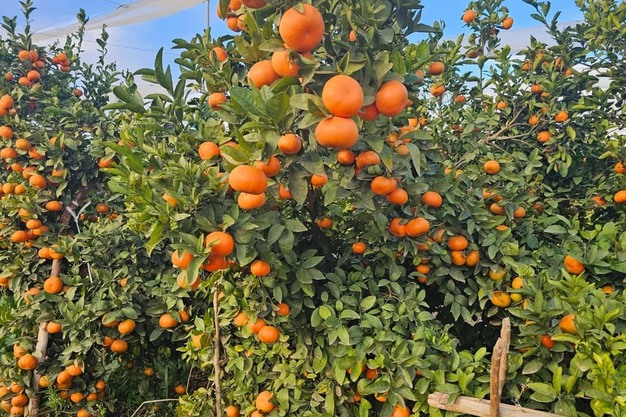
According to Charrat, Nadorcott mandarins, Morocco's flagship export variety, are particularly exposed to the current weather pattern. "The variety's export window is highly sensitive to harvest timing, fruit condition, and logistical fluidity. Prolonged rainfall has delayed optimal maturity and restricted access to orchards, compressing the harvest calendar. Based on current shipment data, field observations, and station-level pack-out performance, several scenarios are emerging. In a central scenario, Nadorcott export volumes for the 2025/26 season could end 15% to 20% below October expectations, mainly due to delayed harvesting, lower export-grade yields, and congestion during peak weeks."
"In a more adverse scenario, should humid conditions persist into late winter, export reductions could reach 20% to 25%, with increased diversion to the domestic market and shorter export programs to distant destinations," Charrat continues. "A partial recovery scenario remains possible if weather conditions stabilize quickly, allowing stations to smooth flows and recover part of the lost volume during February–March, though the early-season shortfall is unlikely to be fully compensated. Despite these constraints, fruit caliber potential remains favorable, and quality could improve once harvesting normalizes, supporting value on selected programs."
 © Delassus
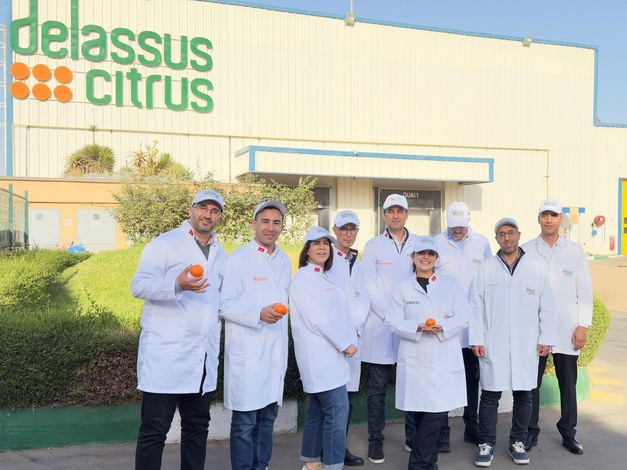
Charrat states that packhouses will have to adapt to the current situation, and have been informed on how to do so: "Drawing on experience from previous rainy seasons, Moroccan packing stations have already revised their operational best practices and implemented specific procedures to mitigate the impact of excess moisture. These measures include stricter fruit intake protocols, enhanced drying and ventilation processes, adjusted washing and fungicide application programs, reinforced sorting criteria to limit latent defects, and tighter control of cold chain parameters to preserve quality and shelf life."
"In addition, many operators are adjusting work schedules and logistics planning to manage peak arrivals once harvesting resumes, with the aim of limiting bottlenecks and maintaining service levels for key export programs. For international buyers, Morocco remains a key citrus origin, but one where supply may be more uneven than initially anticipated. Careful program management, flexibility on shipping windows, and close coordination with suppliers will be essential in the weeks ahead," Charrat concludes.
For more information:
Fatiha Charrat
Delassus Group
[email protected]
www.delassus.com