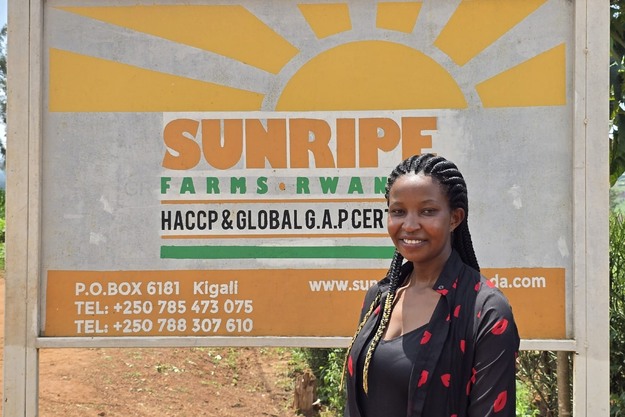
Sunripe Farms, based in the Kigali region of Rwanda, operates 30 hectares of cultivated land, including 2 hectares under 24 greenhouse units. The company is certified under HACCP and GLOBALG.A.P. standards. Its production includes cucumbers, tomatoes, cherry tomatoes, sweet peppers, French beans, chili, and white cabbage. The farm also maintains a limited number of mango and avocado trees.
The company was established in 2015 and began commercial production in 2016. The owner, Randall Long Craig, originally started with open-field cultivation and gradually expanded into greenhouse production. He continues to fund the farm's operations independently and visits the site twice per year.
 © Pieter Boekhout | FreshPlaza.com
 © Pieter Boekhout | FreshPlaza.com
Crop management and cultivation techniques
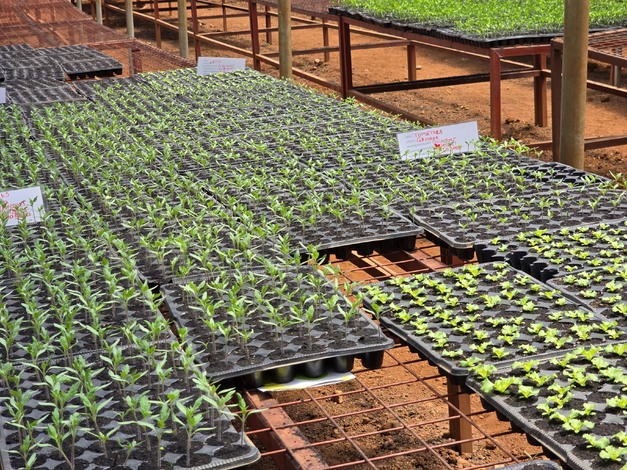
"The greenhouse environment allows us to maintain more consistent yields, and certain varieties are only viable under protected conditions," explains Agathe Uwiringiyimana, Operations Manager at Sunripe Farms. "We rotate crops carefully to manage soil-borne diseases, and we sometimes grow seedlings in bags with clean soil to reduce disease pressure."
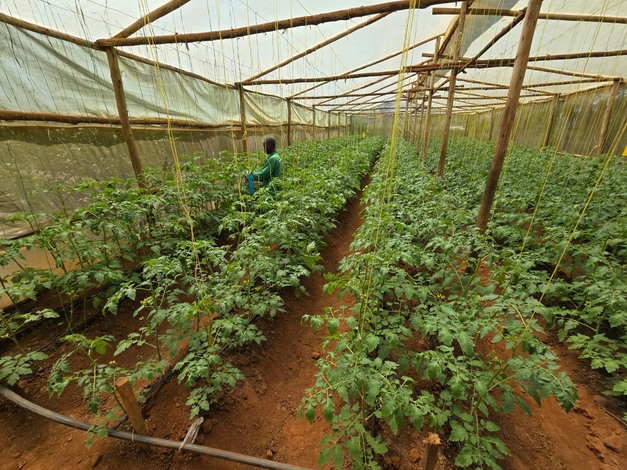
Tomatoes have two planting cycles per greenhouse per year, each lasting approximately six months. Other greenhouse crops, including cucumbers, sweet peppers, and cherry tomatoes, follow a staggered schedule across the 24 units, allowing year-round production. Open-field crops are grown seasonally, with yields dependent on rainfall, disease pressure, and occasional hail events.
 © Pieter Boekhout | FreshPlaza.com
 © Pieter Boekhout | FreshPlaza.com
Diseases
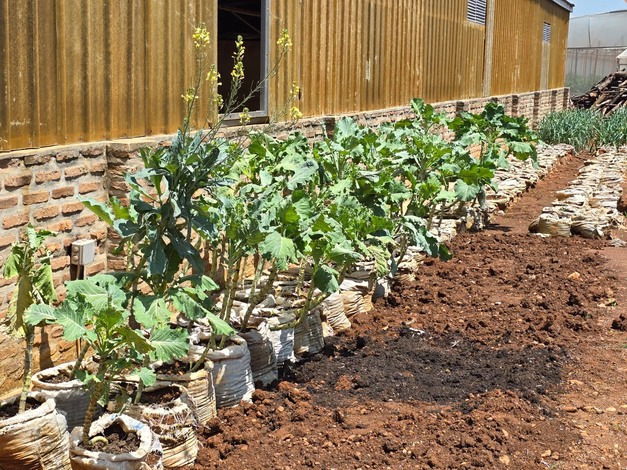
Soil-borne diseases, such as Fusarium wilt, are managed using soil disinfection, crop rotation, and seedlings grown in clean soil bags. "For soil-borne diseases, growing directly in the ground carries a higher risk. We mitigate this by using soil from safer areas and rotating crops, which allows us to maintain yields across multiple planting cycles," Agathe adds.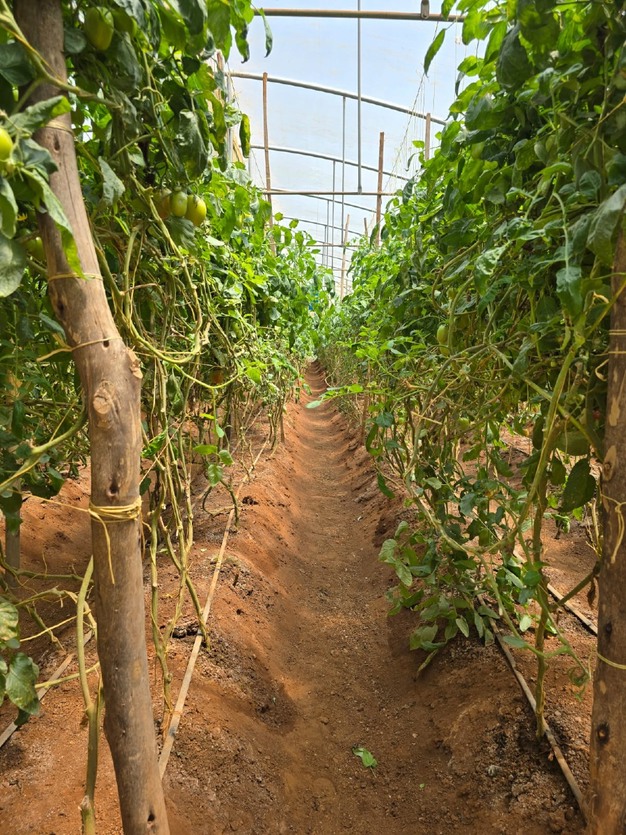 © Pieter Boekhout | FreshPlaza.com
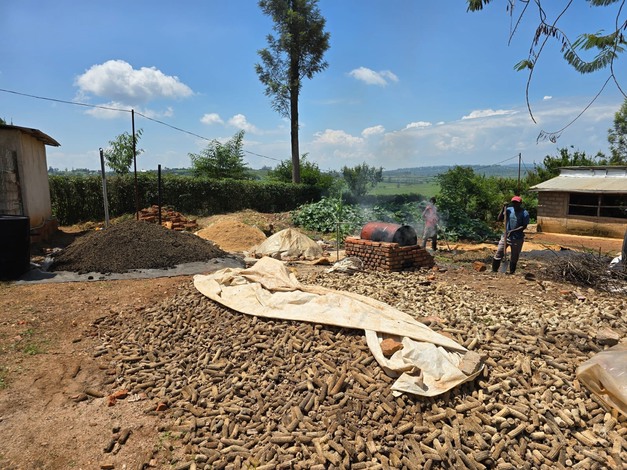
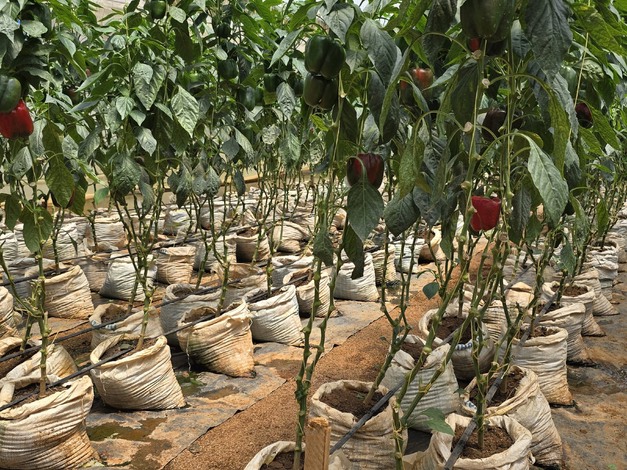
Sunripe Farms uses maize to heat and disinfect the soil prior to planting. Greenhouse crops are planted directly in the soil, with irrigation and fertilization delivered via drip systems. Fertilizers are applied both as granular material and through fertigation. The irrigation water has a pH range of 5.5 to 6.0.
Varieties and seed sourcing
Seed sourcing differs by crop. Tomato seeds are imported from the Netherlands via local suppliers, while French beans are imported directly by the farm. Chili seeds come from Kenya. "The selection of seed material is critical. Good-quality seeds ensure higher germination rates and reduce disease risk in the field, which is important for both yield stability and product consistency," Agathe notes.
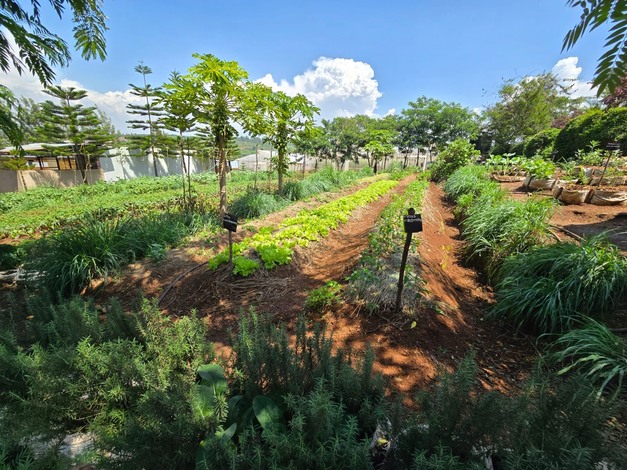
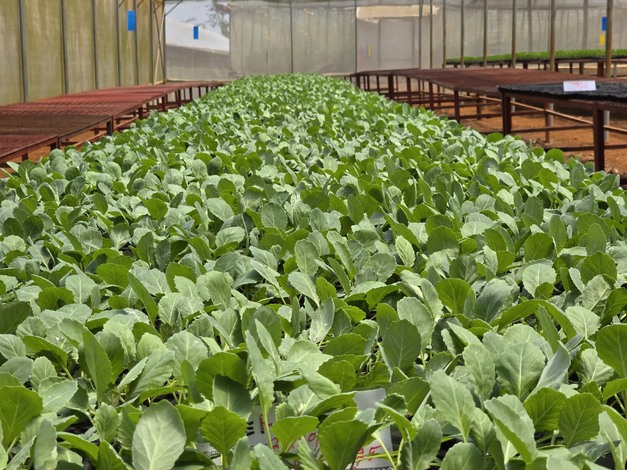
The farm produces multiple tomato varieties, including cherry and plum types. Larger beef tomatoes are not currently cultivated. Sweet peppers and cucumbers are grown in greenhouses, while open-field crops, including chili and cabbage, are grown for both local consumption and export. A small demonstration plot is used to trial pesticide-free open-field cultivation.
 © Pieter Boekhout | FreshPlaza.com
 © Pieter Boekhout | FreshPlaza.com
 © Pieter Boekhout | FreshPlaza.com
Market orientation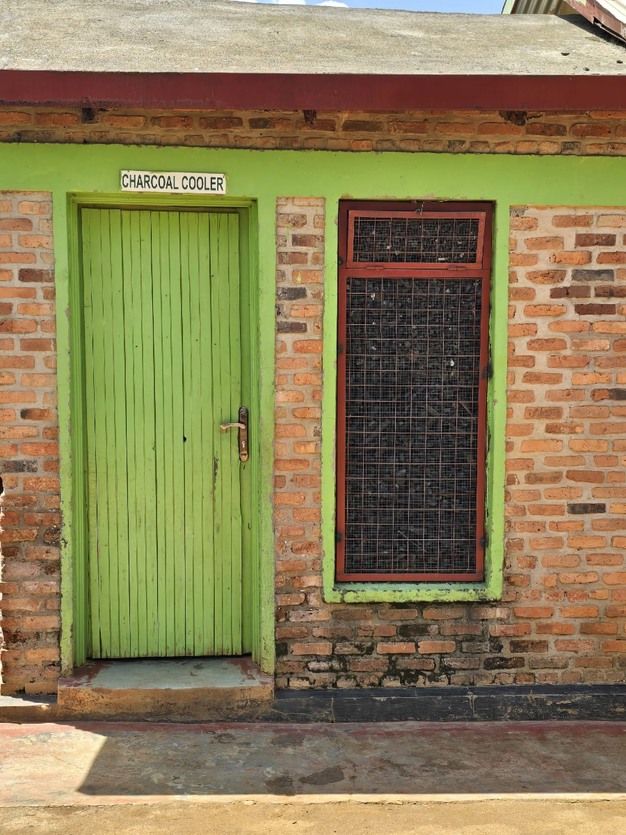 © Pieter Boekhout | FreshPlaza.com
Greenhouse crops are sold on the domestic market to hotels, restaurants, supermarkets, and wholesalers. Open-field crops are partially exported, with approximately 5% of production reaching European markets, primarily the UK. "Local demand fluctuates depending on season and price, but our clients include multiple hotels and wholesalers. We maintain direct supply relationships, which allow us to provide consistent volumes throughout the year," Agathe explains.
Export logistics rely on scheduled airfreight, with pre-sorting conducted at Sunripe Farms and final packing managed through partner facilities. Products are shipped in corrugated boxes, either loose or pre-packed in trays. Airfreight bookings are made at least one week in advance, with volumes planned per crop. Export volumes are primarily French beans and chili, with occasional shipments of cabbage.
 © Pieter Boekhout | FreshPlaza.com
 © Pieter Boekhout | FreshPlaza.com
Labour and workforce management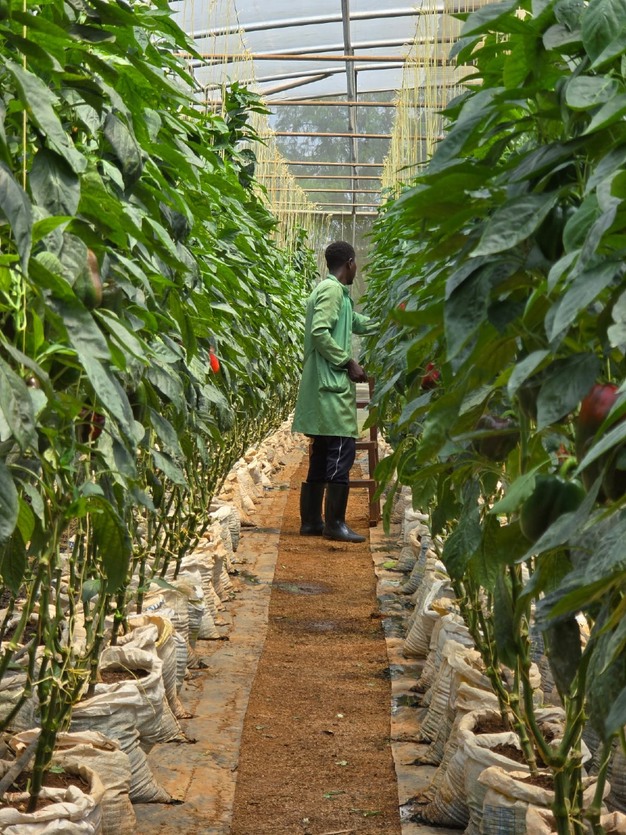 © Pieter Boekhout | FreshPlaza.com Sunripe Farms employs between 250 and 300 casual laborers across its 15 hectares of active production, in addition to permanent staff responsible for greenhouse management, irrigation, and agronomy. Seasonal labor demands fluctuate based on planting and harvesting schedules.
"Finding sufficient labor can be challenging during peak periods because many local workers have their own fields. Casual labor is compensated per kilogram for crops such as chili and French beans, while greenhouse crops are managed by permanent teams," Agathe comments.
Casual workers earn approximately USD 2.50–5 per day, with lunch provided. Harvesting capacity varies by crop: a worker can pick up to 90 kilograms per day for chili and French beans, while tomato harvesting is measured at about 2 kilograms per hour over an 8-hour workday.
 © Pieter Boekhout | FreshPlaza.com
Greenhouse environment and climate control
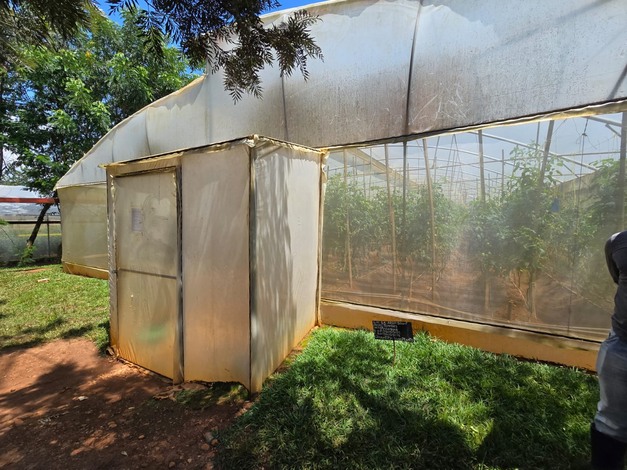
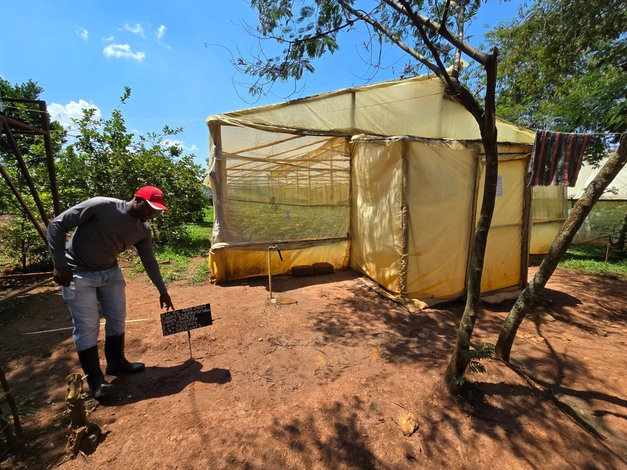
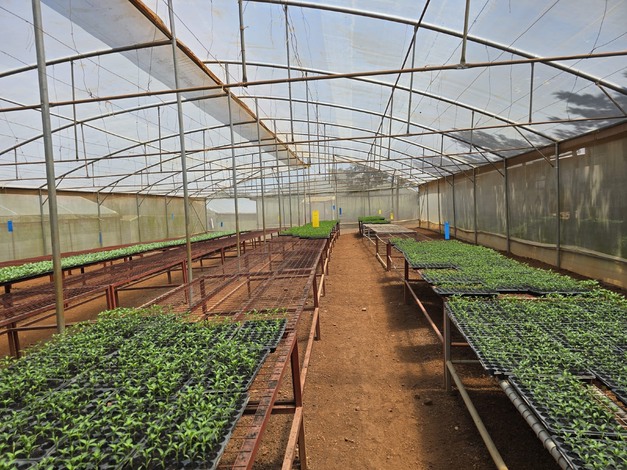
The farm's greenhouses are plastic-covered with netted sides for ventilation. Environmental control is mostly passive: side openings allow airflow, and water is occasionally applied to soil ridges to reduce temperature stress. No automated cooling or fans are used.
"The greenhouse protects crops from most external weather events, although occasional warm periods require manual intervention. Open-field crops are more exposed to climate events, including heavy rainfall and hail, which can reduce yields or damage crops", Agathe explains.
Hail in open fields occurs approximately one to two times per year and can affect 50–90% of vulnerable crops. Open-field crops are also more susceptible to fungal diseases during the rainy season, while dry-season conditions improve yield and reduce pest pressures.
Production yields and crop performance
Average yields for greenhouse tomatoes are estimated at around 10 kilograms per square metre per cycle. Open-field yields vary significantly based on seasonal conditions. Crop rotation is implemented to manage disease, particularly in greenhouses where soil-borne diseases such as Fusarium wilt are a concern.
"Maintaining consistent production requires managing both soil-borne and foliar diseases. Using clean soil for seedlings and rotating crops allows us to sustain yields over multiple planting cycles," Agathe notes.
Export strategy and infrastructure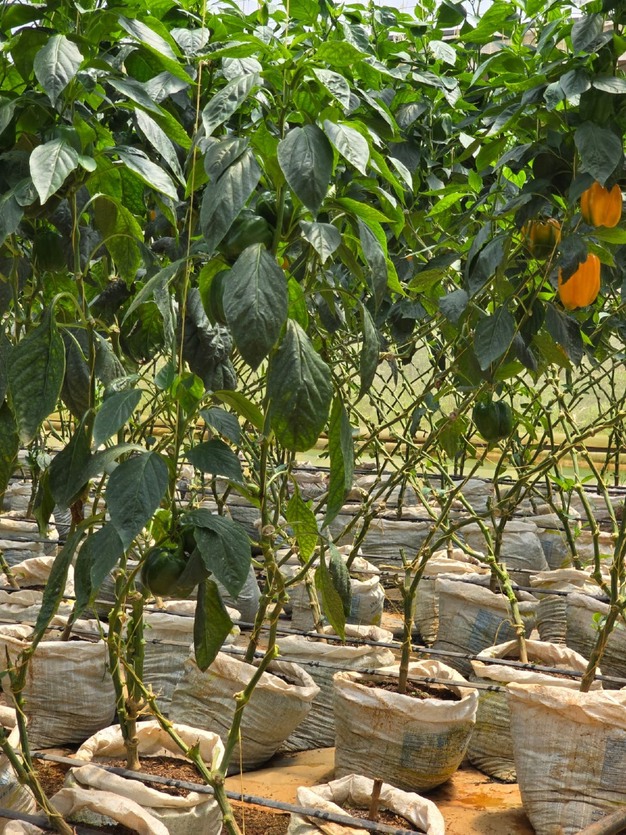 © Pieter Boekhout | FreshPlaza.com
Airfreight logistics require planning one week in advance to secure space for shipments. Pre-sorting occurs on-site, and packing is performed by partner facilities. Products are shipped in standard corrugated boxes, either loose or in pre-packed trays. Export focus is primarily on French beans and chili, with occasional shipments of cabbage to European markets.
"Finding reliable clients and airfreight space is manageable but requires planning. Market consistency is key for expansion decisions," Agathe explains. The UK is currently the main export market.
Sunripe Farms has plans to establish its own packhouse in the future to handle export crops more efficiently, particularly for tomatoes and French beans.
 © Pieter Boekhout | FreshPlaza.com
Expansion and investment
Land availability in the Kigali region allows potential expansion of both greenhouse and open-field operations. "Future growth will depend on market demand, pest and disease management, and infrastructure development. Expansion is feasible if consistent markets are established, particularly for export crops", Agathe adds.
Investment in additional greenhouse structures and export capacity is under consideration to sustain and grow markets for high-value crops.
"Managing crops across open-field and greenhouse systems requires balancing environmental conditions, labor, and market requirements. Our approach is focused on maintaining a consistent supply while preparing for potential growth in both domestic and export markets," she concludes.
 For more information:
Adam Tchelezo (Country Representative)
Sunripe Farms
Tel.: +250 788307610
[email protected]
www.sunripefarmsrwanda.com
For more information on the Rwandan fresh produce export sector, please contact Charlotte Uwicyeza ([email protected]) of the National Agricultural Export Development Board (NAEB), which will also be present at the upcoming Fruit Logistica: Hall 26, Stand C-61. A joint booth with Rwandan companies can be found at Stand B-80 in Hall 26. Click here for an overview of Rwandan fresh produce exporters.