Cold chain management is becoming a central operational issue for fresh produce supply chains as volatility, cost pressure, and sustainability requirements influence planning toward 2026. For fruit and vegetable businesses, improving resilience in temperature-controlled logistics is increasingly linked to product quality, cost control, and market access.
Recent developments in global logistics have highlighted the importance of integrated cold chain systems that connect maritime transport, inland distribution, warehousing, and data monitoring. As supply chains face disruptions related to weather, energy pricing, and port congestion, producers and exporters are reassessing how cold chain performance can be stabilised across multiple transport legs.
 © Maersk
Industry platforms such as Fruit Logistica are being used to discuss how logistics providers support end-to-end cold chain coordination for perishable products. These discussions focus on the operational benefits of linking ocean freight, inland transport, and storage within a single logistics framework, supported by digital monitoring tools.
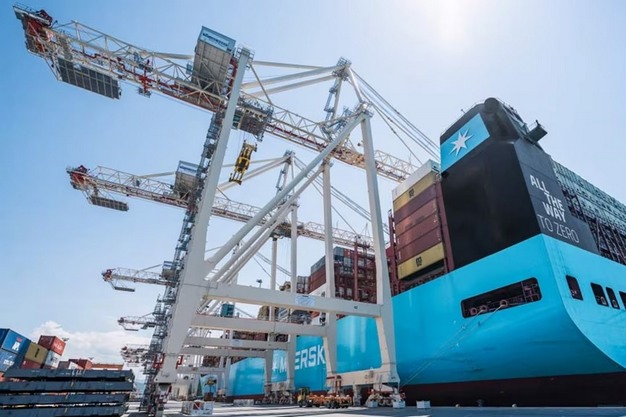
One logistics operator active in this space is Maersk, which combines ocean, road, and rail transport with cold storage and reefer container management. The approach aims to maintain temperature and humidity control throughout the supply chain while providing greater visibility over cargo movement and condition.
Cold chain expertise continues to evolve alongside technology. Operators handling perishable cargo are increasingly using real-time monitoring systems to track container temperature and relative humidity, allowing corrective action when deviations occur. This is intended to reduce delays, limit product loss, and manage shelf life more effectively.
Cold storage infrastructure also plays a growing role. Facilities located near production regions and major ports are being used to smooth transitions between harvest, packing, and export. These facilities are designed to support throughput efficiency while addressing energy use and capacity constraints during peak seasons.
As fresh produce supply chains prepare for the coming years, cold chain management is increasingly treated as a structural component of logistics planning rather than a standalone service. The focus is shifting toward system integration, data transparency, and operational continuity, with implications for cost management, quality preservation, and sustainability targets across the sector.
Maersk will be at Fruit Logistica 2026 in Hall 26 | Booth E-30.
 For more information:
Mikkel Linnet
Maersk
Tel: +45 24821196
Email: [email protected]
www.maersk.com