The year 2026 began with expectations of a generally stable market for the Egyptian potato sector, steady pricing levels, and the continued importance of key export destinations, including Russia, the Arab countries, and the European Union. While some shifts are anticipated between winter and summer crop volumes, overall production levels are not expected to exceed those of 2025, according to Yassen Abdelahay, export advisor at Arafa Company. The exporter shares his insights on the Egyptian potato market outlook for 2026, emphasizing a stable year with balanced supply and demand.
 © Arafa Company
Lower seed imports
The exporter states that one of the most significant indicators for the 2026 potato season in Egypt is the level of imported seed potatoes. He explains, "According to official data reported by Egyptian authorities, seed imports reached approximately 113,000 tons by 5 January, representing a 22% decline compared to the previous year. Last year, seed imports reached 146,000 tons, resulting in a very large production volume. As a consequence, some growers suffered losses toward the end of the season due to oversupply. This year, demand for imported seed potatoes has been lower for this reason, and importers have been more cautious and restrictive in determining their required quantities. This reduction in seed imports is expected to have a direct impact on summer crop volumes, which are projected to be lower than last season. The reduced availability of potato seeds naturally limits planted areas for the summer crop, leading to a more controlled supply rather than aggressive expansion. This situation may also contribute positively to overall market balance by preventing oversupply and sharp price fluctuations later in the year."
A shift in winter-summer crop volumes is expected
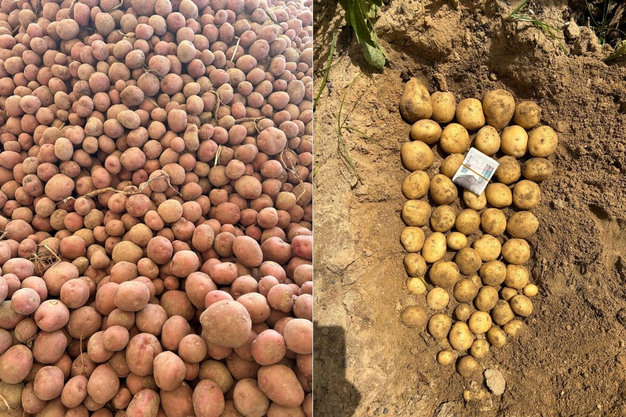
Abdelhay announces an increase in winter harvest volumes while summer harvests are expected to decline. He adds, "The winter crop is expected to be larger as it benefited from favorable planting conditions and lower seed prices. This increase will help maintain sufficient supply for early exports as well as domestic demand during the first half of the year. In contrast, the summer crop is expected to be lower than in 2025, mainly due to reduced seed imports. As a result, total annual production volumes are not expected to exceed those of 2025. By the end of the year, it is unlikely that Egyptian potato production records will be broken, reinforcing the outlook for a stable rather than expansionary market."
 © Arafa Company
Export season kicks off at usual price levels
The exporter reports that the Egyptian export season has already started with shipments to Arab countries beginning at the end of December, while exports to Russia are expected to start within the first weeks of January. Regarding season-launch prices, he says, "Initial export prices are starting at average levels, similar to last year. This reflects balanced supply and demand conditions and the absence of major unexpected shortages. The pricing environment suggests continuity rather than volatility, which is welcomed by both exporters and international buyers. However, price increases are expected for the summer crop starting from April 2026, driven by lower availability and summer crop volumes."
"Exports volumes in 2026 are expected to be lower than in 2025, driven by two main factors: slightly lower production volumes, particularly for the summer crop, and anticipated softer demand in certain international markets. However, we expect export prices to remain close to last year's levels, supported by stable demand from core markets and Egypt's competitive position in terms of timing, quality, and seasonal availability," he continues.
"Russia will continue to be a key market with solid demand"
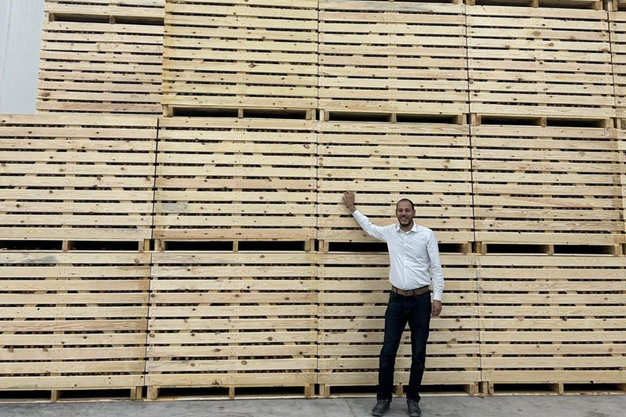
Russia is expected to remain one of the largest and most important markets for Egyptian potatoes in 2026, similar to its position in 2025, according to Abdelhay. "The Russian market continues to face a supply gap, along with quality and size challenges in its domestic crop, which sustains demand for imported potatoes. On the other hand, Egypt's seasonal advantage, combined with suitable varieties and strong export experience, ensures that Russia will continue to rely on Egyptian potatoes as a strategic supply source during its deficit period," he explains.
 © Arafa Company
Conversely, the European dependency is marked by its seasonality, Abdelhay says. "Despite currently lower potato prices and large volumes within the European Union, EU imports of Egyptian potatoes are expected to continue from the end of February through May. This demand is driven primarily by seasonal factors rather than short-term price movements. European producers completed their harvest earlier than usual, and stored potatoes often cannot maintain optimal quality for extended periods. As a result, EU buyers continue to depend on Egyptian potatoes to bridge the gap until their own early crop becomes available. Egypt's different growing season remains a key competitive advantage in this market."
"At Arafa Company, we continue to strengthen our position within the Egyptian potato sector. The company's production capacity exceeds 150,000 tons per year, while export volumes reached 50,000 tonnes in 2025. In 2026, Arafa Company aims not only to maintain stable export volumes to existing markets but also to open new export destinations like Belarus and the Far East, diversifying its market base and reducing dependency on a limited number of clients. This strategy aligns with the broader business trend toward risk management and sustainable growth. In addition, Arafa Company focused on maintaining control over the majority of the potato supply chain, including seed importation, cultivation, harvesting, storage, and export operations. Product diversification is also part of the company's strategy, as Arafa exports white beans and peanuts alongside potatoes," the exporter concludes.
For more information:
Yassen Abdelhay
Arafa Company
tel: +201007244471
Email: [email protected]
www.arafatrade.com