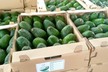
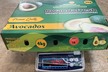
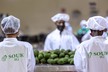
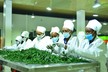
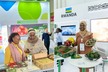
Rwanda's economy still relies heavily on subsistence agriculture. However, in recent years, a growing number of companies have begun consolidating the output of smallholder farmers and preparing it for export. While much of that export is destined for regional markets, products like chili peppers and green beans are flown to Europe, and avocados and passion fruit are shipped to the Middle East. Over the next three weeks, we'll introduce around ten of these companies.
But first, some background on this small East African nation, nestled between the Democratic Republic of Congo to the west, Uganda to the north, Tanzania to the east, and Burundi to the south.
 © ID 170211552 © Hyotographics | Dreamstime
The Land of a Thousand Hills
Rwanda may be smaller than Belgium, but it has a slightly larger population—14.2 million as of 2024, according to the World Bank. Excluding microstates, it ranks as the fifth most densely populated country in the world. Its population has been growing at over 2% per year for the past two decades. The capital, Kigali, is home to more than 1.7 million people.
True to its nickname, The Land of a Thousand Hills, Rwanda is a lush, hilly country dotted with lakes. The highest mountain peaks are at 4,507 meters, and Kigali itself sits at an elevation of around 1,500 meters. Rwanda, which is home to one of the sources of the Nile, lies just a few degrees south of the equator and experiences two rainy and two dry seasons each year. Kinyarwanda is the national language, but English, French, and Swahili are also recognized as official languages. Tourism has become one of Rwanda's fastest-growing industries and is now the country's leading source of foreign income.
Strong economic growth
Rwanda has made remarkable progress on the socio-economic front in recent decades. The share of the population living on less than $3 per day has dropped from 82.3% in 2000 to 38.6% in 2023, according to the World Bank. While GDP per capita remains relatively low—around $1,000 in 2024 (compared to $56,614 in the Netherlands)—the country boasts an impressive average growth rate of 8.9% per year. Inflation is low at 1.8%, and unemployment stands at 12% in 2024. However, digital access remains limited: only 34% of the population used the internet in 2023.
One striking feature of Rwanda's political landscape is the high level of female representation: as of 2024, women hold 64% of parliamentary seats. Women also play an active role in the agricultural sector—not only as workers but also as entrepreneurs and business leaders, as we'll see in later installments of this series.
From colonisation to genocide
At the end of the 19th century, Rwanda became a German colony. During World War I, the Belgians took over administration. Of the country's two main ethnic groups, the Hutu and the Tutsi, the Tutsi were favoured by colonial rulers. The distinction between the groups was more socio-economic than ethnic: the Hutu, who made up about 85% of the population, were mostly farmers, while the Tutsi minority, around 14%, were largely cattle herders and members of the aristocracy.
In 1959, the Hutu rose up in a revolt that led to violent attacks on Tutsi communities and, eventually, the founding of a Hutu-led republic in 1962. In 1973, Juvénal Habyarimana seized power and continued to implement pro-Hutu policies. A civil war broke out in 1990, led by the Tutsi-dominated Rwandan Patriotic Front (RPF). After Habyarimana's assassination in 1994, the conflict erupted into a full-scale genocide. Over the course of 100 days, the world watched in horror and largely failed to act, as extremist militias massacred hundreds of thousands of Tutsi and moderate Hutu. In July 1994, the RPF ended the genocide with a military victory.
Today, Rwanda emphasizes national unity over ethnic divisions. The government promotes a shared Rwandan identity, and many young people no longer identify as either Hutu or Tutsi.
Recent political history
Since the end of the genocide, Rwanda has been governed as a one-party state under the leadership of the Rwandan Patriotic Front (RPF). In 2003, a new constitution was adopted that formally introduced a presidential multi-party system and allowed for democratic elections. The president is elected by popular vote for a seven-year term. Paul Kagame has held office continuously for 25 years, winning re-election each time with impressive results; in 2024, with 99% of the vote.
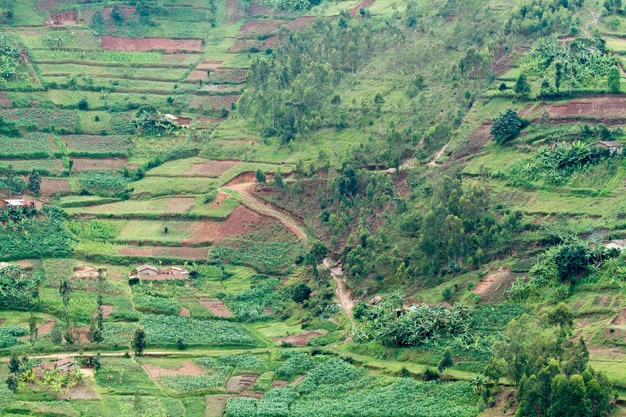 © ID 48131159 © Tiziano Casalta | Dreamstime
According to The Economist and other sources, Rwanda under Kagame has evolved into an authoritarian state—what some describe as an "electoral autocracy." While the country has drawn praise for its impressive economic growth and stability in the post-genocide era, this has come at the cost of limited political opposition, curtailed freedom of speech, and restricted press freedom. Supporters argue these measures are a necessary price for peace and development, but they also spark debate over the tension between Rwanda's development success and its democratic shortcomings.
The 2024 Democracy Index from the Economist Intelligence Unit paints a bleak picture—Rwanda scores just 3.34 out of 10. Still, it ranks ahead of neighbouring countries like the Democratic Republic of Congo and Burundi, and surpasses countries such as China, the United Arab Emirates, Egypt, and Kazakhstan. On the 2024 Corruption Perceptions Index from Transparency International, Rwanda performs relatively well, ranking 43rd out of 180 countries. That puts it ahead not only of some of its neighbours, but also of twelve EU member states, including Spain, Italy, Poland, and Slovakia, as well as major EU trading partners like China, South Africa, Morocco, Brazil, Turkey, Peru, and Mexico.
Fresh produce exports
According to the National Agricultural Export Development Board (NAEB), Rwanda earned over $75 million from the export of vegetables, fruit, and flowers in the 2023/2024 fiscal year. Traditional crops like tea and coffee brought in an additional $201 million. Notably, horticultural export earnings have risen by 162% over the past five years (from 2019/2020 to 2023/2024), representing an average annual growth rate of 21%.
Vegetables made up the largest share of horticultural revenues at $42.3 million (56%), followed by fruit at $30.6 million (41%) and flowers at $2.2 million (3%). Most vegetables are exported within the region (74%), with Europe accounting for 21% and Asia 4%. Exports to Europe and Asia mainly consist of chili peppers and French beans. Fruit exports also primarily target regional markets (68%), followed by the Middle East (26%), especially avocados and passion fruit. Asia takes in 4%, where macadamia nuts are particularly popular. Flower exports remain largely focused on Europe, which absorbs a striking 92% of total exports.
Plastic ban
And finally, a unique feature of Rwanda: you won't see any plastic pollution in its streets. That's thanks to a national ban on single-use plastic packaging introduced in 2008. Rwanda has invested in alternatives such as paper bags, reusable cloth sacks, and biodegradable packaging made from natural materials like banana leaves. The country also runs a national community service program called Umuganda, which mobilizes citizens aged 16 to 65 on the last Saturday of every month to clean, build, and improve their communities.
This initiative, launched in 1995, has helped install environmental awareness into the national consciousness and fostered a strong sense of social cohesion. According to a blog post by the United Nations Development Programme (UNDP), Umuganda has become a cornerstone of Rwanda's civic life. Together with Norway, Rwanda co-leads the High Ambition Coalition, a global initiative aiming to end plastic pollution worldwide by 2040 through a binding international treaty.
In the coming days, we'll introduce around ten Rwandan companies involved in the cultivation and export of fresh fruit and vegetables. For those seeking more general information on Rwanda's fresh produce export sector, feel free to contact Charlotte Uwicyeza at the National Agricultural Export Development Board (NAEB): [email protected]. The organization will also be present at the upcoming Fruit Logistica: Hall 26, Stand C-61. A joint booth with Rwandan companies can be found at Stand B-80 in Hall 26.