With post-holiday business resuming this week, Texas growers continue to look for one thing from their southern neighbors: water.
This comes after a mid-December announcement from the U.S. government of a new understanding for the delivery of a portion of the overdue water, and a path forward for paying the remaining debt and the yearly water obligation from Mexico. This follows Mexico's continual violation of the 1944 Water Treaty, say Texas growers.
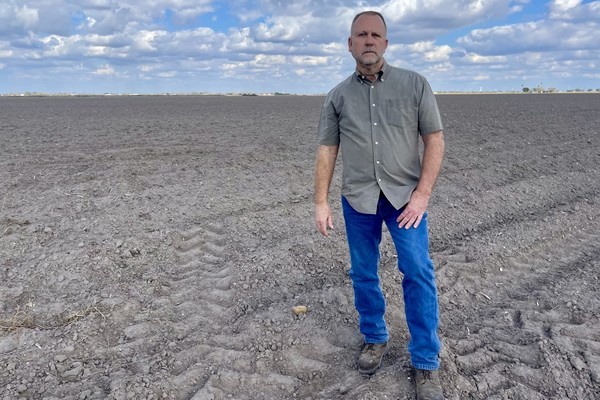
The pressure under the current U.S. administration on Mexico to deliver water as per the treaty is a welcome development, says Brian Jones, a Texas grower and board member of the Texas Farm Bureau. He's a fourth-generation grower of food-grade corn, grain sorghum and cotton and in the past watermelon as well, though he is on year three of only being able to plant half of his acreage. "I don't have enough irrigation water to be able to take care of the entire farm," he says. "We've always been able to grow things here because we have that back up of irrigation water to use when we're not getting timely rains. Since 2023-2025, we just really had a declining amount of water in the dams because Mexico has been willfully withholding water that they are treaty obligated to deliver to Texas."
 © Brian Jones
"I don't have enough irrigation water to be able to take care of the entire farm," says Jones.
Last year's deliveries
He notes that in 2025, Mexico promised to deliver 500,000 acre feet of water. What was actually delivered was only about 380,000 acre feet. "To date we're still seeing minimum deliveries. The agreement in December is for Mexico to deliver 202,000 acre feet before the end of March. There are some broad promises of this 202,000 acre feet but we don't have specifics," Jones says, noting once the water is released, growers will wait upon the Texas Commission on Environmental Quality for water allocations between irrigation districts.
However, even with this new understanding, he remains skeptical that Mexico will deliver the amount of water necessary. "Mexico makes a lot of promises but ultimately fails to deliver. Or they meet the minimum–they will over promise but it ultimately always falls back to the minimum," he says.
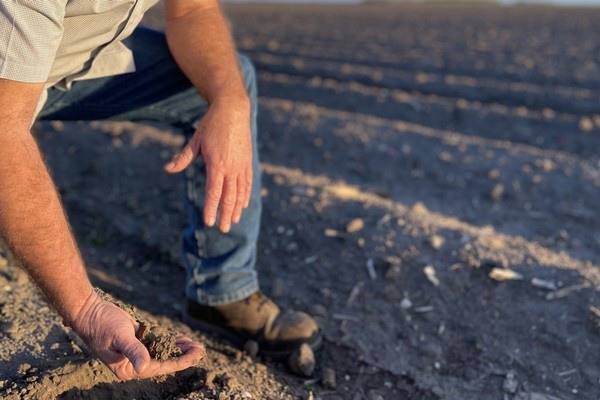 © Brian JonesJones remains skeptical that Mexico will deliver the amount of water necessary.
Current water needs
In the meantime, there isn't a high demand for water right now. While some citrus crops may be close to needing irrigation, fall rains around and after Thanksgiving helped minimize that need, as did the reduced acreage. "We will still need it going forward into the spring so towards the end of January through the end of March is when that 202,000 is supposed to be delivered. That will be prime time for us to use," he says.
The hope for 2026 is that with the increase in water that the acreage will rise again as well. "The reality is with the lake level so low, it probably won't get my farm up to 100 percent. Acreage may go up to ⅔ or ¾ and we're hoping we get some timely rains too. We need another storm to come into Chihuahua or West Texas to bring those lake levels back up to where they need to be," says Jones.
Also ahead in 2026 is the renegotiations for the United States-Mexico-Canada Agreement (USMCA) and Texas growers are hoping to "put some teeth" into the 1944 Water Treaty by incorporating punitive damages or recourse over the lack of water deliveries–something that isn't in the agreement currently. "Because what is also happening along with withholding water, is growers in Mexico are using that water and directly competing with South Texas products," says Jones. "They're filling our windows with products that we were not able to grow right now because we don't have enough water. That's also why we think we can use the USMCA because it is trade altering as well."
 For more information:
Brian Jones
https://texasfarmbureau.org/