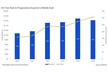
From January to November 2025, Georgia exported hazelnuts worth USD 146 million, up 62% year-on-year, according to the National Statistics Office. Total export volume reached 16,900 tonnes, with the average export price rising to USD 8.66 per kg from USD 6 per kg a year earlier.
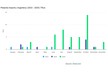
Italy was the largest importer of Georgian hazelnuts, purchasing USD 28 million worth, followed by Spain with USD 20 million and Germany with USD 11 million.
Georgia also significantly increased walnut exports to Syria, with shipments rising to USD 7 million, indicating a revival of trade ties between the two countries.
At the same time, the Ministry of Environmental Protection and Agriculture confirmed that the hazelnut production subsidy program will be discontinued from 2026. The decision was announced in response to an inquiry from MP Gela Abuladze regarding the cancellation of agricultural support programs.
According to Deputy Minister Lasha Dolidze, the government is restructuring existing agricultural support schemes to introduce more targeted and sector-specific instruments. The ministry stated that the hazelnut support program was implemented for a fixed term, and its extension is not planned.
While the program helped improve hazelnut quality, the ministry noted that key challenges remain, including sudden nut decline, bacterial and fungal diseases, pest pressure such as the brown marmorated stink bug, limited drying infrastructure, low mechanization levels, technology gaps, and insufficient awareness among small and medium-sized farmers.
The subsidy program was initially designed for one year but was later extended through 2024 and 2025. Total government funding amounted to GEL 68 million (approx. USD 25.2 million), including GEL 21.5 million in 2023 (around USD 8.0 million), GEL 22.7 million in 2024 (about USD 8.4 million), and GEL 23 million in 2025 (about USD 8.5 million).
Source: bizzone.info