The year 2025 is shaping up to be a particularly dynamic time for the international fresh produce sector. Tito Spaldi, Isolcell's International Sales Manager, portrays a transforming market driven by new storage, ripening, and quality continuity needs, as well as major geopolitical and logistical uncertainties. These uncertainties are already prompting companies to anticipate the challenges of 2026.
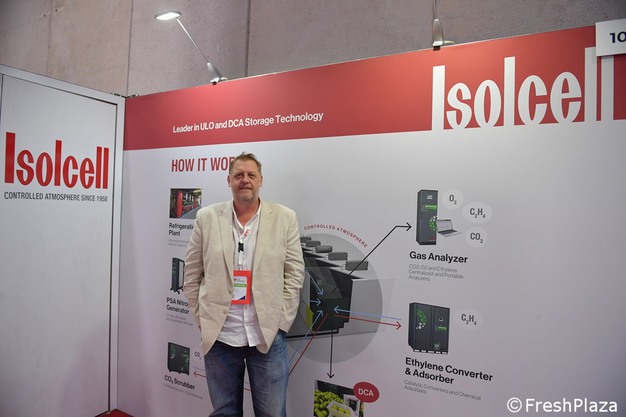 © Cristiano Riciputi | FreshPlaza.com
Tito Spaldi, International Sales Manager at Isolcell
Australia and New Zealand are currently key growth areas, but we are also expanding our focus toward North Africa and Asia - emerging markets showing increasing interest in controlled atmosphere systems. At the same time, there is growing attention on storing high-value tropical fruits, such as mangoes, avocados, and passion fruits, which require precise management of physiological parameters," Spaldi says.
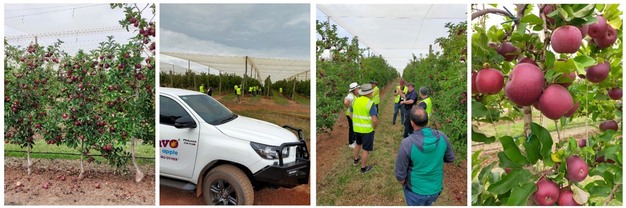 © ISOLCELL
Visit to Bravo orchard (Soluna) in Casuarina, Western Australia
Alongside the push toward exotic fruits, Spaldi notes another significant development: a return to fresh products in certain vegetable categories, such as onions, garlic, and cabbage. These products were often destined for processing or handled using different storage methods in the past.
In this context, Isolcell systems have evolved technologically, becoming more oriented toward hybrid solutions that integrate storage and controlled ripening. "For fruits such as avocados, the goal is to extend shelf life and ensure uniform, scheduled ripening, delivering a ready-to-eat product to consumers when desired."
 © ISOLCELL
This project is located in Hawke's Bay, New Zealand. The 24 controlled atmosphere (CA) rooms, which can hold nearly 22,000 apple bins, will use top-of-the-line Isolcell storage equipment to maintain a controlled atmosphere. An additional 16,500 RA storage bins will be installed using Isolcell's humidity and CO₂ control systems - a first for New Zealand.
This technology can be compared to a "technological orchestra conductor": just as a maestro coordinates the entrance of each instrument to create perfect harmony, the technology precisely regulates gases inside the rooms so that each piece of fruit reaches peak ripeness at the same time. This eliminates the "off-key notes" of fruit that is either underripe or overripe. In an industrial and scientific sense, it is a return to the personalized service once offered by the "old-fashioned fruit vendor."
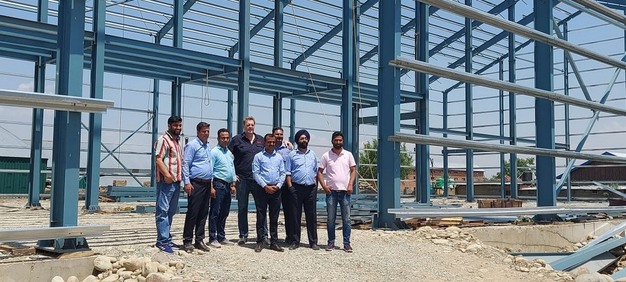 © ISOLCELL
Construction site in Lassipora, India
Controlled atmosphere as a "time machine" for fruit
Spaldi uses an effective metaphor to illustrate the value of these technologies: the controlled atmosphere system is like a time machine. "By reducing and modulating the fruit's cellular respiration, the product enters a state of deep dormancy that slows its physiological aging. The result is the ability to bring fruit to consumers' tables - even months later - with the same freshness it had on the day it was harvested."
Today's market shows strong polarization. "On one side are large companies investing in new varieties and high volumes. On the other side are small, locally rooted producers who, thanks to advanced technologies, can ensure consistent quality year-round and maintain their competitiveness."
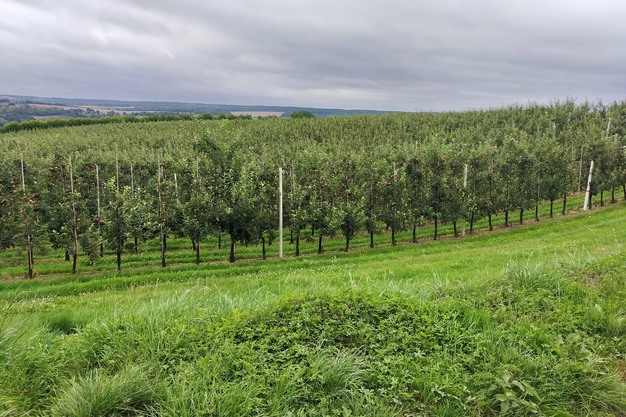 © ISOLCELLOrchards in Kent, United Kingdom
In Asia, however, structural challenges remain. "In Korea, for instance, certain apple varieties cannot always be sourced year-round due to storage capacity limitations."
At the same time, a profound shift is underway in many African and Asian countries. "Where government-run cooperatives once dominated, we are now seeing a gradual opening to private capital, with new entrepreneurs ready to invest in know-how and technology."
 © ISOLCELL
Above and below: Orchard harvesting in Kashmir, India 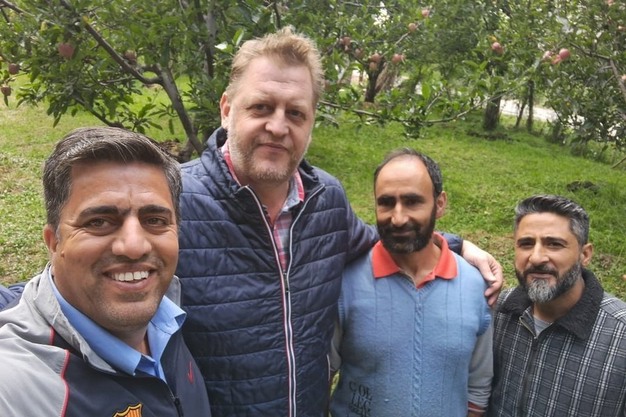 © ISOLCELL
Research, bureaucracy, and the weight of regulations
In a market that is increasingly focused on new varieties with high commercial performance, applied research is essential to avoiding mistakes in the supply chain. This is the context in which Isolcell collaborates with the Laimburg Research Center, a European benchmark for post-harvest physiology studies.
 © ISOLCELL
"The goal is not purely scientific, but operational: to anticipate critical issues that new varieties may exhibit during storage and controlled ripening," Spaldi explains. "Many next-generation clones and varieties, selected for yield, color, or field resistance, exhibit physiological behaviors after harvest that remain largely unexplored, such as sensitivity to oxygen levels, abnormal responses to ethylene, uneven ripening, and the onset of latent physiological disorders."
Side photo: Citrus grove in Shizuoka, Japan
According to the manager, the added value of this collaboration lies in its ability to translate scientific data into practical guidance and avoid solutions that are theoretically perfect but economically unsustainable. "Thus, experimental rigor is balanced with supply chain needs, such as energy costs, warehouse turnover, retail demands, and end-consumer expectations."
The relationship with bureaucracy is more complex. Spaldi is deeply concerned about the survival of small farmers, who are under pressure from constantly changing regulations. This situation appears even more paradoxical when compared to the greater freedom granted to less healthy products, such as snacks and soft drinks. These products are often supported by strong consumer pressure and large advertising investments.
 © ISOLCELLSupermarket in Japan
The uncertainties of 2026
While 2025 was profitable for many producers, the future is uncertain. Geopolitical instability, transportation disruptions, and extreme weather events could compromise entire seasons. One case in point: an Isolcell shipment to New Zealand that was held up for three months. "This delay, combined with normal transit times, nearly pushed a seasonal project back by an entire year. Added to this are the repeated floods that have hit the country, forcing many producers to postpone planned investments.
At recent international economic forums, such as one held in Saudi Arabia, the message was clear: Italian expertise and technology are recognized as global excellence. However, to compete with other food industry segments, the fresh produce sector must invest more in communication and marketing to highlight its health and environmental benefits.
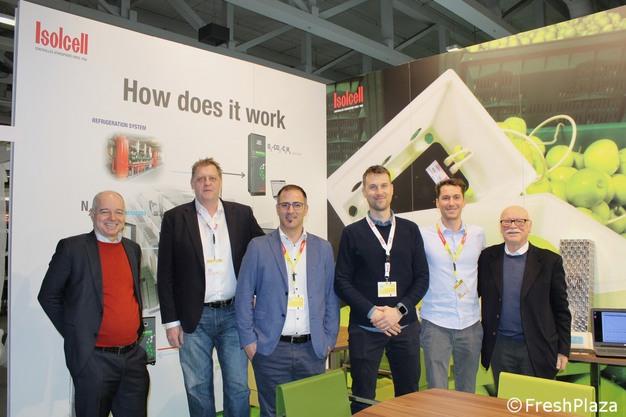 © Maria Luigia Brusco | FreshPlaza.com
Giorgio Pruneri, Tito Spaldi, Marco Gobetti, Stefano Brigadue, Simone Pasqualino, and Carlo Nardin at Fruit Logistica 2025
The trade fair calendar is another hot topic. 2026 is shaping up to be an intense year, with events starting as early as January in Poland, France, and Germany. The growing number of industry events has a significant impact on company budgets, often without a proportionate return in terms of innovation or concrete opportunities. To give a few examples: Madrid stands out for its more liveable and pragmatic atmosphere. Berlin remains a strategic meeting place, but it is increasingly oversubscribed. Hong Kong, while growing, has lost some of the conviviality that once characterized it, partly due to the city's own evolution. More and more operators are questioning the sense in concentrating their presence on a single annual event.
Spaldi concludes: "2026 will require strategic vision, adaptability, and ever more precise orchestration to keep quality, technology, and the market in harmony."
For more information Isolcell SpA
via A. Meucci, 7
39055 Laives (BZ) - Italy
Phone: +39 0471 954050
www.isolcell.com