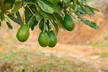
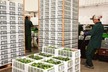
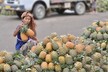
The National Agricultural Export Development Board (NAEB) has intensified efforts to diversify Rwanda's export markets, expanding horticultural exports beyond traditional destinations to new markets in the Middle East, India, and China. Export protocols signed with China for products such as chilli, avocado, macadamia, and honey have played a key role in reducing reliance on a limited number of markets while opening new trade opportunities for Rwandan exporters.
NAEB has also supported exporters to participate in international trade fairs and exhibitions, enabling them to showcase Rwandan products, connect with new buyers, and better understand evolving global market demands. According to Iranzi, participation in these platforms has strengthened Rwanda's visibility as a reliable exporting country and helped identify medium- and long-term business opportunities.
Logistics efficiency has also improved with the introduction of sea freight using Controlled Atmosphere Containers to Europe and Dubai, reducing transport costs and improving exporter margins. In addition, regular market analysis and transparent farm-gate pricing have encouraged reinvestment and the adoption of good agricultural practices.
On the production side, NAEB has expanded land under high-value export crops such as tea, coffee, avocado, and macadamia. Over the past two planting seasons, coffee rejuvenation covered 2,145 hectares, 8.5 million tea seedlings were distributed, and 730 hectares of horticultural orchards were developed. These efforts have contributed to export earnings rising from $515.8 million in 2017 to over $893 million in 2024/25, with Rwanda targeting $1.54 billion in agricultural exports by 2029 under NST2.
Source: www.newtimes.co.rw