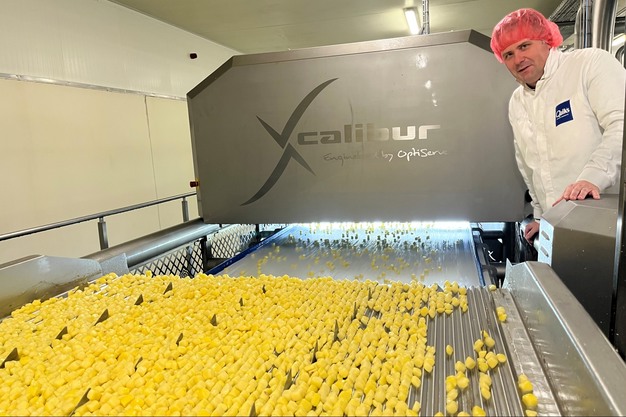
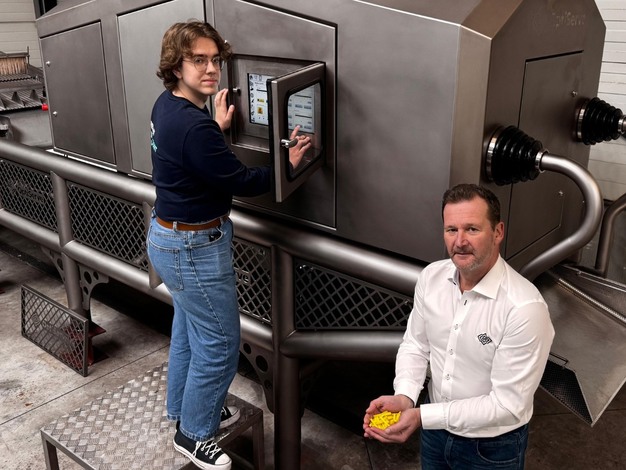
After 20 years of working together, Quik's Quality Potatoes and OptiServe took another step forward. A third Xcalibur sorting machine, part of a new production line for potato specialties, was recently installed at Quik's factory in the Netherlands. This family business can thus expand its capacity while OptiServe can show that technological innovation and client-oriented customization go hand in hand.
 © Quik's Quality Potatoes
From used to high-tech
This partnership began two decades ago, when most sorting was still done manually. "With potatoes, you can't do everything by hand. We started with refurbished machines, then moved on to new equipment," says Quik's director, Peter Quik. His company now runs three Xcalibur sorters. OptiServe, which previously reconditioned used machines, developed the Xcalibur line based on that experience with the Xcalibur line. The latest version combines mechanical reliability with advanced camera and software technology.
The Xcalibur in practice
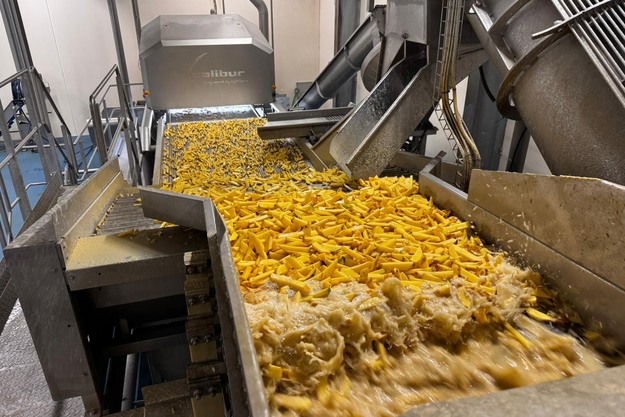
This machine sorts various potato products, from French fries and baby potatoes to mashed potatoes, after peeling and slicing, too. "First and foremost, it's about food safety, removing foreign objects from the product. Then, it's about quality, with as little good product lost as possible." The Xcalibur's continuity, precision, and modular design make it distinctive and easy to integrate into existing lines.
 © Quik's Quality Potatoes
Purchasing these new machines forms part of Quick's broader modernization. "We're always expanding and optimizing lines. New equipment increases capacity and sustainability. The older machines require more maintenance," explains Peter. Trust is vital. "Family businesses like OptiServe have short communication lines. If there's a problem, they're here to help the same day."
Technology that grows alongside its user
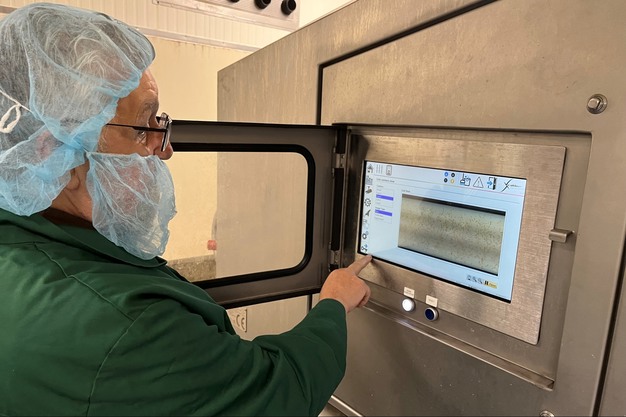
Operators are central to using the Xcalibur. "It has an intuitive interface, and operators can optimize settings themselves," says Antoine van Kasteren, CEO of OptiServe. "The better they understand the machine, the better the result." Software is its beating heart: the algorithms determine what is sorted, minimize waste, and increase yield. Existing machines can be updated, extending their service life.
 © Quik's Quality Potatoes
Sustainability and yields are linked. Less waste means more efficient use of raw materials. ROI is calculated based on throughput, product quality, and energy and labor costs, not on variable market factors. Peter: "In practice, things are unpredictable, but, for us, reliability and food safety are paramount." Installing the new lines took precise planning but went smoothly, nonetheless. "Our lines are becoming increasingly professional, with more attention to hygiene and maintainability," says Peter.
 © Quik's Quality Potatoes
The future of optical sorting
For OptiServe, the future lies in AI and data-driven technology. "Machines continuously collect data and analyze processes. Ultimately, it shouldn't only detect errors, but also predict why they occur," explains Antoine. What remains, however, is the partnership's foundation: trust, craftsmanship, and innovation. "We speak the same language. That's how we demonstrate that the Netherlands is a global leader in potato processing technology: through innovation and mutual trust," Peter concludes. (JG)
For more information:
Quik's Quality Potatoes
Akkerseweg 13b
5321 HG Hedel
+31(0)73 599 20 93
[email protected]
www.quiks.nl
OptiServe
Rondven 24a
6026 PX Maarheeze
+31 (0)495 588 510
[email protected]
www.optiserve.nl