A cooperation meeting between New Zealand and India's Nagaland state was held this week in Kohima to discuss opportunities in kiwifruit production and plantation development.
Michael Fox, Head of Global Public Affairs at Zespri, said the organisation represents around 2,800 kiwifruit growers in New Zealand and works with approximately 1,200 growers in northern hemisphere production regions. He explained that discussions with Nagaland are part of broader efforts to develop the Indian kiwifruit market, following earlier engagement with the New Zealand government.
Fox said cooperation could focus on value creation for growers by applying experience from New Zealand in areas such as scale, supply chain development, and innovation. He noted that Zespri's role is centred on sales and marketing, alongside demand development and export growth. He added that discussions with Nagaland have been ongoing for several years and expressed expectations that cooperation could move into practical stages.
The New Zealand delegation included representatives from Zespri, the Bioeconomy Science Institute, and the New Zealand High Commission, covering public affairs, regulatory issues, agricultural policy, and international programmes.
Nagaland's Secretary of Horticulture, Akumla Chuba, said agriculture supports nearly 70 per cent of the state's population, with horticulture playing an increasing role. She said that while the state's climate supports a range of crops, production growth has been constrained by logistics, limited market research, and weak market linkages. She highlighted the need for collaboration with international partners and support from the Government of India to address these gaps.
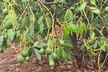
Joint Director of Horticulture S Senka outlined the development of kiwifruit cultivation in Nagaland, which began in 2001 in Zunheboto district and later expanded to Phek and Kohima. He said Phek, Kohima, Tuensang, and Zunheboto are currently the main production districts, while Kiphire, Noklak, and Peren are emerging areas. According to Senka, the crop has adapted to different microclimates across the state.
Senka identified challenges including limited availability of certified planting material, gaps in canopy and nutrient management, insufficient cold storage and packing infrastructure, and weak farmer-buyer linkages. He said collaboration with New Zealand could address areas such as orchard management training, nursery development, pollination, varietal improvement, post-harvest handling, and market development.
Additional Secretary of Horticulture Razouvolie Dozo said the delegation plans to visit Pfutsero to assess the potential for establishing a centre focused on kiwifruit plantation and production.
Source: Eastern Mirror