Two more weeks and the Flemish spice company Kruiden Claus will mark its 125th anniversary. A milestone few companies can match. Reason for celebration, one might think, but for Lode Claus, now the fourth generation at the Kruishoutem-based company, the anniversary is mainly about looking ahead. "It is a moment to emphasise that Kruiden Claus has been a family business for 125 years, one that has managed to adapt and remain relevant generation after generation, but also to reflect on where we need to go in order to continue our growth," says Lode.
 © Kruiden Claus
"I joined the company myself in 2009," he continues. "Since then, I have focused strongly on raising the company's profile. Marketing, image, and identity received more attention, which also meant a renewed focus on the history of Kruiden Claus. That history dates back to 1900. This means the company will soon celebrate its 125th anniversary. No major jubilee is planned, but there will be a conscious emphasis on it."
Peak in spring
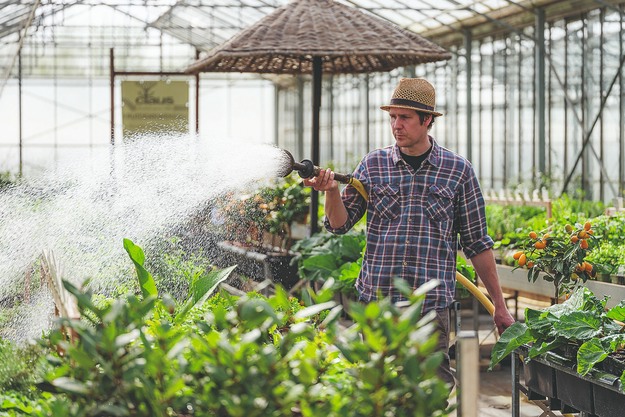
While for many herb growers the busiest period is around the holidays, this is not the case for Kruiden Claus. The company, which specialises in growing around 300 different potted herbs, 'forgotten vegetables' and edible flowers, sees spring as its peak season, while autumn shifts the focus back to the market. "The rhythm is strongly determined by the seasons. Plant propagation occurs throughout the year, but sales exhibit clear seasonal peaks. In autumn, attention turns back to the market, while spring traditionally remains the busiest period."
 © Kruiden Claus
Looking back, Lode is satisfied. "Last spring went remarkably smoothly. The vegetable garden season started early thanks to favourable weather conditions, but it also ended more quickly. The combination of heat and drought brought peak activity to an earlier close than usual. As a result, the season both started and ended slightly earlier than normal. Autumn then offers other opportunities. When the weather remains wetter and relatively mild, there is still plenty of scope for planting. This gives growers the chance to enter spring with a head start. It is precisely this spread across the seasons that makes the work fascinating, but it also requires constant adjustment."
Turmeric and ginger
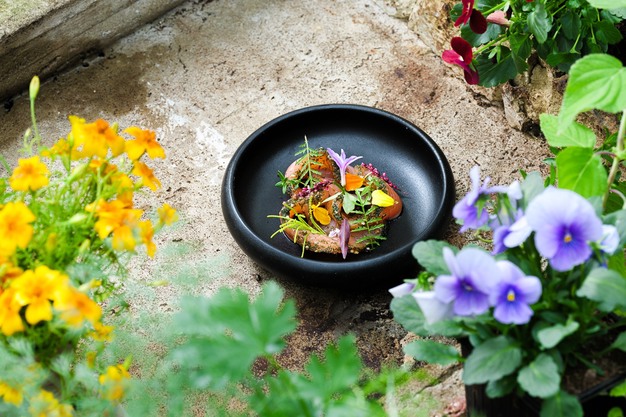
This need for adaptation is also reflected in product developments. "In recent years, there has been growing interest in new products, such as ginger and turmeric plants for professional cultivation. More and more growers, both in Belgium and the Netherlands, are venturing into these crops. What was once considered difficult or exotic is proving increasingly feasible on our soils. Cultivation in plastic tunnels in particular delivers good results, provided the right knowledge and approach are applied."
 © Kruiden Claus
So what explains this growing uptake? "Experience has shown that the classical harvest moment, waiting until the foliage has completely died back, does not always deliver the best results. In our region, an earlier harvest, around mid-September or early October, often proves more favourable. At that point, foliage is still present, and the tubers have a milder flavour. They have a fresher, almost citrus-like note and a thinner, less tough skin. This is greatly appreciated, and growers can now also expect more profitable yields. Add to this the growing popularity of these crops in cooking or for health applications, such as shots or tea, and it becomes clear that they are economically attractive and have strong future potential."
Dual-purpose herbs
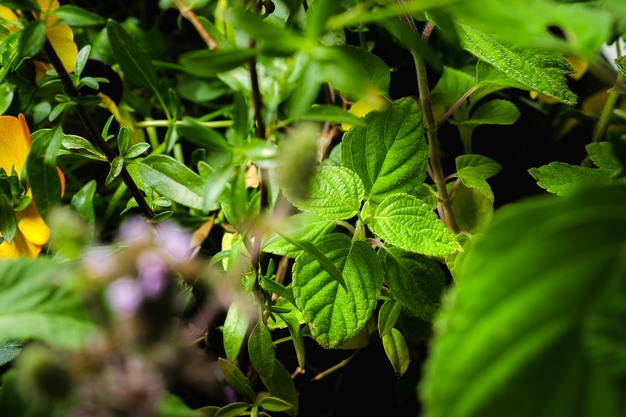
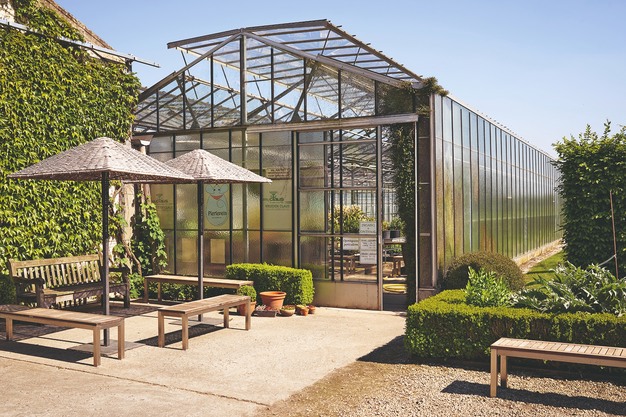
Despite this growing interest, the core business remains unchanged, Lode emphasises. "We focus on offering high-quality planting material that can be further cultivated. This often involves herbs with a dual purpose. They are not only culinary, but also decorative. That is why they are increasingly finding their way into classical landscaping, where the emphasis is not solely on edibility. It is precisely this combination of aesthetics and functionality that appeals to many people," he explains.
 © Kruiden Claus
"Inspiration for this also comes from beyond the home garden. In public gardens and parks, edible plants are increasingly being used as fully fledged ornamental plants. Herbs with striking foliage or distinctive colours are combined with flowering plants to create surprising and harmonious borders. This trend is also visible in recreational environments such as the Efteling amusement park. Edible plants are integrated into the greenery there, not only for their appearance, but also because they contribute to biodiversity and bee-friendliness. In child-friendly environments, this also has educational value: the plants are recognisable, safe if something is put in the mouth, and they stimulate curiosity."
For more information:
Lode Claus
Kruiden Claus  Beerstraat 1
9770 Kruishoutem, Belgium
+32 (0) 498 106 733
[email protected]
www.kruidenclaus.be