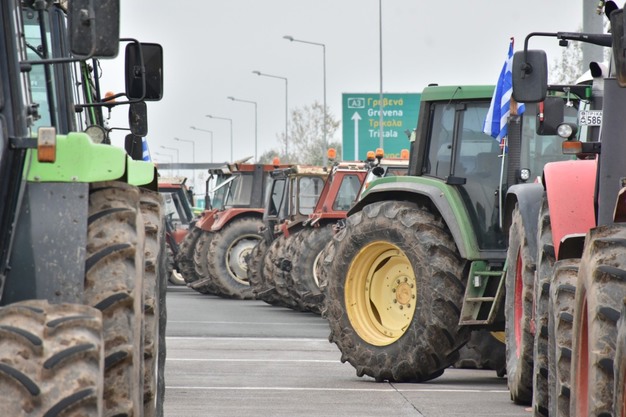
Another week that is expected to be hotter than the previous one is beginning for the agricultural mobilizations in Greece, in which other social groups are now participating with increasing intensity. First of all, the week begins with all farmers' organizations having rejected a proposal by the Greek Prime Minister, Kyriakos Mitsotakis, to meet today at his office, because the Prime Minister did not include their demands within the framework of the discussion.
 © Fotis Karabetsos | FreshPlaza.com
Instead, the representatives of the farmers' organizations, at their nationwide assembly on Saturday, drew up a list of their common demands, once again submitting them to the government and making it clear that only this would constitute the basis for negotiations. They also stressed that negotiations would take place only with tractors on the roads. In his response, the Prime Minister accused the farmers of harming the country through their mobilizations.
 © Fotis Karabetsos | FreshPlaza.com
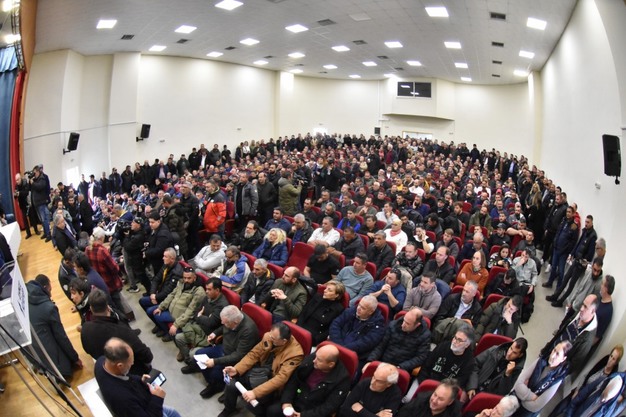
Snapshot of the national assembly of farmers' organizations in Nikaia on Saturday, December 13.
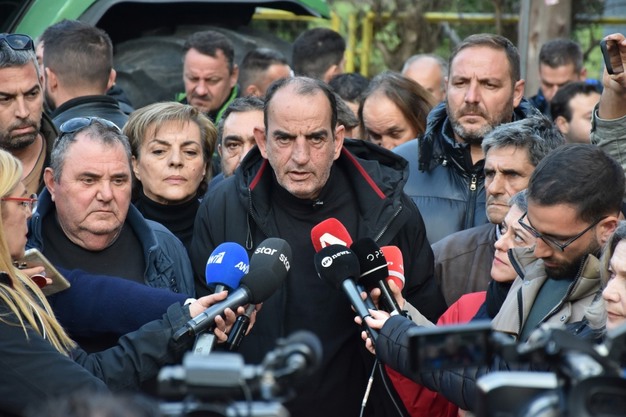
The farmers' assembly was the first since they began their nationwide coordinated mobilizations 15 days ago. "We expect the government to provide answers to our demands," said Mr. Rizos Maroudas, head of the major Nikaia blockade, speaking to all the country's media on behalf of the nationwide farmers' assembly after its conclusion. "We will escalate our mobilizations in a nationwide coordinated manner, remaining steadfast and uncompromising at our blockades," he added.
 © Fotis Karabetsos | FreshPlaza.com
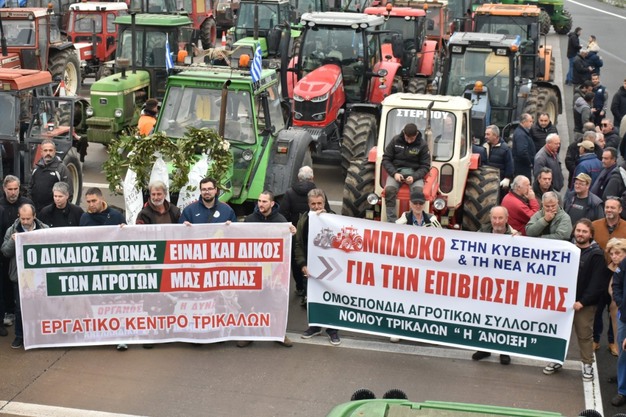
Snapshot of a recent joint action by the farmers' organization of Trikala (right) and the regional labor center (left).
In escalating their struggle, farmers are aligning with major labor unions across the country. The first step will be the strike that will take place tomorrow, Tuesday, December 16, in the private sector in Lesvos, Trikala, Karditsa, as well as Larissa, which hosts a significant fruit and vegetable industry, while public sector workers have also ultimately called a nationwide strike for the same day. Workers are striking also in response to the government's submission of the new state budget to Parliament, but among their complaints is the large difference in product prices from the field to the shelf. Various other joint actions are scheduled in many other parts of the country.
 © Fotis Karabetsos | FreshPlaza.com
Mr. Rizos Maroudas announces in the Greek media that farmers will keep fighting until their demands are met.
Moreover, an additional 48-hour strike has been announced by seafarers' unions from today, Monday, December 15, until the morning of Wednesday, December 17. They state that they will not allow Roll-on/Roll-off (Ro-Ro) cargo vessels to transport war material, while they are also putting forward a series of other key demands for seafarers. At the same time, they stress that they will escalate their mobilizations.
The second step of the farmers' struggle escalation will be from Wednesday through Friday, during which the various blockades will carry out different actions and interventions in their regions. The peak of this activity, if in the meantime there is no satisfactory response from the government, will be the simultaneous, nationwide, temporary closure for several hours of all bypass roads to which traffic has so far been diverted due to the blockades.
Among other things, farmers from all over Greece are demanding:
- Cancellation of the prosecution of farmers by decision of Parliament.
- Immediate payment of all subsidies owed to them.
- Minimum guaranteed prices that cover living needs and cultivation costs.
- Tax-free fuel and a price cap on agricultural electricity.
- Subsidies and abolition of VAT on agricultural inputs.
- Compensation for lost income for 2025.
- Agricultural infrastructure and protection projects.
- A new agricultural insurance regulation providing compensation for 100% of damages.
- No reduction of CAP funds for the war economy.
- Doubling of farmers' pensions.