This year, Luis Miguel Vegas has been put in charge of the general management of Provid, the association that brings Peruvian table grape producers and exporters together. In addition to this responsibility, he has also been in charge of Proarándanos, the equivalent association for the blueberry industry, since 2019. This dual management responds to a logic of synergies between the two sectors.
"Many of the associated companies grow both grapes and blueberries," says Vegas. "Moreover, they share common challenges: logistics, market access, international promotion... It was natural for the idea of integrated management to be considered. Although structures are still kept separate, the plan in the medium-term is to move towards greater integration, without losing the technical specialization that each crop requires.
 © PROVID
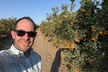
Luis Miguel Vegas, CEO of Proarándanos and Provid.
Representation and strategy for a dynamic agro-industry
Both Provid and Proarándanos are private associations with voluntary membership. Although they represent approximately 80% of the national production in their respective crops, they are not intended as closed trade associations. "We aim to represent the entire sector at a national level, to act as ambassadors of our fruits in the world," says the general manager.
The actions of both associations are organized around four strategic pillars. The first is opening up and improving access to markets. In coordination with Senasa, the national agricultural health service, they are working to gain access to new destinations, maintain current ones, and optimize logistical and phytosanitary conditions.
The second pillar is the provision of statistical information: "We provide reliable and updated data so that producers and exporters can make informed decisions," says Vegas. The third pillar is international promotion. This includes participation in global fairs - such as those in Berlin, Madrid, Hong Kong, and the U.S.- where national pavilions are set up. The last pillar is communication. "We want fruit to be seen not just as a product, but also as a generator of employment, development and wellbeing in the regions where it is grown."
 © PROVID
Table grape: sustained growth and varietal change
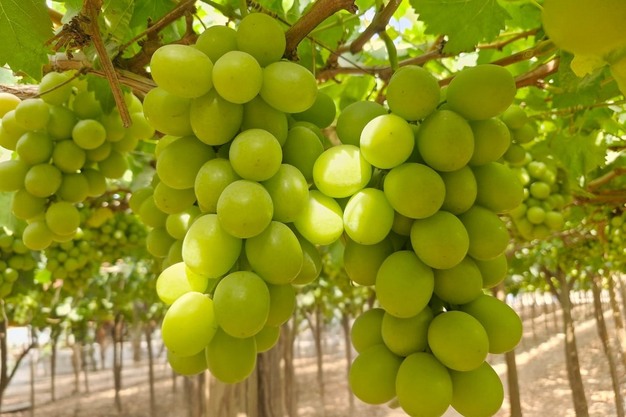
The Peruvian table grape industry has been developing at an astonishing rate. "In the 2011 campaign, we exported 16 million boxes. Today we are at 83 million, and we expect to reach 86 million in the current season," says Vegas. This means over five-fold growth in just twelve years. There are currently around 24,000 hectares registered for export. Half of this is in the department of Ica, 35% in Piura, and the rest is spread between Lambayeque, La Libertad, Arequipa, and Ancash.
Varietal replacement has been one of the biggest changes in recent times. "In 2016, 90% of the grapes exported were traditional varieties. Today, 80% are licensed varieties," he says. Among the most planted are Sweet Globe (5,200 hectares), Autumncrisp (4,000 hectares), and Red Globe (3,500 hectares), with the latter being the only traditional variety that still maintains a significant presence.
Markets with dynamism and challenges
The main destination for Peruvian grapes is the United States, which absorbs 50% of the volume exported. Europe, including the United Kingdom, accounts for another 25%, and Mexico for 8%. Fruit is also shipped to Colombia, China, and Japan. "In the case of China, we have seen a slight reduction, probably due to the growth in local production. Japan, on the other hand, has been increasing its share since the market was opened, although access there is reserved for specific varieties," says Vegas.
 © PROVID
Blueberries: from explosion to consolidation
The case of blueberries is even more spectacular. "In 2016, we were exporting 27,000 tons. Today we are at 320,000. With this volume, Peru has consolidated its position as the world's main exporter of fresh blueberries for the third consecutive year. This is more than a tenfold growth in less than a decade, with an average annual rate of 30%," says Vegas. However, the pace is slowing down, which suggests that the sector is entering a phase of maturity. Currently, there are some 25,000 hectares of blueberries in production. La Libertad leads with 42% of the total, followed by Lambayeque (26%) and Ica (14%). There are also crops in Ancash and Lima.
Varietal replacement has been equally significant. "Biloxi and Ventura used to account for 80% of the volume. Today, together they account for 40%," he says. New varieties, such as the Sekoya Pop, are gaining ground. Peru is home to more than 10 active genetic programs, which allow for a very diverse range, adjusted to agronomic behavior, commercial windows, and local conditions. The list of breeders present in Peru includes Fall Creek, Planasa, MBO, OZblu, IQ Berries, and the University of Florida.
During the last three seasons, FOB export prices of Peruvian blueberries have shown an upward trend. In the 2022-2023 season, the weekly average price was $5.19/kg, with a maximum of $7.57/kg. In the following season (2023-2024), the average increased to 7.45 $/kg, and in 2024-2025 to 7.57 $/kg, with a peak of 10.64 $/kg recorded in week 36.
There are clear differences in the evolution of average FOB prices depending on the destination market. During the 2024-2025 season, China was the market with the highest maximum price, reaching 12.78 $/kg, and with a weekly average of 8.12 $/kg. The United States, the main market in terms of volume, had a maximum price of $11.70/kg and an average of $7.79/kg, and less variability compared to other markets. In Europe, prices were more moderate, with a weekly average of $6.56/kg and a maximum of $10.91/kg.
Regarding the social role of blueberries in the Peruvian economy, Vegas says that in the last season, blueberry exports have generated approximately 120,000 direct jobs, mostly taken by women.
Favorable climate and quick market response
The Peruvian climate has been a key ally. "We can produce blueberries all year round, and have exportable fruit just eight months after planting," says Vegas. This facilitates experimentation with new varieties and an accelerated return on investment.
The export calendar is also well defined. The season runs from May to April of the following year. China is the leading importer in the first months (July to September), with Peru taking advantage of the lesser competition from the Northern Hemisphere. From October onwards, shipments go mostly to the U.S. and Europe, with the peak reached in that same month, with weekly volumes exceeding 20 million kilos. Approximately 10% of the blueberries exported are organic; a significant figure, considering the crop's demands.
The grower profile
For both grapes and blueberries, the associations represent companies of all sizes. However, there are differences. "When it comes to blueberries, there are few small growers because of the crop's technical and commercial requirements. In the case of grapes, there are more small and medium-sized growers, although not at the same level as we see with avocados," says Vegas.
In the future, according to Vegas, the focus can't be only on growing in terms of volume, but in doing so intelligently. "We are heading towards sustained, but more moderate growth. The key lies in improving quality, choosing better varieties, and consolidating our position in markets that are already open," he says. There's also interest in gaining access to new destinations with more complex protocols, such as the case of Japan for blueberries.


For more information:
Luis Miguel Vegas
Proarándanos and Provid
Tel.: +51 944 000 399, Peru
[email protected]
www.proarandanos.org.pe
www.provid.org.pe