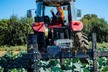
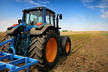
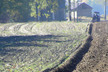
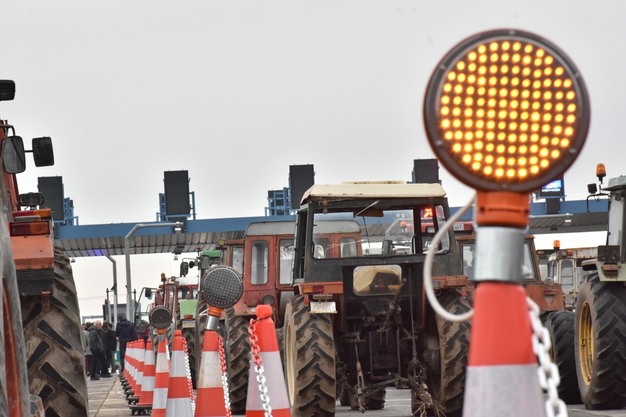
A tractor blockade at Greece's second-largest port, that of Thessaloniki, has been announced for Friday, December 12, by the farmers from the major Malgara blockade, located right outside Thessaloniki. This is another port blockade after those of Volos and Mytilene, as well as the blockade of two airports in Crete, which took place on Tuesday and Wednesday and were marked by intense police violence.
 © 902.gr
©Fotis Karampetsos
Facing an unprecedented economic dead end and demanding immediate measures to support their work and income, the blockades of ports and airports are the escalation step chosen by Greek farmers in the second week of their nationwide mobilizations. At the same time, they maintain tractor blockades at all border customs posts and have multiplied them on major roads, now reaching almost 70, either permanent or frequently repeated. (See at this link the updated map with all active blockades)
 © 902.gr
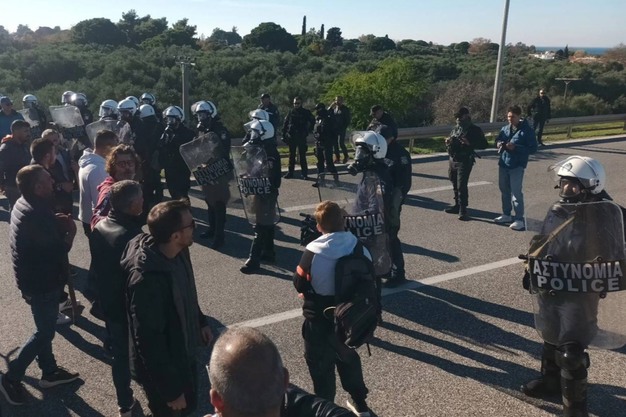
Special police units blocked the nationally important Rio–Antirrio Bridge on Wednesday, December 10, to stop farmers from letting vehicles pass freely through the tolls. They even blocked ambulances, while farmers distributed citrus fruit to drivers. (photo credits: 902.gr)
As Mr. Kostas Sefis, president of the Agricultural Association of Kymina–Malgara, tells us: "We want to proceed with a symbolic blockade of the port of Thessaloniki. It is an idea we had in mind, but it is also an answer to the government that we are not afraid of its threats. This is a struggle for survival, and we are not stepping back. We only move forward. If they want to put us in prison, let them come and arrest us."
Mr. Sefis refers to the decision made two days ago by the government-appointed supreme prosecution office, calling on law enforcement authorities to act ex officio against the farmers' mobilizations, meaning without waiting for lawsuits. Earlier, the government had tried to cultivate public opposition toward the farmers, speaking of disruption to daily life. "Solutions come through dialogue. Extreme forms of protest, such as blockades, may exert pressure but ultimately make everyday life more difficult," the Greek Prime Minister, Kyriakos Mitsotakis, had said a few days before the prosecutorial decision, but the farmers immediately rejected his invitation as insincere.
 © 902.gr
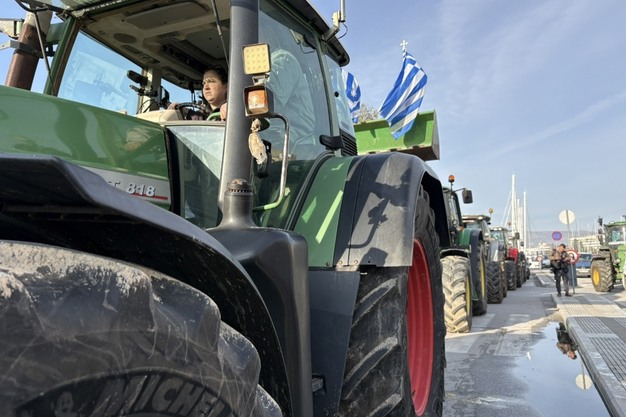
Farmers blocking the port of Volos by land with their tractors on Wednesday, December 10. (photo credits: 902.gr)
The government has failed to isolate the farmers' blockades, as solidarity is expressed daily by major workers' unions and other mass organizations, even by associations of ex-military personnel and police officers. Furthermore, workers' unions are now also participating in the mobilizations. The blockade of Thessaloniki's port will take place in coordination with the city's workers' unions, while solidarity strikes will be held next Tuesday, December 16, across Lesvos and Karditsa, as well as in Larissa, which hosts a significant fresh produce industry.
Summarizing the second week of the intense farmers' mobilizations in Greece, they are already described as the largest of the past three decades, and it is the first time such widespread support is expressed by workers' and other unions. Government repression has not managed to weaken them by force. On the contrary, farmers have become even more outraged, seeing the government prosecute them instead of those involved in the multimillion-euro agricultural subsidies scandal, including two former Ministers of Agriculture from the ruling party.
 © Fotis Karabetsos | FreshPlaza.com
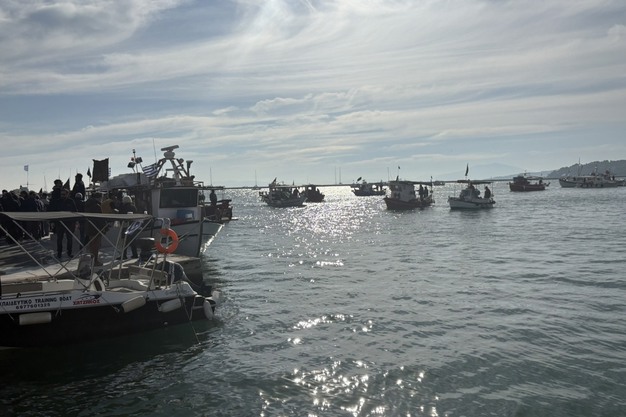
Fishermen blocking the port of Volos by sea with their boats on Wednesday, December 10. (photo credits: 902.gr)
Next week begins with key decisions on further escalation of mobilizations, expected to be taken on Saturday at the first nationwide farmers' meeting, two weeks after the start of their coordinated actions, while additional mobilizations by workers' unions are also possible. We will continue to report the most important developments.