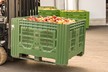
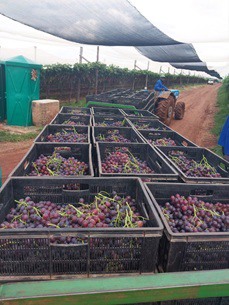
 © Vaalbos TrustTwo hundred millimetres of rain have fallen at Vaalbos Trust, just outside Marble Hall in the Loskop Valley of Limpopo, since the start of the grape harvest in the second week of November.
Citrus is the farm's main source of income, but when the grape harvest starts, citrus feels very long ago. It's been a complicated kick-off: rain in the production area and, 1,600km away, wind at Cape Town port, which lost the equivalent of sixteen days of operation due to wind during the month of November.
"We've exported really little of what we've picked this season," says Jaco Britz, the farm's table grape manager. "Perhaps as little as 30%, and we've sent the rest to the domestic market. It's the opposite of how we'd like it to be: normally we aim to export 70% of our grapes."
What they have managed to export has all gone to Europe. Locally, they supply Spar stores through Freshworld, as well as the municipal markets of Pretoria, Johannesburg, and Springs.
Despite the challenges, the northern grape production region as a whole remains predominantly export-focused.
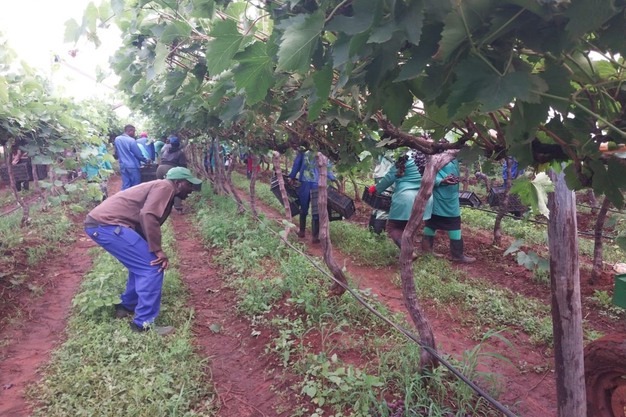 © Vaalbos Trust
"The development of sugar in the grapes has been slower. It's as if it develops and then reaches a point where it stalls," he says. "It's been more difficult to get going with the grapes than in other years."
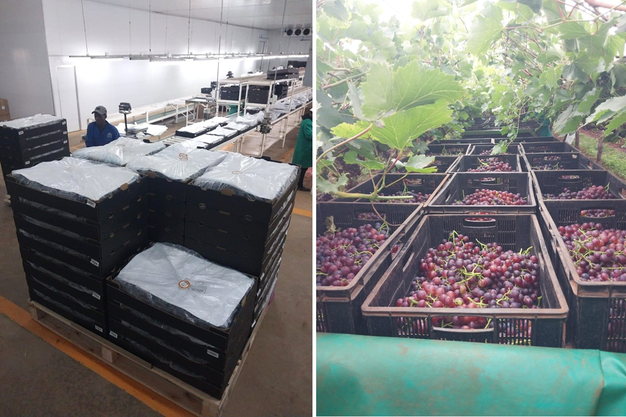 © Vaalbos Trust
Pricing levels have, from the outset, been depressed, he remarks, both domestically, where imported grapes were pulling it down when they started their harvest, and on the export market, which is puzzling, he says, when one hears that the grape crop in Peru is delayed. "An exporter told me the trade with Europe kicked off with prices three to four euros [per box containing ten punnets] below usual."
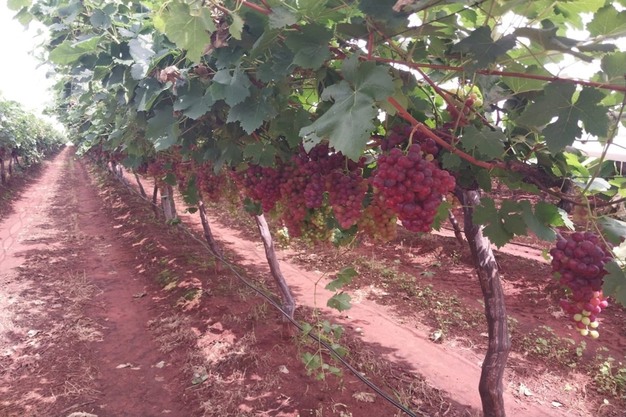 © Vaalbos Trust
 For more information:
Jaco Britz
Vaalbos Trust
Email: [email protected]
https://www.vaalbostrust.co.za/