The LAN team at the embassy in Amman has worked with government and private-sector stakeholders over the past two years to analyse price formation in Jordan's food system. To create a concrete basis for policy dialogue, the team examined tomato and lemon value chains using recently published farm-gate, wholesale, and retail data.
The assessment showed wide fluctuations in absolute prices throughout the year, while percentage mark-ups remained comparatively stable. For tomatoes, the mark-up from farm-gate to wholesale ranged from 135 per cent in December to 232 per cent in October. Between wholesale and retail, the average markup was about 300 per cent for tomatoes and 200 per cent for lemons.
 © MLVVN
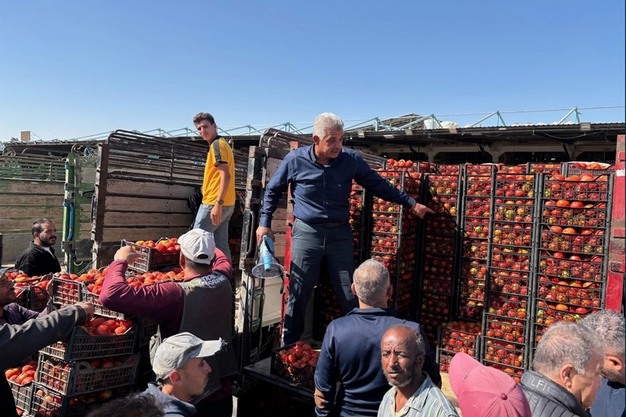
A workshop on the findings brought together representatives from the Amman Central Market, the Ministry of Agriculture, traders, brokers, the Jordan Cooperative Council, and farmer cooperatives. Participants raised questions about the high increase in price from wholesale to retail, particularly for tomatoes. The discussion centred on logistics, price-setting mechanisms, and structural challenges in the supply chain.
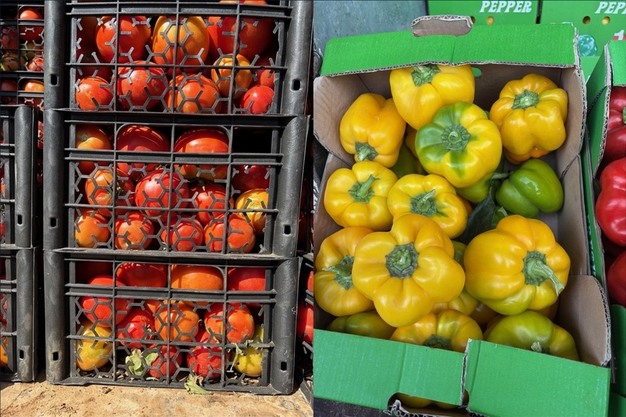
Stakeholders emphasised the need to distinguish between value-adding steps and cost-adding inefficiencies. Identified cost drivers included high product losses and labour needs resulting from short shelf-life tied to poor varieties and cultivation practices, inadequate packaging, and informal logistics infrastructure such as hand-held carts in the central market.
Additional cost additions stemmed from sorting and grading late in the chain, where mixed-quality lots require re-sorting downstream. Sales processes were described as inefficient, with brokers offering produce in batches while buyers search stall by stall. Storable crops such as citrus allow for speculation, adding cost and risk without increasing product value. Unofficial onward sales also occur.
 © MLVVN
Market imbalance was noted, with limited price transparency and uneven access to market data. Larger actors typically have better insight into price levels from farm-gate to retail, while smaller farmers and brokers face disadvantages. Limited data access contributes to reactive production shifts, including overproduction following periods of high prices.
Participants identified potential interventions. Short-term actions include establishing quality standards for grading and food safety, upgrading packaging, and improving access to centralized market and price data. Longer-term steps include strengthening extension services to improve shelf-life performance, investing in cooled storage and logistics, developing electronic auction systems, and adding processing capacity for surplus volumes.
Branding was also discussed as a strategy for growers. Recommendations included product aggregation through cooperatives, internal quality standards, and stronger collaboration within value chains. Programs such as Holland Horti Support and REGEP are positioned to support these activities.
Source: MLVVN