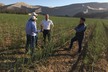
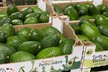
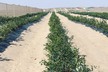
In the heart of the fertile valley of Majes, in Arequipa Peru, packing companies play a key role in the marketing of the thousands of tons of fruit and vegetables harvested in the fields of the small and medium-sized growers who own most of the agricultural lands here. Kamuk, which is not only a packer but also an agricultural producer, combines tradition and technology to meet this need in the agro-exporting heartland of southern Peru.
Although Kamuk only formalized its status as a company in 2016, it is not new to the business. "The family that owns the company has more than 25 years of experience in agro-exports," says operations manager Gastón Castillo. The company had already been operating since the 2000s in the Majes area under other names, and after several mergers, its current identity became consolidated. Since then, it has not stopped growing.
 © Agrícola Kamuk SAC
Today, Kamuk fulfils four roles simultaneously: agricultural producer, collector/purchaser, packaging service provider, and agricultural exporter. Its lands are planted with 140 hectares of pepper, 20 hectares of avocado, and 3 hectares of table grapes in a trial phase. And although it buys products such as pomegranates, grapes, avocados, and mandarins from third parties, and provides packing services in the southern part of the country, the Arequipa-based company is mostly devoted to agro-exports, for which it subcontracts plants in Ica, Chincha, and Piura.
A service that connects regions
Kamuk has managed to take advantage of its strategic location and infrastructure to provide packaging services to companies in different regions. "Our main clients are agro-exporters that don't have their own plants," says Castillo. They also serve companies in the north that move their operations south outside of their productive windows.
This model of regional complementarity is evident, for example, in grapes. While the season in Piura runs from August to December, in Majes, the harvest starts in March and can last until January. Thus, Kamuk, which is one of the three largest packers in the department of Arequipa, acts as a logistics hub to maintain the export flow.
New crop: Snow peas
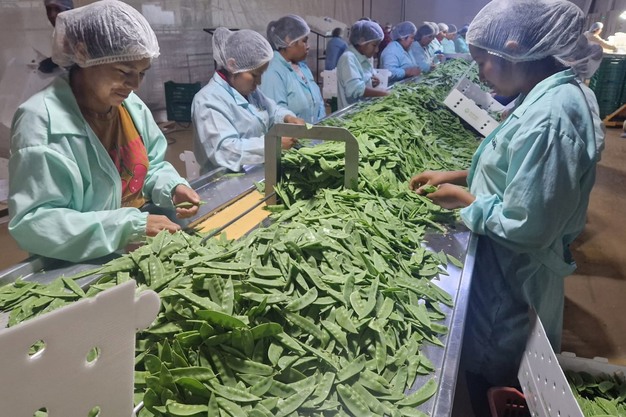
Kamuk's operating year is marked by well-defined production windows. Grapes, the flagship product, are processed between March and December and account for the highest, most stable volume. They are followed by avocados (February to June) and pomegranates (December to February). In recent years, snow peas have also emerged, and their production has been expanding thanks to the boost given by regional production chain programs.
 © FreshPlaza
"Snow peas grow very well in the area, and their cultivation has been on the rise since 2023," says general controller Giuliana Verapinto. Although volumes are still low, Kamuk is already processing them as a service for a specialized exporter.
Small producers, big chains
In Majes, most growers are small, with plots of just 4 to 5 hectares. Many of them have diversified their productions, combining grapes, avocado, maize, or onions. Kamuk works with around 40 to 50 of these producers through production chains that allow them to access the international market.
 © Agrícola Kamuk SAC
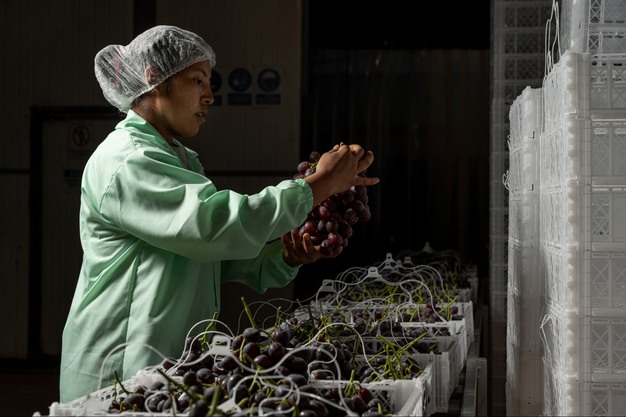
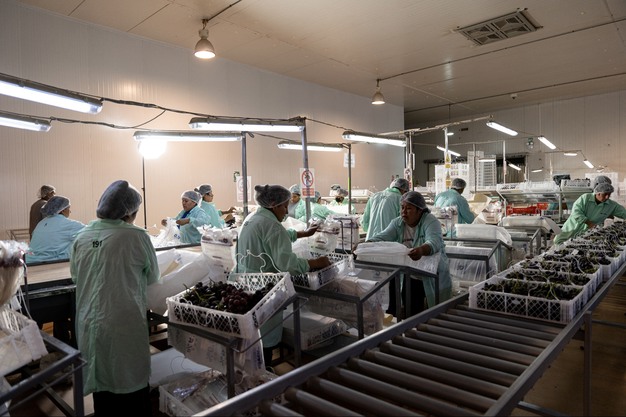
Grapes are the flagship product. They are processed between March and December, and are Kamuk's biggest and most consistent product
"The logic is simple, but demanding; to fill an avocado container in regions such as Ayacucho, it is sometimes necessary for eight different producers to coordinate," says the operations manager. In this sense, Kamuk has become a key hub, not only in Majes but also in other areas, such as Cusco, Moquegua, Chincha, and Caravelí.
Waste management
The operational heart of Kamuk is its packing plant in El Pedregal. Its model is based on keeping staff stable throughout the year, even in times of low production. "We don't want to lose skilled labor," says Castillo. During those periods, the team carries out maintenance, storage, and inventory tasks.
Grapes are the most challenging product to process because of their delicacy and the manual work required. Avocados, on the other hand, benefit from the use of automatic graders, which significantly improve efficiency. The plant can currently process up to 10 tons per hour on two lines.
 © FreshPlaza
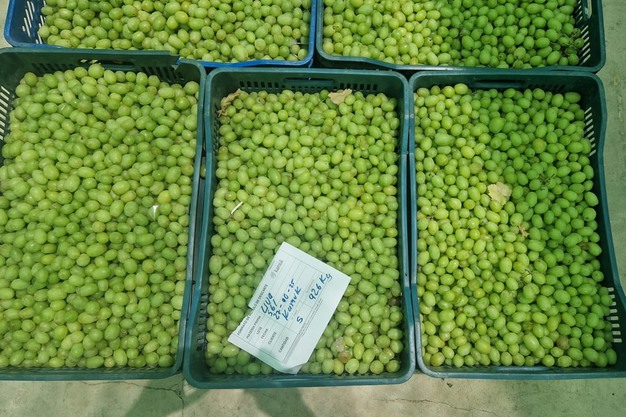
Discarded grapes are delivered to companies that sell them on the domestic market.
A recent expansion and the installation of cooling tunnels have helped eliminate bottlenecks in the operation. Waste management is also regulated. "Maquila customers manage their own discards, while ours are delivered to companies that sell them on the domestic market. But they must be removed within 48 hours, according to Senasa regulations, to avoid the appearance of fruit flies," says Verapinto.
Torrential rains
One of the biggest challenges for Kamuk and the producers in the area is climate change. "Although it doesn't usually rain much in this desert area, in the last four years we've had several episodes of unusually heavy rain," says Castillo. These rains are not only causing damage to infrastructure but also facilitating the appearance of fungi and diseases in crops. Moreover, phenomena such as El Niño and La Niña, which used to be cyclical every 6 to 10 years, are now occurring more often.
Grapes leading growth
Agriculture in Majes is in the middle of a transformation process. "Grapes are leading growth because of their high productivity (up to 40 tons per hectare) and profitability. In contrast, avocados have started to lose ground. Yields have dropped (20 tons per hectare in good years), and prices are very volatile, falling from 7 soles ($2.05) to 3 soles ($0.90) per kilo," says Verapinto.
 © FreshPlaza
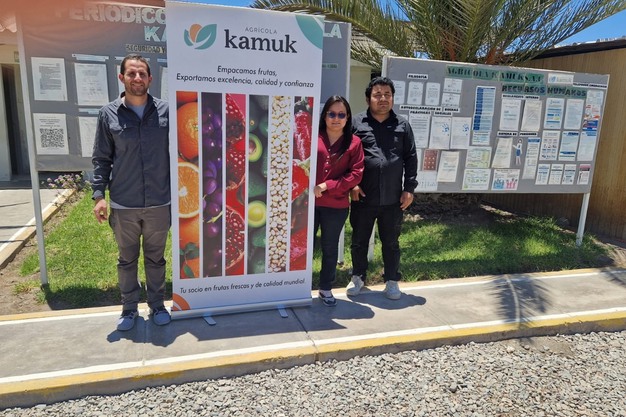
From left to right: Gastón Castillo (operations manager), Giuliana Verapinto (general controller), and Jhonatan Luis López (production manager).
Other traditional crops, such as white onion for export, garlic, pepper, quinoa, and oregano, are in decline. However, there is renewed interest in fruit trees and products, ensuring stable exports. In this new landscape, snow peas are emerging as an interesting option for small growers.
"Although more than 15 years behind schedule, the Majes-Siguas II irrigation project could mark a turning point in agriculture in the south," says Castillo. The company is ready to contribute to this expansion of thousands of hectares of fruit crops and continue acting as a bridge between producers, exporters, and international markets. It is currently also building a new packing plant in the northern part of the country, which will be larger and will allow it to meet the growing demand.

For more information:
Gastón Castillo
Agrícola Kamuk SAC
Av. Luna Pizarro 926
04001 Arequipa, Peru
Tel.: +51 949311605
[email protected]
www.agricolakamuk.com