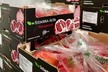
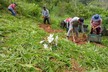
The new campaign for yellow-fleshed kiwifruit began early, offering excellent quality prospects for Kiwiny and the Breitenberger brothers' farm. The farm runs an entirely organic supply chain between the regions of Veneto and Calabria. While the fruit's intense aromas, bright color, and good sweetness boded well, the season then revealed some issues with shelf life. Philipp Breitenberger explained that despite the strong initial quality, the season was marked by critical issues regarding the shelf life of the product in an increasingly crowded market with new varieties.
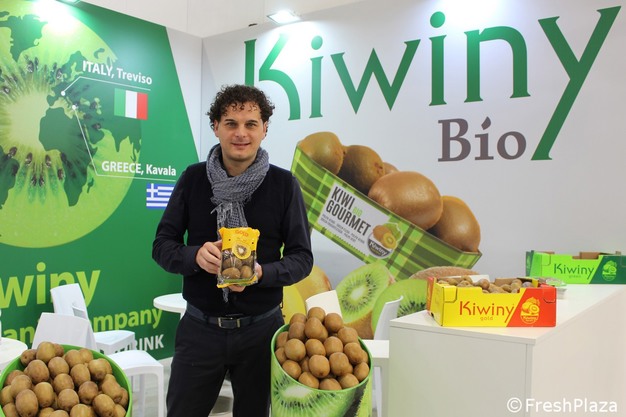 © Maria Luigia Brusco | FreshPlaza.com
"This year, we started early. We made the first cuts on 20 September, which is almost two weeks earlier than usual," Breitenberger explains. "We found excellent quality in terms of aroma and color, especially with the yellow Soreli variety, which is very sweet and juicy. However, we encountered an issue: the fruit does not hold up well over time, which is a critical issue for all yellow varieties, not just ours."
Breitenberger is referring to organic kiwifruit, but he says the difference with conventional ones is minimal. "The problem is true for both," he says. Even colleagues who work with conventional produce confirm the same anomalous behavior. This year, the yellow kiwi tends to lose its consistency, reducing its shelf life. The risk is that it spoils too quickly."
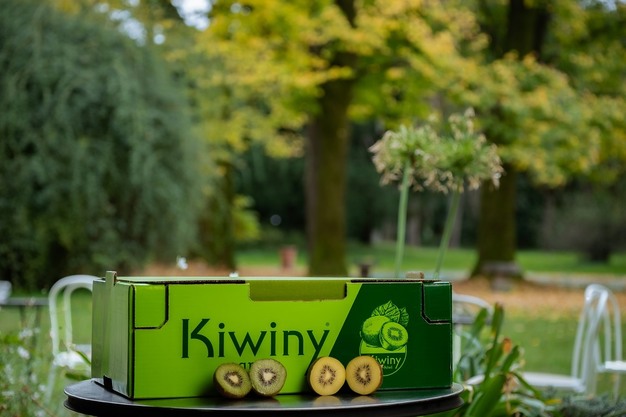 © F.lli Breitenberger - Kiwiny
The campaign started off strong commercially, but the market is already becoming more complicated. Initially, demand was promising, as it always is in the first few weeks. Now, however, with the arrival of new cultivars and an overall increase in volumes in Italy, things are getting crowded. We have all harvested more yellow kiwifruit than expected, and the market is suffering as a result."
According to the producer, this situation calls for caution. "Currently, the price is holding up, and yellow kiwifruit is still in demand. However, we will have to see what happens between mid-November and December. That's when we'll understand how much these problems will affect the final price paid to producers."
In terms of exports, Kiwiny is present in Europe and other premium overseas markets. We have received positive feedback in California, especially in the Los Angeles area, and in Canada, where there is demand for high-quality organic products. Although U.S. duties impact sales of premium products such as organic yellow kiwifruits, they do not significantly affect sales. High-end customers, accustomed to purchasing high-quality and more expensive products, will continue to do so despite the price increase. "Those who choose our kiwifruits do so with intention," says Breitenberger.

In contrast, the harvest of green Hayward kiwifruit has only just begun. Despite the favorable production outlook, there are significant unknowns in the market. The main variable is consumption trends in the coming months. Green kiwifruits are perceived as more of a commodity than yellow kiwifruits. While there is a global shortage of green kiwifruits, it's important to consider increased production in other European countries.
"Our production levels have increased slightly, by 5 to 10 percent over last year, and the quality is good. Now, it remains to be seen how consumers will react. Availability at the European level has increased. Greece, Portugal, and Spain have harvested larger volumes. We must closely monitor the impact of this additional supply on the European market.
The outlook for the coming weeks is uncertain. I anticipate a slow and stagnant market with a lack of significant growth or change. There is plenty of supply, and all market participants are ready to sell. "A possible upturn in market dynamics is only expected in March. The first months of 2026 should also be stable," Breitenberger concludes.
For more information: Philipp Breitenberger
+39 340 2696337
Agricultural Society F.lli Breitenberger - Kiwiny
Via Caramini, 21
31040 Giavera del Montello (Treviso) - Italy
+39 0422 774374
www.kiwiny.com