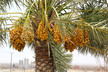
Vietnam's government has ordered an investigation into recent disruptions in chemical residue testing that temporarily stalled durian exports to China. Deputy Prime Minister Tran Hong Ha directed the Ministry of Agriculture and Environment and Dak Lak Province to identify the causes and individuals responsible for the delays that held up shipments at the border.
According to the Dak Lak Durian Association, thousands of containers were stuck at warehouses, packing facilities, and border checkpoints after laboratories halted testing on October 11, preventing exporters from obtaining phytosanitary certifications required for China. Some facilities cited equipment maintenance, while others said their licenses were pending renewal under new administrative procedures.
Ha instructed the agriculture ministry to strengthen oversight of testing facilities, accelerate the license renewal process, and report findings before November 7. Provincial authorities were also told to assist laboratories in completing documentation and meeting technical requirements. Several exporters reported losses after their shipments spoiled, while reduced buying from packers pushed farm-gate prices down from VND 80,000 (US$3.04) per kilogram to VND 20,000–25,000 (US$0.76–US$0.95).
Vietnam currently has 24 laboratories approved by China's General Administration of Customs (GACC), capable of processing about 3,200 samples per day. In mid-October, several facilities paused operations for maintenance, equipment repairs, or reassessment, delaying the testing of cadmium and Auramine O, which are mandatory indicators for export certification.
On October 24, the agriculture ministry held an emergency meeting to review laboratory capacity and align testing procedures with Chinese standards. Within a week, testing resumed, stabilizing export schedules and customs clearance. "The backlog has been mostly cleared, the market is stabilizing, and businesses are confident about completing final-season exports," said Le Anh Trung, Chairman of the Dak Lak Durian Association.
According to Huynh Tan Dat, Director General of the Plant Protection Department, export testing and clearance are now running smoothly. Daily border flows have returned to 300–400 trucks, including 200–250 through Lang Son, 100–150 through Lao Cai, and about 50 through Mong Cai. The Ministry of Agriculture and Environment said it will continue working with Chinese authorities to address technical issues, mobilize qualified testing units to handle pending samples, and maintain export continuity.
Dak Lak Province, the country's largest durian-growing area, has nearly 45,000 hectares under cultivation, including more than 26,000 hectares in production. Output in 2025 is projected at 390,000 tons, up 30,000 tons from 2024. Farm-gate prices are currently VND 60,000–70,000 (US$2.28–US$2.66) per kilogram, with about 10% of the crop still being harvested.
At the end of November 2025, the Dak Lak People's Committee, together with the Durian Association and related agencies, will host a conference to discuss sustainable durian production and export strategies for 2026.
Source 1: Voice of Vietnam
Source 2: VNExpress