It's been fifteen years since the Matsamo community and Tomahawk, citrus and litchi grower-exporter, joined forces through a joint venture, today drawing visits from other communities and traditional leaders for lessons to apply to other land reform models.
The descendants of those hailing from this district on the doorstep of the Kruger National Park (gathered together during the land claims process as the Matsamo Community Property Association, named after the longest-serving regional chief) assumed a pragmatic view of the export fruit farms that had sprung up since the proclamation of the whites-only town in 1949. It had been a clear-cut case of forced removal foisted upon black South Africans by the apartheid state.
Malalane sugarcane, mango, litchi, papaya, and citrus farms were sold to the state, which transferred them to the Matsamo Community Property Association in 2007. The new owners decided that there was room in this new arrangement for the previous landowners.
"The entire Tomahawk team is still here with us. The reason why we opted to go into a joint venture with Tomahawk as a community coming out of the land reform process was because of the professional manner in which Tomahawk runs the citrus and the litchi export business, as well as the bananas and papayas we sell on the domestic market," says Bernard Shabangu, spokesperson for the Matsamo CPA. "Post-settlement arrangements in land reform can be done to make sure that the community and the former land owners need not sit at cross-purposes. They can partner for mutual benefit."
 © Tomahawk
Shabangu continues: "Our view is that if we ship most of our fruit to our overseas markets, we get the greatest benefit through the returns, because in those international markets our fruit gets paid for in dollar and Euro terms."
The community association represents 2,000 people, many of whom are employed on the farms or gain contracts from its operations. From the revenue generated by fruit exports, over a hundred of their young people have been sent to universities across South Africa, studying what they themselves decide. "By allowing these young graduates to venture into all of these fields, we are also preparing the joint venture to be an agile operation through our broad spectrum of skills."
Expansion of 1,000 hectares
"The previous management team at Tomahawk joined forces with the Matsamo team," remarks Stuart Butcher of Tomahawk, who has been with the company since before the land reform process. "The Tomahawk team and the Matsamo team have developed a strong relationship. We have a shared common strategic vision. Jointly, we have expanded the area under irrigation from 1,563 ha to 2,587 ha under crops."
More farms have been added to the joint venture, and through recent acquisitions, the Matsamo Community Property Association has become South Africa's largest litchi grower. "Inala Farms, the Lomati section is one of the farms that the joint venture has completely redeveloped from a state of bush to a magnificent new sugarcane and papaya farm," Butcher says.
Inala Farms is a former export fruit farm that went bankrupt under its first iteration of land reform, and the Matsamo CPA took possession of the farm in 2022.
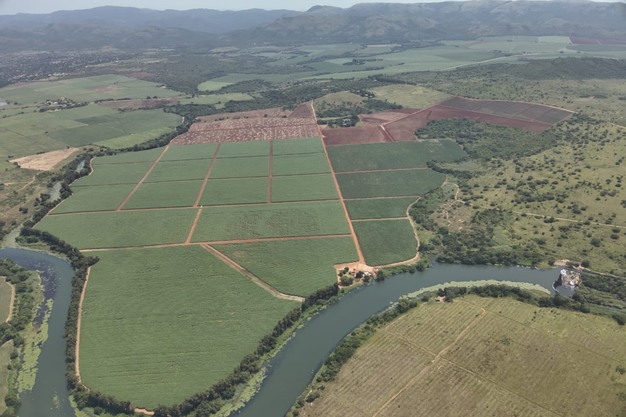 © Tomahawk A bend in the Lomati River where the Matsamo-Tomahawk joint venture has redeveloped the Lomati section of Inala Farms, formerly a failed land reform project
Former Tomahawk shareholders fund the joint venture. "To invest in a land claim scenario on land that's not yours, you've got to be confident in the stability of your partners, which we have," Butcher observes.
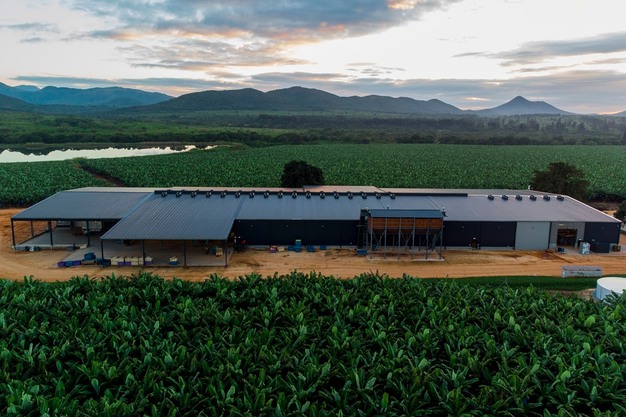
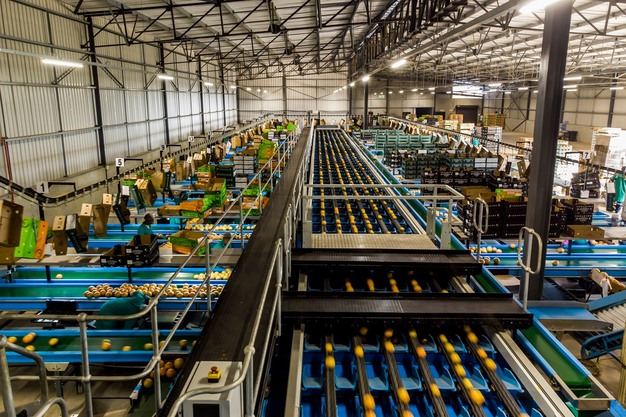
"In 2024, the joint venture built a state-of-the-art new citrus and mango packhouse, which will set them up for many years to come with their new developments and expansion."
The communities have 14,000 hectares of agricultural land, besides whose landscapes and abundance of water and waterfalls make it well-suited to agritourism.
 © Tomahawk
For more information:
Bernard Shabangu
Matsamo Community Property Association
Email: [email protected]