A five-year research project led by The University of Queensland (UQ) aims to develop a chemical-free and low-cost approach to managing viral diseases in Australia's vegetable industry.
Dr Mark Jackson from UQ's Queensland Alliance for Agriculture and Food Innovation said the project will focus on identifying molecules that activate plant defence genes, rather than controlling the insects that spread viruses.
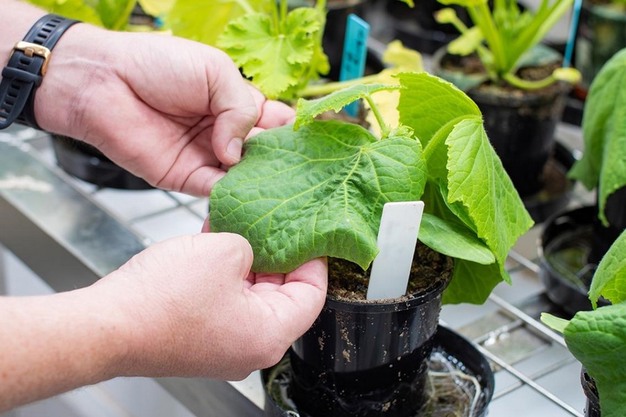 © Megan Pope, The University of Queensland
"Some of the viruses we're looking at are transmitted so quickly that traditional methods like insecticides can't contain the spread," Dr Jackson said. "Initially, we're looking at papaya ringspot virus, which affects zucchini and other vegetable crops in Queensland. The industry wanted innovative approaches to manage these problems, so we started thinking about what molecules might induce defence gene pathways in plants at the very early stage of growth when the plants are most vulnerable."
The project, funded by Hort Innovation, is designed to support the long-term resilience of Australia's A$5.7 billion vegetable industry. The research will focus on identifying viral risks and developing sustainable management tools to reduce the need for chemical treatments.
Dr Jackson said the team would explore whether plant defence peptides or growth-promoting bacteria could play a role in strengthening plant resistance.
"We'll use molecular biology tools to look for peptide elicitors, which are molecules that simulate the presence of a virus, triggering a defence mechanism and allowing the plant to fight back," he said. "We'll also look at beneficial bacteria from vegetable root systems. It's just like priming an immune defence in the plants. We're already setting up the required high-throughput assays to find peptides and beneficial microbes to prime the defence response and also enhance growth."
Hort Innovation Chief Executive Officer Brett Fifield said the research aligns scientific methods with on-farm needs. "This research will support reduced reliance on chemical treatments by offering growers practical, eco-friendly virus control options," he said. "It will also enhance crop resilience and productivity, helping to future-proof farming systems against emerging viral threats."
The project is being undertaken in collaboration with Hort Innovation and the Department of Primary Industries.
For more information:
Natalie MacGregor
The University of Queensland
Tel: +61 409 135 651
Email: [email protected]
www.news.uq.edu.au