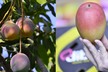
Farmers in Gulmi district, Nepal, are increasingly adopting kiwi cultivation as a profitable crop suited to the local climate.
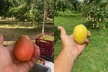
One grower, 56-year-old Yama Bahadur Thapa from Barse in Satyawati Rural Municipality–8, has shifted from maize and sorghum to commercial kiwi production. He earns more than Rs 600,000 (US$4,500) annually from kiwi farming. Thapa began cultivating the fruit 11 years ago and now grows six varieties, Yellison, Hayward, Red, Golden, Bruno, and Monty, on eight ropanis (0.4 hectares) of land.
Barse is considered suitable for kiwi production due to its climate and topography. Last year, Thapa earned around Rs 600,000 (US$4,500) from fruit and seedlings, and he expects higher returns this season. His orchard has 150 trees, each producing between 50 kilograms and 100 kilograms of fruit annually.
Thapa initially invested Rs 800,000 (US$6,000) in infrastructure such as wires, poles, and irrigation pipes. "That investment has lasted until now," he said. "Since kiwi is a perennial plant, you can keep earning for up to 50 years after planting once. I'm very satisfied with this farming."
He said kiwifruit is less prone to disease than other fruits and requires only pruning twice a year. "I've been using only organic manure like cow dung, and production has improved steadily," he said.
Locally produced kiwifruit sells for Rs 200 to Rs 300 (US$1.50–US$2.25) per kilogram in markets such as Palpa and Butwal. Thapa has also expanded into kiwi wine production, which he says has stable demand. In addition, he operates a nursery with about 8,000 seedlings, each selling for Rs 150 to Rs 200 (US$1.10–US$1.50).
Satyawati Rural Municipality has designated Barse as a "kiwi pocket area" and supports growers with technical training, tunnel structures, nursery assistance, and grants for seedlings, according to chairperson Tikaram Pandey.
Among cultivated varieties, golden and red kiwis are considered the most profitable, earning about Rs 100 (US$0.75) more per kilogram than other types. Golden kiwis have received higher prices this season.
Currently, five kiwi farming groups operate in Barse, involving about 80 farmers cultivating between 10 and 150 plants each. Altogether, kiwi orchards now cover about 40 hectares in the area.
Source: Khabarhub