The upcoming Egyptian orange season will begin in early December, pending the official launch date of the export campaign, amidst anticipation over production volumes and sizes, as well as a new key parameter: the influence of the local processing industry on the volumes available for fresh fruit exports. Howaida Hassan, founder and export manager of Select Greens Export, provides insights into the situation.
 © Select Greens Export
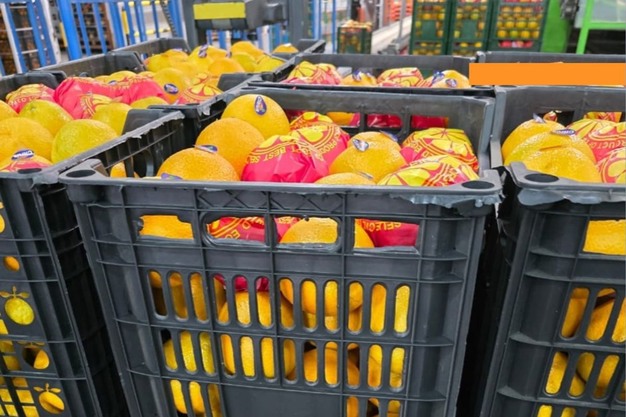
Lower production volumes are to be expected
The exporter states: "Overall, available evidence indicates that the 2024/25 season produced fewer exportable oranges than the previous season. Official reports and market analysts indicate a decline in export volumes due to lower production and increased demand from the local processing industry. On the ground, for the upcoming season, our field teams and packing houses are reporting a slightly lower harvest in many regions compared to the previous season, with fewer fruits in some orchards and growers planning to divert part of their harvest to processing."
"For us at Select Greens, this translates into more limited availability early in the season and higher prices for export-quality fruit. Despite these pressures, we were able to secure oranges for export throughout the last season. Exporters who planned early and secured their fruit achieved the best results," Howaida continues.
 © Youness Bensaid | FreshPlaza.com
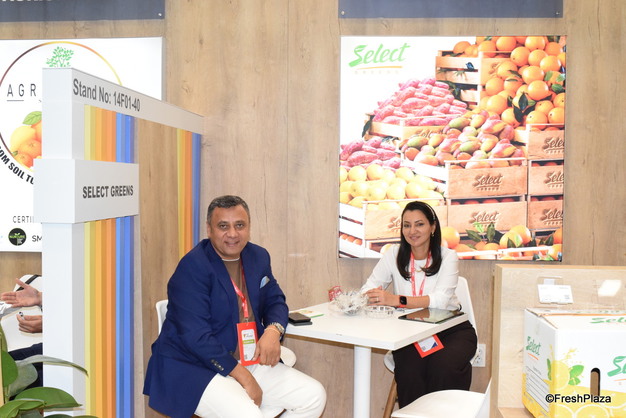
Large sizes continue to be in short supply
Last season was also marked by a predominance of small sizes, which further complicated exporters' commercial performance in several markets. Howaida believes that the problem will persist next season, but to a lesser extent. She explains: "The size distribution has improved in some regions compared to the worst of the previous season, but pressure on large sizes has remained strong. Last season's heat and other growth stresses reduced the proportion of large fruit in some orchards, contributing to market complaints about the lack of large sizes. This season, we are seeing a more balanced size distribution overall, particularly in the medium sizes, but the shortage of large sizes has not completely disappeared."
"The sizing outcome still depends on local factors: irrigation, age of the orchard, and exact flowering conditions. When growers have maintained good irrigation and pruning, sizes 72 to 88 are more readily available. When stressful conditions have occurred, the fruit tends to be smaller. Warehouses that invest in rigorous sorting and early selection in the fields reduce surprises for buyers and can meet precise market specifications. Based on what we are seeing, the small size issue is less severe than last season but remains a risk in some areas, and exporters need to communicate sizes in advance and be flexible in their programs," she continues.
 © Select Greens Export
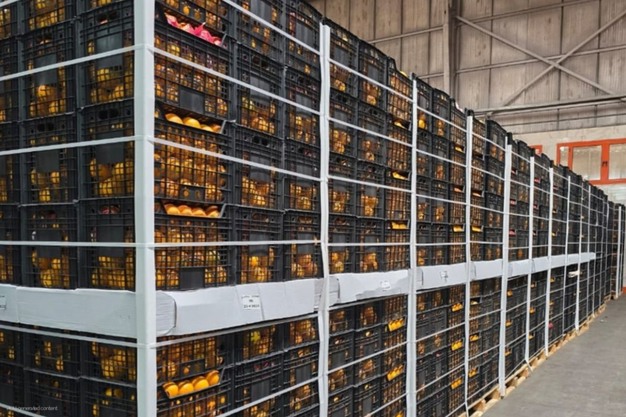
The influence of the local processing industry is expected to be milder
The rapid emergence of a large processing industry in Egypt has removed hundreds of thousands of tonnes of oranges from the market, including volumes removed from the export pool. The exporter comments: "The processing industry in Egypt has grown rapidly and remains an important factor. Last season, high juice prices and the emergence of new processing capacity diverted significant volumes from fresh fruit exports, which had a clear effect on the market. Numerous industry reports and notes confirm that new processing capacity has been developed and that processors have offered attractive prices that have changed the distribution of fruit."
However, according to Howaida, the effect of the processing industry will be milder next season. She adds, "For the coming season, factories will continue to exert their influence, but there are signs that their impact could be moderate. Juice prices have fallen from their peak, and some processors are balancing their purchases, so the complete diversion seen last year may not be repeated on the same scale. Exporters who secure fruit early through contracts and work closely with growers will be best positioned to secure fresh volumes for export. Concentrate factories, therefore, remain important buyers, but through proactive planning, exporters can reduce the risks they induce."
 © Select Greens Export
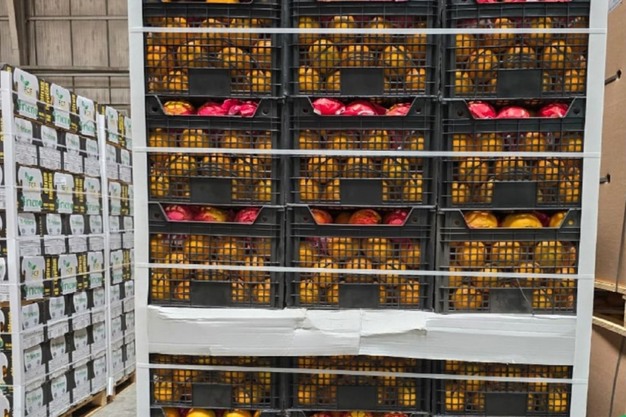
Early planning is key to the upcoming campaign's success
The exporter maintains that the success of the upcoming season depends on exporters' adaptability to the trio of volumes, sizes, and competition from orange juice factories in orange sourcing. She explains her recipe for a successful season: "We are cautiously optimistic. Based on our direct contact with growers and packhouses, and the market signals we follow, the crop availability looks stable enough to support healthy export programs from February through early summer, provided exporters and buyers coordinate early. To make the season a success, we see three practical needs:
- Pre-season planning and clear commitments. Buyers should share target volumes and sizes early so we can secure allocations, packing slots, and freight. At Select Greens, we already use our supply planning sheet for partners to lock in allocations.
- Improved sorting and size management at packing houses. Careful field selection, sorting, and grading avoid unexpected size shortfalls and reduce rejects at destination. We are investing in stronger packing house coordination this season.
- Flexible logistics and fair pricing. Given the competing demand from processors, exporters, and buyers must accept a practical price and shipping schedule. Scheduled shipments and using tight cold chain controls also reduce waste and protect value.
If these measures are followed, we anticipate a stable and commercially successful season for both exporters and buyers. At Select Greens, we focus on long-term partnerships, predictable supply, and transparent communication. That's how we plan to ensure our customers' success," Howaida concludes.
For more information:
Howaida Hassan
Select Greens Export
Tel: +201224608886
Email: [email protected]
www.selectgreens.eg