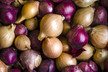
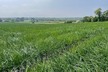
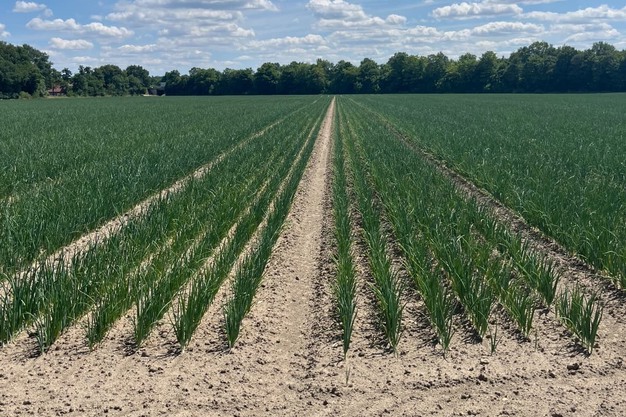
Compared to the previous year, the onion acreage in Germany's Lower Saxony more than doubled in 2024, from 2,000 to 4,500 hectares. Particularly in the western part of the state, near the Dutch border with Drenthe and Groningen, that mushroomed from 150 to no less than 1,700 hectares. Inquiries reveal that most of the onions grown in that region are exported to overseas markets, including Africa, via Dutch trading companies.
 © raiffeisenagrar
Ludger Deters says the German regional agricultural organization, Raiffeisenagrar Ankum (formerly Agravis), is one of the parties benefiting from this recent development. Ludger used to grow onions and now advises numerous growers on fertilization, crop protection, sowing, and harvesting. "We also help these mostly new growers by selling their product as brokers," he begins. Early sowing (as early as March) and predominantly favorable conditions, despite a brief heatwave in July, made for better yields and larger sizes than last year.
Good yields, large sizes
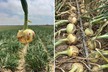
According to Ludger, by mid-September, roughly 80 to 85% of the seed onions had already been harvested. "Although we can now say it won't be a record harvest, yields are significantly better than last year. Then, we had to deal with downy mildew, resulting in quality problems and smaller onions. This year, we have larger onions."
"And yields are good to excellent, especially for the later varieties harvested in mid-September," says Ludger. Due to a lack of storage capacity, onions at many farms must now make way for potatoes, so most have to be brought to market early. Prices are around €0.09-0.12/kg, with no significant price changes expected until mid-November to December.
 © raiffeisenagrar
More exports to the Netherlands
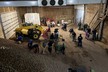
Parallel to the steady acreage expansion, Northern German onions are fast gaining export ground, Deter notes. "Everything within an hour's drive of the border is interesting in that respect. In concrete terms, that means only onions of outstanding quality have a chance of being sold in the Netherlands beyond Osnabrück." Both recognized trading companies and smaller players are now turning to German onions. Most of those ware onions are then offered on the global export market and thus travel all over the world.
 © raiffeisenagrar
No end to the growth curve
Ludger believes onion cultivation will keep growing in the west of Lower Saxony. "This year's potato market is under severe pressure due to considerable overproduction and rock-bottom prices. Prices for other arable crops, like grain and corn, are also generally below average. There are, thus, few alternatives from a grower's perspective, which is why many are returning to onion cultivation. For Raiffeisenagrar, it's essential to safeguard sales structures to keep onion exports attractive for growers in the future," he concludes.
For more information
Ludger Deters
Raiffeisenagrar Ankum
Tel.: +49 (0) 5462 74 20 0
[email protected]
www.raiffeisenagrar.de