Surprises are nothing unusual in Dutch onion trading. In mid-September, a ship on which JP Beemsterboer was to load 5,400 tons of onions was detained in Rotterdam. "A ship detained because of fuel? I've never seen that before. It just goes to show: Our industry is always exciting," says William Nannes from that company's purchasing department.
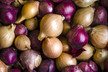
This year's product quality is, fortunately, excellent. "There are lots of good sizes, and few triplets or oversized specimens. It's all nicely in between." Problems - root rot, disease pressure, and water availability - in the province of Zeeland, though, have shifted cultivation to the north/east of the Netherlands and across the border to Germany. There, local growers offer competition, and reliable agreements are valued. Pink Crimsun onions grow there.
 © Beemsterboer
JP Beemsterboer, thus, keeps a sharp eye on quality. The company rarely uses internal scanning sorting machines, but claims are rare. "The most important thing is to buy good input quality. Sorting machines that only do external scans replace manual labor and increase capacity. And they do that very well. You can grade precisely by size and colorwise, and even divide your tare. You can still sell bare onions, but not rotten ones," William explains.
Although packaging facilities do their own exports, the huge capacity necessitates collaborations. "There's so much capacity in the Netherlands that even exporting packing plants want to work with us." That also applies to Crimsun onions. "We and Wiskerke market those in Europe. It's going very well. We're not active in European trade, but happily make an exception for this product," William adds.
 © Beemsterboer
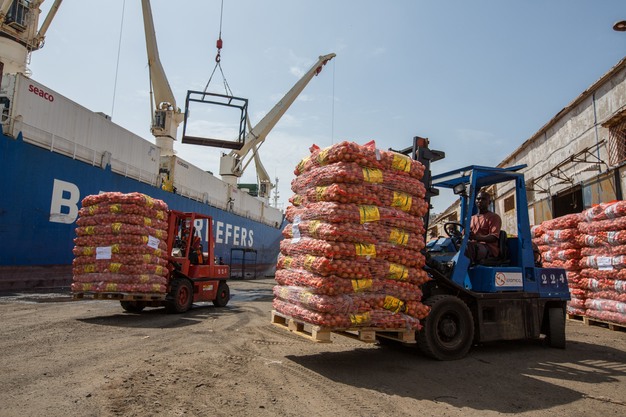
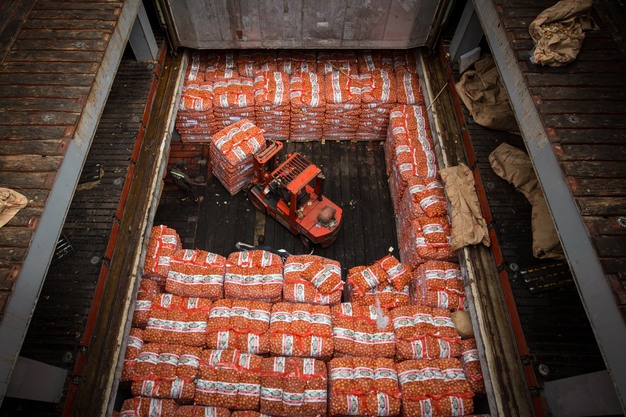
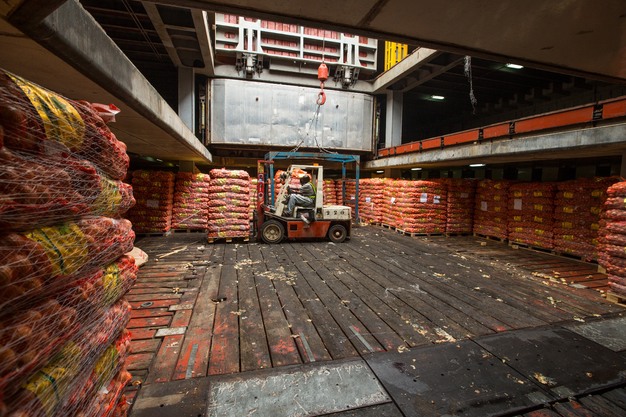
International competition (India, China, and Egypt) is fierce. Container route and the sea transport availability disruptions are the leading causes of the sometimes high prices for Dutch onions. That hinders export growth, particularly to the Far East. Nannes does, however, see expansion potential in West Africa. "We send a boat with 5,000 tons of onions to Senegal every ten days. In three months, that amounts to 55,000 tons, about 40% of our exports. And those exports will keep being necessary, given that region's population growth," he says.
World Bank figures show that last year, Senegal had a population of 18.5 million people; West Africa, a total of 468 million. With an expected annual population growth of just over two percent, that region should have 519 million inhabitants by 2030, and 573 million by 2035. That is 100 million+ more than today. About half of Dutch onion exports go to West Africa. "All those people must eat. And onions are a staple."
 © Beemsterboer
Countries in that part of the world are trying to cultivate more of their own onions. However, they still lack professionalism and have hardly any storage facilities. Their short-day onions have a shorter shelf life, too. "Someone who'd built nice storage facilities there saw their stock spoil after three days. That's a problem. I definitely see us continuing to export to West Africa in the coming years," William concludes.
 Voor meer informatie:
William Nannes
J.P. Beemsterboer Food Traders
+31 226396408
[email protected]
www.beemsterboer.nl