After a difficult start, the pear market now seems to be slowly but surely picking up. This is what Xavier Laduron, grower and sector committee representative for fruit at Fairebel, observes. "Many farms are still harvesting apples, which means cold storage space is scarce. As a result, pears are entering the market quickly, causing some pressure and lower prices. However, over the past two weeks, I've noticed a slight improvement."
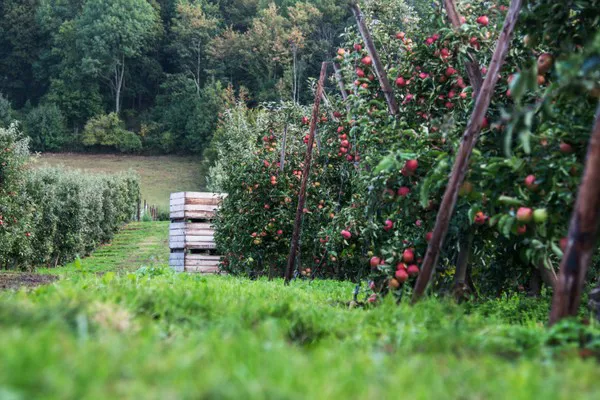
At the grower's farm in the Walloon town of Weerst, harvesting is now almost complete. "At our farm, all the pears have been picked, as have most of the apples. We're still working on the industrial apples and finishing the last round of Fuji picking," Xavier notes. "It was quite a challenge this year to get everything off the trees on time, especially with the pears. Because of the higher volumes, it wasn't easy to complete the harvest on schedule, but in the end, it went well. The picking team was strong and the weather was on our side, so we're satisfied with that."
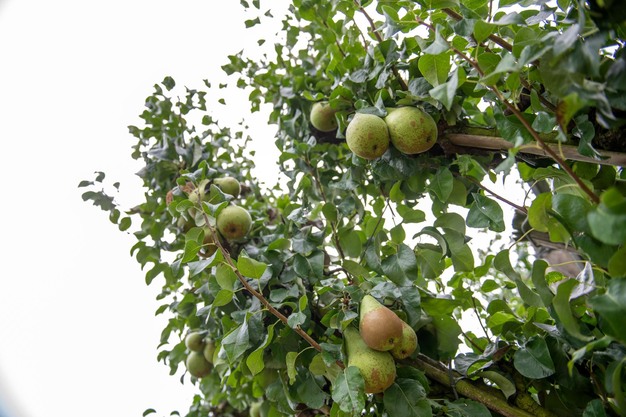
He is therefore very pleased with the quality. "The quality of the Conference pears this year is excellent. There's a lot of sugar, and we were able to harvest at the right time. The flavour is very good, so I'm very satisfied with both the quality and the course of the harvest."
Continuing upward trend
Still, the market has yet to really take off. "At the moment, it's still very busy. Right after the harvest, there's always a lot of supply, which happens every year. However, in the last two weeks, I've seen a slight improvement, which is a positive sign. I think prices will recover further in the coming period. With this year's European pear harvest, we should normally be able to achieve similar prices to last year, although of course nobody knows for sure."
 © Fairebel
Looking ahead, however, he warns against overenthusiastic planting in the Netherlands and Belgium. "In the short term, not much will change. Italy, for example, will never again reach the former volumes of 600 to 700 thousand tons, because many orchards have been uprooted. As long as we don't start replanting on a large scale, the coming years will remain stable. But we must be careful: Don't just plant additional hectares. If every grower plants 20 per cent more, it won't help anyone. There is enough supply at the moment; we need to stay structured and not double production. Staying calm is key."
European apple crop not bigger
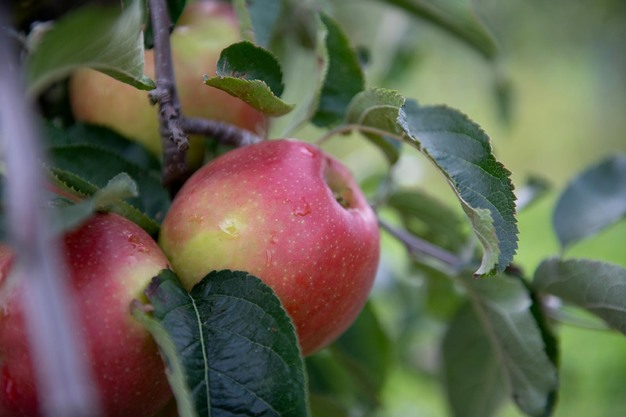
As for apples, Xavier sees a similar situation. "August forecasts showed that the harvest in Europe is no larger than last year, so things should be fine. In Belgium and the Netherlands, there's been slightly more picking than expected, so cold stores and storage rooms are full. This is temporarily putting pressure on the market, but I expect improvement in the coming weeks. In the rest of Europe, supply isn't as high as anticipated. Poland has about 3.2 million tons, and in Turkey, the harvest is very poor, which could support the market. Whether we'll see the same prices as last year is uncertain. Last year's harvest was smaller, but higher prices are essential. No company can survive on the prices of ten years ago. Costs have risen enormously, so we have to stay realistic: a business that can't cover its costs will disappear."
 © Fairebel
Guarantee needed for new varieties
Is this why the company is considering new varieties? "That's always interesting, and we're certainly open to it. But the biggest problem is that well-known varieties such as Jonagold in Belgium and Elstar in the Netherlands are deeply established. Without a strong marketing plan—and I'm talking millions of euros a year—it's impossible to successfully introduce a new variety. Without a clear guarantee or marketing support, there's little point in planting. After all, new planting involves major investment: expensive trees, high planting costs, altogether a lot of money. The yield price must also be right."
"I believe there are opportunities, especially with consumers willing to pay a bit more for sustainable products. But the variety must be recognised and well promoted. Without solid marketing, it won't succeed. We're certainly willing to plant new varieties, but we also need certainty. As a farm manager, I have to keep the business running, and I can only do that if there's sufficient assurance."
For more information:
Xavier L aduron
Fairebel
+32 (0) 80 44 77 26
[email protected]
www.fairebel.be