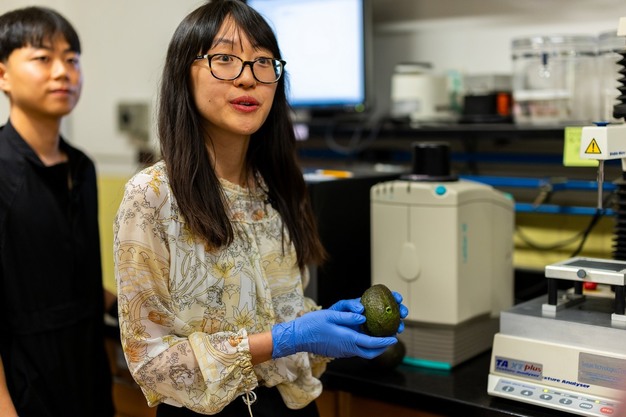
Researchers from Oregon State University and Florida State University have developed a smartphone-based artificial intelligence (AI) system capable of predicting the ripeness and internal quality of avocados.
"Avocados are among the most wasted fruits globally due to overripeness," said Luyao Ma, assistant professor at Oregon State University. "Our goal was to create a tool that helps consumers and retailers make smarter decisions about when to use or sell avocados."
 © Oregon State University
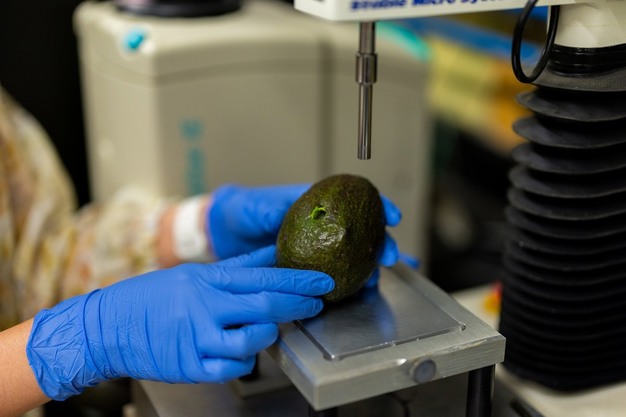
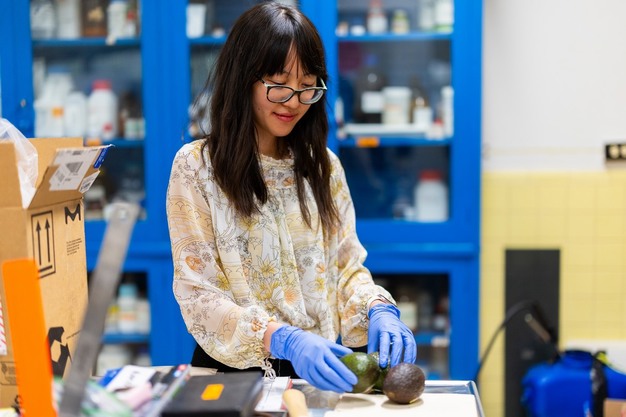
The research team trained AI models using more than 1,400 iPhone images of Hass avocados. The system predicted firmness, an indicator of ripeness, with 92% accuracy and internal quality (fresh versus rotten) with over 84% accuracy. The researchers expect that the system's performance could improve as more images are added to the dataset.
The team noted that the same approach could be adapted to assess the quality of other perishable food items. Future developments may allow consumers to use the system to determine the best time to eat an avocado, reducing household food waste.
 © Oregon State University
Potential applications also exist in the supply chain. In processing or distribution facilities, the technology could help sort and grade fruit according to ripeness. For instance, batches detected as more ripe could be directed to nearby retailers, while less ripe fruit could be sent to more distant markets. Retailers could use similar assessments to manage shelf rotation and reduce spoilage.
The study builds on previous research that used imaging and machine learning to evaluate food quality. Earlier studies depended on manually selected features and conventional algorithms, which limited prediction accuracy. "To overcome these limitations, we used deep learning approaches that automatically capture a broader range of information, including shape, texture, and spatial patterns to enhance the accuracy and robustness of avocado quality predictions," said In-Hwan Lee, a doctoral student collaborating on the project.
 © Oregon State University
The researchers said the study also contributes to broader food waste reduction efforts. Roughly 30% of global food production is lost or wasted annually. In the U.S., the Department of Agriculture and the Environmental Protection Agency have set a national goal to reduce food waste by 50% by 2030.
"Avocados are just the beginning," said Ma. "This technology could be applied more broadly to help consumers, retailers, and distributors make better decisions and reduce waste."
The findings were published in Current Research in Food Science. Co-author Zhengao Lee of Florida State University collaborated with Ma and Lee from Oregon State University's Department of Food Science and Technology. Ma is also affiliated with the Department of Biological and Ecological Engineering.
For more information:
Sean Nealon
Oregon State University
Tel: +1 541 737 0787
Email: [email protected]
www.news.oregonstate.edu