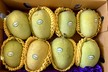
"Despite its sweetness and health benefits, the vast majority of consumers have never tasted a yellow kiwi. Have you ever considered that?" The numbers tell a surprising story,” says Fabio Zanesco, CEO of the European KiKoKà Consortium, as he presented data. "In Italy, market penetration is around 15-16%, which is still only about one-third that of green kiwis. In practice, 85 out of 100 consumers have not yet tried yellow kiwis or do not purchase them."
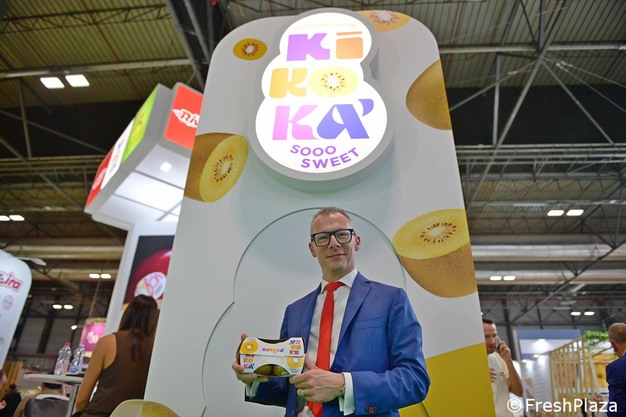 © Cristiano Riciputi | FreshPlaza.com
Fabio Zanesco, CEO of the European Consortium KiKoKà
"This is not a sign of weakness," Zanesco points out. "Rather, it's a glimpse into a vast pool of potential customers." The yellow kiwi has several strengths that make it appealing in the marketplace. Almost everyone likes its taste, and it is perceived as healthy and wholesome thanks to its high vitamin C content. It appeals to people of all ages, from children to seniors, and it aligns with the growing emphasis on healthy living and nutrition among consumers.
The potential is not limited to our country. In Germany, for example, only about 50 percent of the population consumes kiwi fruit, regardless of color. Just imagine what could happen if even a fraction of that market started regularly consuming yellow kiwis. "It is our duty to raise awareness of it, promote appreciation for it, and guarantee an appropriate level of quality," says Zanesco.
In this scenario, confrontation between operators is not the solution; collaborating to grow the entire market is. "Our goal must always be to make the cake bigger, not fight over how to divide the slices," explains the CEO of KiKoKà. Direct competition can create tension, slow product turnover, and reduce the perceived value in the eyes of consumers. In contrast, a collaborative approach expands the customer base and helps fill the many gaps that still exist in today’s market. According to Zanesco, the future of the sector depends on players across the supply chain working together toward a shared goal of boosting consumption and transforming this emerging market into a stable, prosperous one for all.
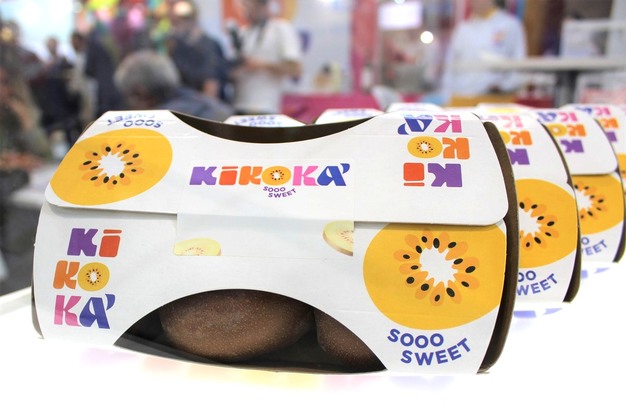
A growing commercial campaign between quality and new markets
The European KiKoKà Consortium is gearing up for a prolific production and sales season, with a meticulously planned calendar that will ensure the continuity and value of the product. The campaign is about to enter its full operational phase. "The fruit is being harvested this week," Zanesco explains, "and the first marketing phase will be in November and December. We will have limited volumes of our early variety and those batches of fruit that, due to technical characteristics, are not intended for long-term storage. However, from the end of February to the end of April, the heart of the campaign will begin with the largest volumes and the greatest interest in European distribution."
The most favorable market window in terms of demand and valuation is in the spring. "During that period," Zanesco expounds, "the availability of yellow kiwi fruit on the European market is remarkably limited. This creates an ideal opportunity for retailers, who can offer a quality product during a period of scarcity, and for producers, who can receive higher valuations."
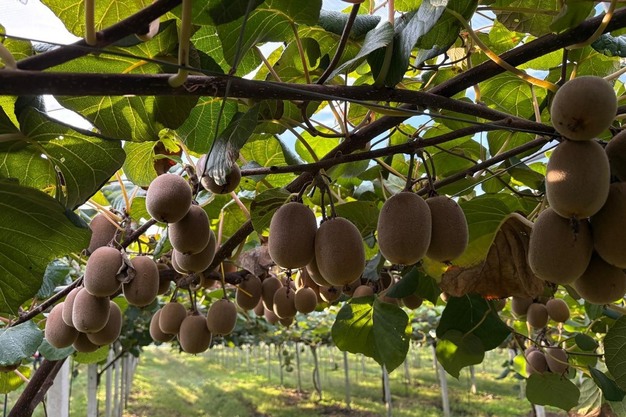
The Consortium's primary variety, AC 501 022, accounts for approximately 90 percent of the plantings and is characterized by a robust fibrous structure. This makes it particularly suitable for long-term storage. It also ensures stable, consistent trade flows through spring. "It's different from the varieties already on the market," Zanesco points out. "It requires us to develop specific post-harvest and cold storage protocols. At the same time, it offers remarkable firmness and quality for consumption."
Both varieties are tolerant of dieback, also known as Kiwifruit Vine Decline Syndrome (KVDS), and PSA.
 © KIKOKA'
Production estimates for this year are around 4,500 to 4,600 tons, with large-scale organized distribution (GDO) serving as the primary outlet. "This does not mean," Zanesco points out, "that we are neglecting wholesale markets. In Italy, Spain, and the Benelux countries, for example, we will rely on selected partners."
In addition to the harvest, the Consortium is developing a quality system to accompany the fruit throughout the supply chain, from the field to cold storage and on to consumption. Zanesco emphasizes, "Our goal is to develop preservation and post-storage protocols that enhance the variety's characteristics. Successful harvesting is not enough; knowledge of batch management, destination, and shipment timing is also necessary. That is why we also want to develop an eating guide that is useful for retailers and consumers alike and indicates the optimal time for consumption."
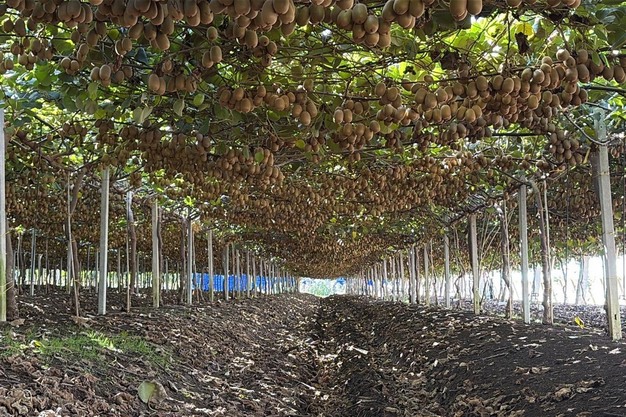
In terms of production, over 700 hectares are already in the field, including approximately 400 hectares in Italy, 300 hectares in Greece, and the remainder in France and the Iberian Peninsula. The inaugural commercial campaign in France is set to begin with the 2026 harvest season. The strategy is to strengthen the connection with local markets. Zanesco explains, "The French product will have France as its primary outlet, and the Iberian product will remain on the Iberian Peninsula as a priority. Meanwhile, the Consortium will oversee all other flows, including goods from Italy and Greece, and all operations from all locations."
 © KIKOKA'
The growth isn't limited to Europe; it's worldwide. Four sub-licenses have already been signed in Chile with Frusan, Garces Fruit, Rio Blanco, and Gesex for a total of 600 hectares. Projects are also being developed in South Africa and Australia. These southern hemisphere plants will extend the commercial calendar by linking the long-life European product with fresh produce harvested overseas, which will be available starting in mid-May. The Consortium will oversee imported goods.
The project also includes an increased organic quota, with the producers' organization OP Armonia currently being the sole sub-licensee in Italy. "The will to develop this reference is there," says Zanesco, "even if the market remains partially different from the conventional one. Currently, we manage both lines in parallel with differentiated packaging to offer consumers the widest possible range. However, we want to provide a complete service to as many customers as possible, so we carefully follow every expression of interest."
KiKoKà conquered Fruit Attraction with its vibrant yellow energy
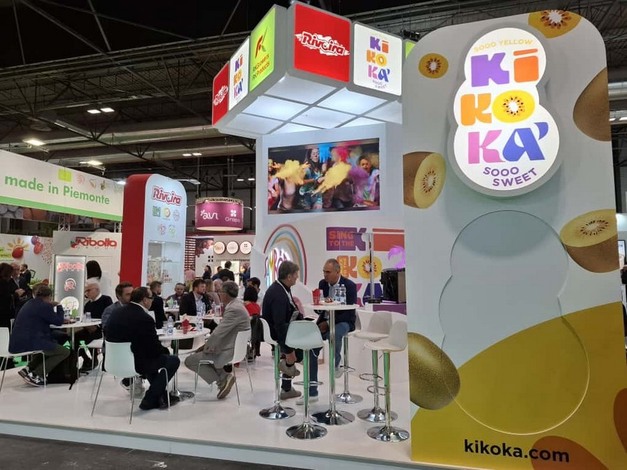
"The fair was an extraordinary opportunity for our Consortium to strengthen ties with professionals in the fruit and vegetable sector, share our brand philosophy, and initiate direct dialogue with distributors and retailers," said Zanesco. The event also provided an opportunity to introduce KiKoKà's new technical director, Mirco Stefanati. Stefanati is dedicated to establishing a quality system that aligns with the expectations of customers and suppliers.
 © KIKOKA'
In Madrid, Andrea Peviani, president of the Consortium, emphasized the critical importance of maintaining an unwavering commitment to quality. The market must be offered a premium product that will sustain consumption and increase producers' value. This is an essential condition for achieving that goal. Marco Rivoira, the CEO of the Piemonte-based group of the same name and Master Licensee, shared this optimism. He highlighted the results already achieved and the growth prospects for the chain. Gerhard Dichgans, the global project manager, confirmed the plants' strengthened expansion plans worldwide.
For more information:
www.kikoka.com