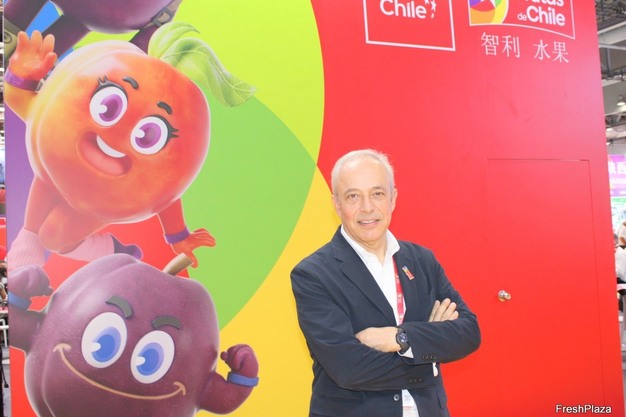
Over the last five years, global kiwifruit consumption has shown sustained growth. According to Carlos Cruzat, president of the Chilean Kiwi Committee, this trend is largely due to a change in eating habits, especially among young consumers, who are increasingly health-conscious. Kiwifruit, rich in vitamin C and with digestive benefits, has gained prominence after the pandemic, consolidating its position as a highly valued functional food.
 © Diana Sajami | FreshPlaza.com
Chile, one of the main exporters in the Southern Hemisphere, aims to ship 140,000 tons of kiwifruit in 2025, down from 230,000 tons a decade ago due to the reduction in the acreage because of the impact of PES and Moria. However, there are still opportunities in the international market, since in Europe -traditionally one of the most important markets- production has also been affected by these diseases, which has resulted in a lower global supply and has opened up space for Chilean fruit.
In this context, the Chilean Kiwi Committee has intensified its positioning strategy in India, Brazil, Mexico, and the United States, countries where per capita consumption is still low, with fewer than 0.5 kilos per person per year, compared to the 2 to 2.5 kilos recorded in Europe. The focus of those campaigns is on digital actions, collaborations with influencers, and gastronomic content, seeking to bring the product closer to consumers who haven't incorporated it yet into their regular diet.
The results confirm the potential for growth. "In Brazil, Chilean kiwifruit exports have increased from 6,000 tons to 18,000 tons in recent years. In India, the jump has been significant, from barely 800 tons a decade ago to 15,000 tons today. For its part, the United States has doubled the value of its purchases, going from 200 million dollars to 400 million dollars a year in just five years," says Cruzat.
Despite this progress, the industry faces significant technical challenges. One of the main ones is managing to preserve the product in optimum conditions for six to seven months, as that guarantees a constant supply of Southern Hemisphere fruit before production starts in the Northern Hemisphere. "It is essential to produce healthier and more resilient fruit to ensure that quality stays the same from the beginning to the end of the season," says Cruzat. In addition to this, there is a need to optimize logistics and avoid stock breakages that could affect the supply of kiwis in international markets.
"Southeast Asia is also a target for expansion. Currently, a large part of the supply in this region comes from New Zealand, but volumes are small. Chile is looking to consolidate its presence in these destinations, where the potential for growth is considerable," he says.
For more information:
Carlos Cruzat
Frutas de Chile
Tel.: +56 9 9825 4204
[email protected]
www.frutasdechile.cl