The Italian pear industry is undergoing a period of profound change. Northern Italy's traditionally specialized areas are experiencing a decline in supply due to pressing phytosanitary issues. Meanwhile, southern Italy is emerging as a new hub for development and innovation, attracting significant investments thanks to favorable soil and climate conditions, as well as the adoption of advanced cultivation techniques.
 © Vitelli Vito Domenico
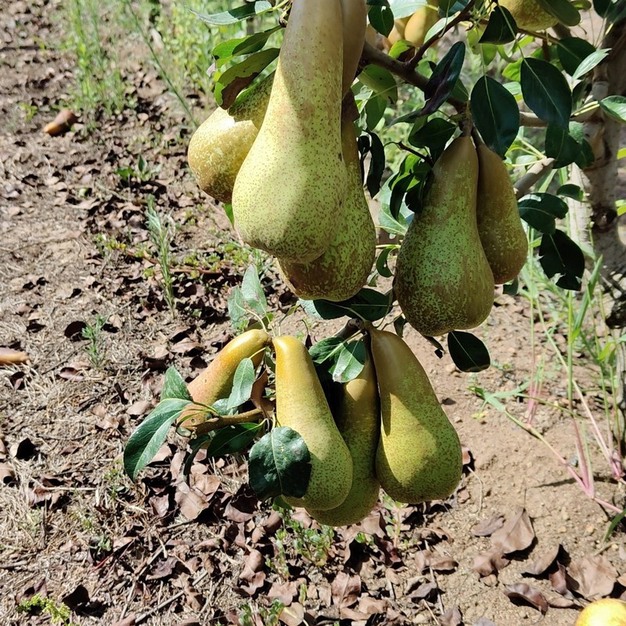
As agronomist Vito Vitelli points out, "The supply of Italian pears has drastically decreased due to adverse phytosanitary conditions in the north. Brown spot and the Asian fruit bug are the two main pests that have thrived in these highly cultivated areas. While these problems are spreading to central and southern Italy, with cases reported in the area of Caserta (Campania) and the region of Sicily, where bacterial diseases are also reducing yields, southern Italy offers a less favorable environment for these pests. The southern regions offer ideal soil-climate conditions that include prolonged periods of drought and low humidity. These conditions make it easier for pest management. Moreover, water, a precious resource, is managed efficiently through localized distribution systems."
 © Vitelli Vito Domenico
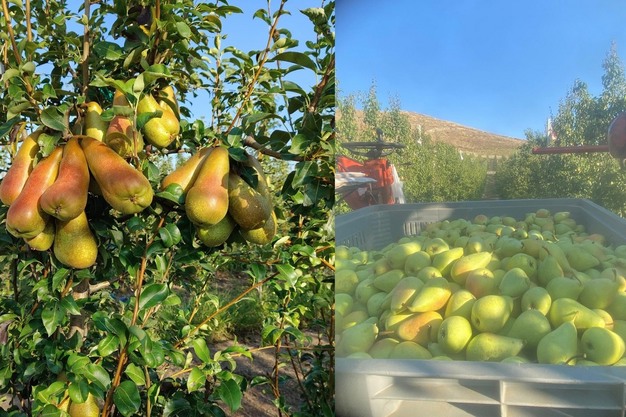
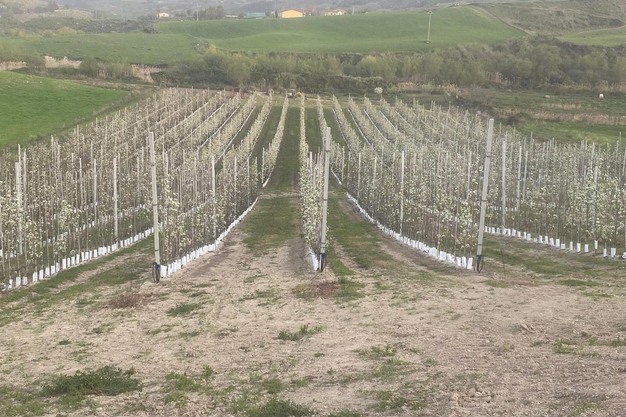
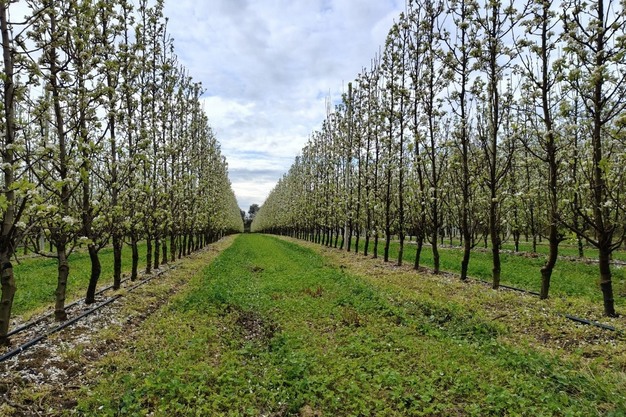
Innovative cultivation techniques also play a crucial role in expanding pear cultivation southward. High-density, single-axis planting, which involves planting over 4,000 plants per hectare, is an improvement over the systems currently used in the north. "Pest management is easier because it involves managing a wall rather than a volume form of farming," the agronomist points out. This efficiency also applies to how they use their resources. They can absorb up to 95% of the light, manage pests effectively, and use fertilizer efficiently. The advantages are enormous, as the plants begin producing as early as the third year."
Producers have shared their experiences with this method, demonstrating its tangible benefits in terms of yield, quality, and price from the first year of production onward. These advantages are bolstered by ample local water resources and opportunities for expansion.
 © Vitelli Vito Domenico
"Considering it's our first year of production, it's been a satisfying year," says Fabio Di Marco from Castronovo di Sicilia (Palermo). "We harvested 26 tons of Abate pears from one hectare. The fruit was a nice color and size, and we sold it to a local trader for 1.20 €/kg. There are no water shortage problems on the farm, and we have considered planting in other areas, but my primary job complicates matters."
Antonio and Rosario Cipolletta of the agricultural company New Apple, based in the Campania region, say, "Our harvest, which began at the end of August, has already been completed. The harvesting process took about a week, precisely because the quantities are small. The limited availability due to phytosanitary issues allows for higher prices. The fruit, which ranged in size from 250 to 400 grams, was sold to a local cooperative at prices from €1.20 to €1.30 per kilogram. Harvest volumes exceeded 25 tons per hectare. Management costs are not so high (€6,000–€8,000 per hectare for harvesting, pruning, treatments, and irrigation)."
 © Vitelli Vito Domenico
These specific examples show the clear advantages in terms of yield, quality, and price from the very beginning of the production process. These benefits are supported by ample local water availability and favorable expansion prospects.
Roof structures mitigate the risks posed by adverse climatic events, such as heavy rain, strong winds, and hail.
From an economic standpoint, the sector offers substantial incentives. High yields of over 30,000 kg per hectare, coupled with entry into production as early as the third year, ensure the rapid amortization of investment costs.
Therefore, pear cultivation offers significant and tangible opportunities in southern Italy, presenting a prospect for a promising future in the industry.
For more information:
Agronomist Vito Vitelli
+39 3392511629
[email protected]
vitovitelli.blogspot.com