The Spanish Rojo Brillante kaki harvest will start in September, and, for now, it is expected to be good in terms of both volume and quality, as no adverse weather conditions have been recorded so far. The acreage has been significantly reduced over the last five years and continues to fall as the product is increasingly left in the hands of specialists.
"At the moment, we are expecting a normal kaki production in terms of volume in Spain, with the potential to reach around 340,000 tons", says Pascual Prats, president of the Spanish Kaki Association, although he warns that "there are still many months to go."
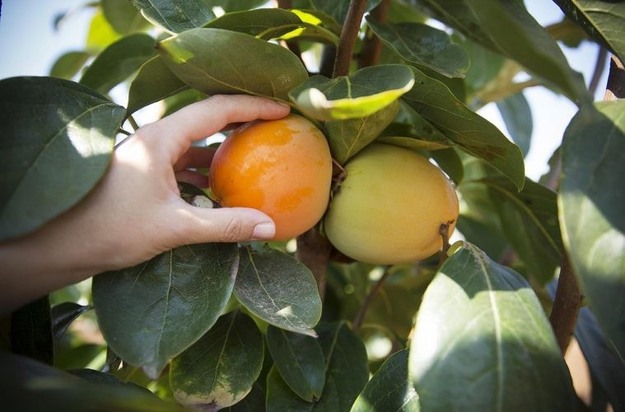 © Aekaki
"Other than some localized hail damage, weather conditions have been good for the crop so far. The abundant rainfall in spring has helped the trees sprout vigorously and healthily, which will result in large calibers and good quality," he says.
It is worth recalling that, in the last two seasons, volumes have been significantly reduced. In the previous season, the total production amounted to around 240,000 tons. Storms and floods hit the province of Valencia at the end of October and caused the direct and indirect loss of a significant part of the harvest, especially in La Ribera del Xúquer, which accounts for most of the production.
Purchases at the source, which this year started in May, are very lively, according to Prats, and reasonable prices are being paid. At the moment, average prices range between 0.50 and 0.65 euros per kilo, which is between 15 and 20 cents above last year's average. "Production costs have risen due to the proliferation of pests as a consequence of European restrictions on the use of active materials to combat them, which is why this price increase is necessary", he says.
The kaki acreage continues to fall. In the last six years, it has been reduced by around 20%, from 18,500 hectares to around 14,000 hectares, and according to the president of the Spanish Kaki Association, this trend is expected to continue. "Pest management has become one of the biggest challenges for growers, and in some areas, it has become very difficult to control them. Those who are not specialists in kaki cultivation have been giving up on it, and it seems that this will continue to happen."
 For more information:
Spanish Kaki Association
Calle Hernán Cortés, 4, 1.
46004 Valencia, Spain
Tel.: (+34) 902 920 515
[email protected]
www.aekaki.es