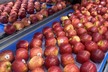
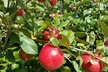
Michigan's bearing apple acreage has expanded since 2017, with new plantings established in both high-density trellised orchards and medium-density semidwarf orchards. A recent study developed enterprise budgets for both systems.
Results showed that while all plantings indicated profitability under current conditions, returns are highly dependent on market prices. Even small gluts from overproduction could push prices below production costs.
Semidwarf systems were found to produce apples at a 10 to 12 percent lower cost per bushel compared to high-density orchards at a given yield. Their advantage lies in lower establishment costs, as they do not require trellis systems. Planting costs for semidwarf orchards were estimated at US$7,676 per acre (US$18,968/ha).

High-density systems, with establishment costs of US$26,578 per acre (US$65,654/ha), showed higher overall profitability due to earlier and higher yields, which offset the higher upfront investment. Very high-density plantings of 1,800 to 2,000 trees per acre (4,447–4,942 trees/ha) were also considered viable, as an additional 2 bins per acre (4.94 bins/ha) per year or earlier production could cover the added costs.
Climate analysis indicated that high-density orchards are more carbon efficient than semidwarf systems, since they produce larger volumes of fruit with similar carbon inputs. Both orchard systems were more carbon efficient than row cropping.
The study analyzed three variety types: high-value (Honeycrisp, Tango), mid-value (Gala, Fuji, other fresh market apples), and processing apples. Operating costs for processing apples were about 19 percent lower than for fresh apples. Variable harvest costs, excluding trucking, were estimated at US$71 per bin for high-value apples, US$45 per bin for mid-value, and US$35 per bin for processing.
For high-density orchards, the break-even dock price for Honeycrisp was US$211 per bin at 1,000 bushels per acre (62.7 t/ha). For Gala and Fuji, the break-even price was US$163 per bin at 1,200 bushels per acre (75.2 t/ha). For semidwarf orchards, the Honeycrisp break-even was US$235 per bin at 700 bushels per acre (43.9 t/ha), and for Gala and Fuji, US$175 per bin at 900 bushels per acre (56.4 t/ha). These calculations included a US$5 trucking cost from farm to packer and were based on delivered volumes to packers rather than field yields.
To view the full report, click here.
For more information:
Chris Bardenhagen
Michigan State University
Tel: +1 517 355 1855
Email: [email protected]
www.canr.msu.edu