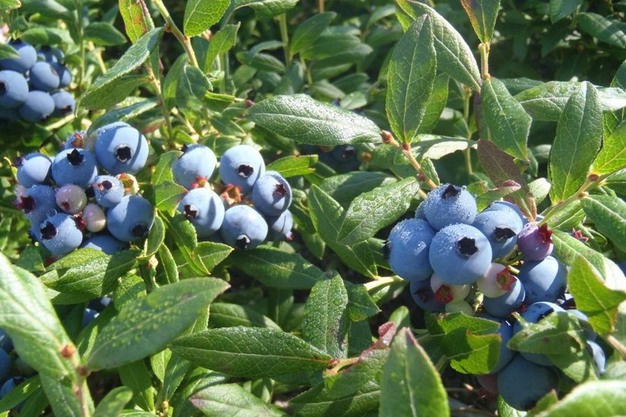
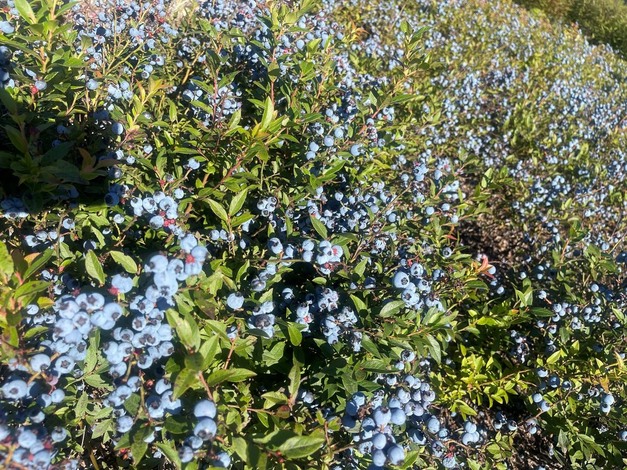
Harvest of Canadian wild blueberries is in full swing, but the season is unfolding differently than expected. "About a month ago, we were anticipating a normal crop of about 150,000 tonnes for all our growing regions combined," says Jean-Pierre Senneville, President/CEO of Quebec Wild Blueberries. However, Mother Nature had different plans, and a combination of dry weather and heat changed the landscape and is expected to significantly bring down production volumes.
 © Quebec Wild Blueberries
Production volume adjusted downward
All five production regions, including New Brunswick, Nova Scotia, Prince Edward Island, Quebec, and Maine (U.S.) have been impacted by very dry weather as well as a week of intense heat. "It's really rare for this weather pattern to impact all five regions and something I've never seen in my career," admitted Senneville. In the Maritime provinces, wildfires surrounding the blueberry fields caused harvest to be temporarily halted. While the temperatures have come back to normal levels, production volumes have been adjusted and are now estimated at 100,000 tonnes.
For the past seven to 10 years, Quebec has been the largest growing province of wild blueberries and out of all growing regions it is in the best shape this season. The organization Quebec Wild Blueberries specializes in bringing all-natural wild blueberries to market, grown in the boreal forest. With consumers becoming increasingly interested in organic wild blueberries, many growers are transitioning to fully certified organic, a process that takes three years.
Strong demand
Demand is quite impressive, which is partly driven by shorter cherry, raspberry, black current, and apricot crops, especially in Europe. "We were hoping our wild blueberries could ease some of the pain," shared Senneville. Due to the uncertainty around volumes, all growers are very careful now and will first complete harvest before they start selling their product. With harvest expecting to wrap up in the first or second week of September, Senneville believes most players will be in the market in September.
 © Quebec Wild Blueberries
Global reach
Wild blueberries are mainly sold in frozen format (IQF) or as concentrated juice. "Demand for the number one antioxidant fruit from North America is very high all over the globe," commented Senneville. It's very well balanced with about one third of volume staying in North America, one third making its way over to Europe and the remaining one third ending up in Asia. "Interest is big and during the harvest season, many delegations come out to visit the wild blueberry fields and processing facilities." This week alone, four client groups from Japan will be visiting.
 For more information:
Jean-Pierre Senneville
Quebec Wild Blueberries
Tel: +1 418-679-6348
[email protected]
www.wild-blueberries.com