In just a few years, sweet potatoes have become a favourite among sports enthusiasts and a staple of healthy recipes featured across social media. Demand continues to grow steadily. Although the market is still largely dominated by imports, Fruidor Terroirs took a bold step ten years ago by deciding to develop this crop locally, in partnership with two producers in southwestern France. The initiative has since joined the Carrefour Quality Chain (Filière Qualité Carrefour, or FQC). Stéphane Hoffmann, International Sales Director at Fruidor Terroirs, discusses the challenges of structuring a fast-growing sector and the benefits of FQC certification for the product. 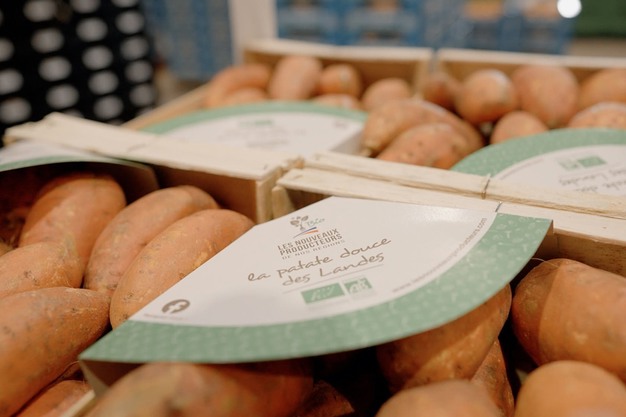 © Fruidor Terroirs
1,400-tonne harvest forecast for next season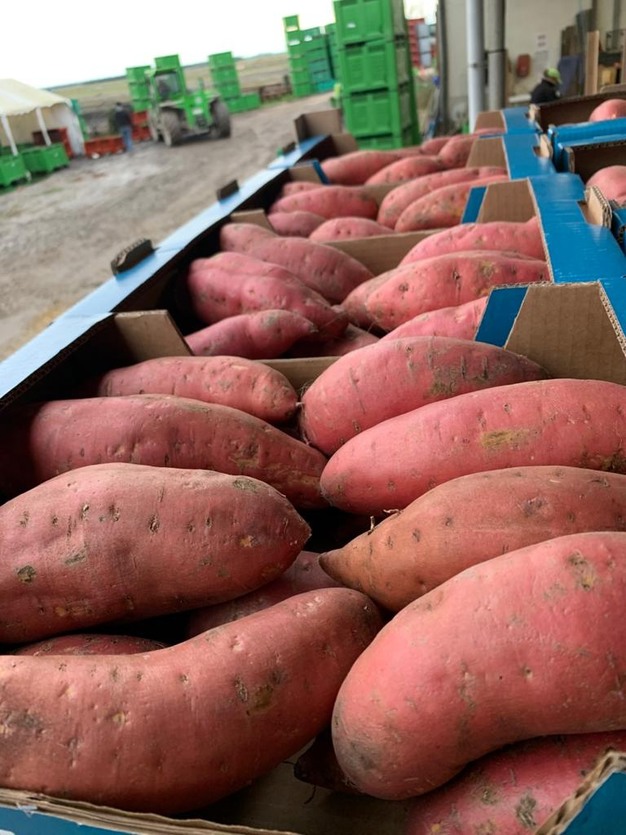 © Fruidor TerroirsFruidor Terroirs launched its sweet potato production in 2015, in partnership with two growers, Benoît Labouille and Antoine Proffit, in southwestern France. "At the time, we realised that all sweet potatoes sold in France were imported. So we wanted to develop this crop locally," explains Stéphane Hoffmann. Trials were conducted to identify varieties suitable for the Landes de Gascogne terroir, along with technical support for cultivation practices such as manual planting, weeding, harvesting, curing, and packaging. "To scale up, we've also streamlined and mechanised part of the production process." From its modest beginnings ten years ago, the operation has expanded to cover 60 hectares, with a forecast yield of 1,400 tonnes for the upcoming season.
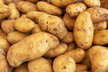
The main variety grown is the orange-fleshed 'Beauregard', visible on the right in the photo. Trials are also underway to diversify into varieties with different skin and flesh colours, especially for the foodservice market.
Fruidor Terroirs aims to go further by building a true local industry. "To do that, we need to structure the supply chain and secure a foothold in the supermarket segment," says Hoffmann. One of the particular challenges in France is that sweet potato production is still largely carried out by small-scale farms that sell directly to consumers.
Promoting French-grown sweet potatoes amid strong Egyptian competition 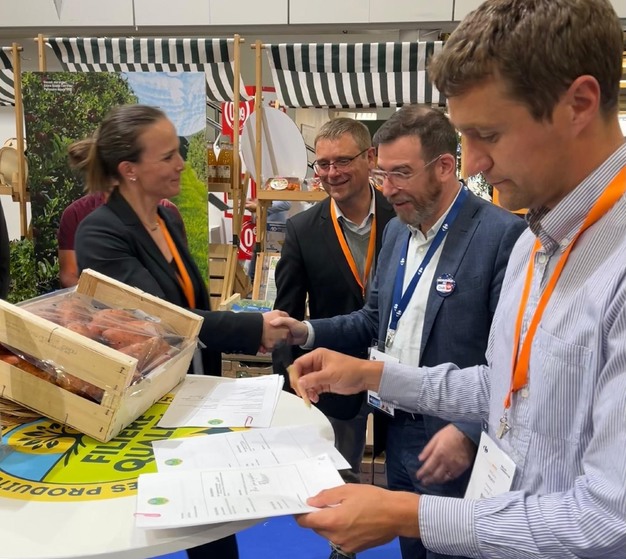 © Fruidor TerroirsFor Stéphane Hoffmann, the FQC partnership between Carrefour, Fruidor Terroirs, and its partner growers represents significant recognition. "The FQC not only showcases the product—it also highlights the know-how of the sector. It helps support and improve the visibility of French-grown sweet potatoes and promotes them against competing origins." French sweet potatoes face stiff competition from the USA, Spain, and, in recent years, especially Egypt. "Last year, Egyptian sweet potatoes were heavily promoted by retailers at the same time the French product was hitting the shelves," notes Hoffmann. "But our production costs are much higher—French sweet potatoes are sold at an average price of €2.50 to €2.90 per kilo, compared to €0.90 to €1.99 for Egyptian products. Our yields are also two to three times lower per hectare." To maintain the viability of the French sector, awareness and outreach are essential. "We need to communicate with consumers, and the FQC can help us do just that. We must showcase the advantages of French production: it's local and, above all, more sustainable."
 © Fruidor Terroirs
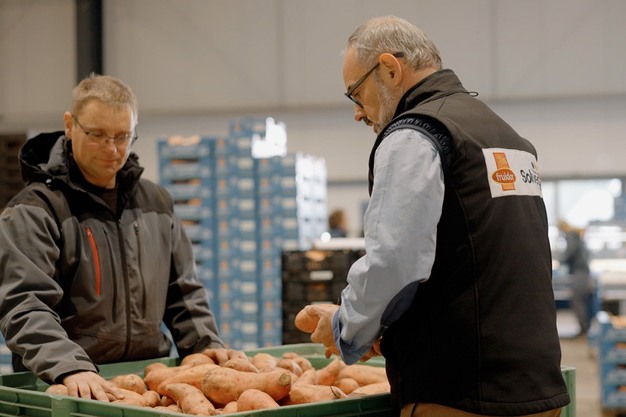
Benoît Labouille, producer, and Stéphane Hoffmann, International Sales Director, Fruidor Terroirs
Managing planting material and capitalising on off-grade produce
"The number one challenge is to continue growing volumes," says Hoffmann. A third producer is set to join the initiative in 2026. "Our goal is to stabilise or even reduce production costs while improving yields, and of course, ensure a fair return to secure the sector's future." Extending the marketing season—currently running from late August to the end of April—is also under consideration, "provided it doesn't come at the producers' expense, as rising energy costs have significantly increased storage expenses." Another key issue is securing a reliable supply of planting material. "Sweet potatoes are a tropical crop and can't be grown just anywhere—today, the main producers are Portugal, Spain, and North Africa. But the seed industry is vulnerable to climate-related issues, and some operators are pulling out." To address this, Fruidor Terroirs is currently testing the procurement of planting material from other sources. Finally, there is the matter of utilising off-grade sweet potatoes. "This crop generates a high proportion of seconds, so developing viable industrial outlets is essential."