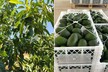
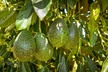
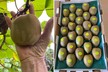
In central Albania, veteran agronomist Irakli Shkoza has implemented a strategic shift in crop cultivation due to the changing climate. Since 2019, the small farm near the Adriatic Sea has seen Shkoza importing seeds from Africa and America, leveraging the rising temperatures for agricultural diversification. The warm climate has facilitated the adaptation of these exotic plants.
The Divjaka region, historically known as the granary of Albania, is positioned between farmland and the sea, contributing to local and export markets with its vegetable and watermelon production. However, climate-related challenges, including rising temperatures and labor shortages, affect the agricultural sector in Albania, a nation with a decreasing population of 2.7 million people.
Shkoza points out that exotic fruits require less water and upkeep, leading to lower production costs. The Mediterranean climate, previously defined by hot summers and mild winters, has evolved due to global warming. A 2022 study forecasts an increase in average temperatures between 3.5 and 8.8 degrees Celsius in the Western Balkans by the century's end if greenhouse gas emissions persist.
Research from the Leibniz Institute of Agricultural Development in Transition Economies indicates potential crop yield damage in Albania, particularly during high-temperature summer months. Despite this, Shkoza believes adaptation can turn challenges into opportunities for Albanian agriculture.
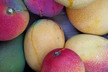
The agronomist emphasizes the potential for Albanian farmers to profit by cultivating exotic fruits, which are in demand in Europe but mainly imported from distant regions like Latin America and Australia. Agronomist Altin Hila highlights that sourcing from Albania could reduce costs and improve freshness in the European markets, exemplified by papayas, which often ripen artificially during import.
Vasil Nikolovski, a production manager from North Macedonia, notes that Albanian-grown exotic fruits could naturally ripen on the trees. Shkoza's exports include dragon fruit, passion fruit, and pepinos to European markets. Recently, with regional farmers, he sent 30 tons of kiwano to Croatian buyers.
In a related venture, Lulzim Bullari grows kiwis near Elbasan for export to Switzerland and the Netherlands. His production, over 40 hectares, also includes fig trees from North Africa, which are adapting well to the local climate. Bullari regards climatic shifts as opportunities for expansion in the agricultural sector.
Source: France 24