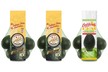
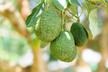
Last season, Greek kiwis were marked by limited shelf life, leading to hurried sales in March and April and an early season end. Kavala Coop was one of the few exceptions that managed to stay in the market for a longer period and is currently preparing to once again safeguard the quality of its new crop.
"Our cutting-edge cooling chambers with enhanced internal air flow and digital monitoring of storage conditions have helped us ensure the high quality of our harvested crop. However, the work of achieving good quality begins long before harvest time. It requires proper and proactive cultivation methods, and this is what the growers of Kavala Coop are currently applying in their orchards," says Mr. Argyrakis, executive of Kavala Coop and a kiwi grower himself.
 © Kavala Coop
As he says, "We are preparing for temperatures of 40°C expected in our region. Growers are currently applying the necessary root fertigation tasks that will fortify the plants and help them avoid the stress caused by extreme heat conditions."
"The application of such treatments is now essential in order to achieve a crop intended for export over long distances. We don't know if and when increased US tariffs are going to take effect, or what the level of these tariffs will be—there is constant back and forth on this issue—but if they eventually do take effect, then the redirection of all exports initially designated for the US to the European market would not be a good development. We want to focus on Canada and Far Eastern markets, like Japan and South Korea. However, eastward shipments will be a demanding task," Argyrakis warns.
 © Kavala Coop
As he stresses, "The dangerous situation in the Red Sea forces vessels to go around Africa. This means doubled travel time for kiwis, and if they are not properly cultivated, harvested at the right time, and managed according to high standards, they won't reach their destination in optimal condition. This is why we are taking special care starting now."
Finally, according to Argyrakis's assessments, the upcoming kiwifruit crop will decrease due to the spring frost: "The average damage in Kavala Coop's orchards stands at 30–35%. However, we are getting very good results from our young Boerica farms. We are going to harvest 30–35 tons per hectare, and since the plants are still young, we expect stronger crops in the coming seasons. Such promising results motivate us to expand our current 15 hectares of Boerica kiwis."
For more information:
Savvas Argyrakis
Kavala Coop
Tel: +30 25108 30184
Email: [email protected]