Yet again, South Africa is exporting record amounts of citrus - 175.6 million 15kg cartons from a first estimate of 171 million cartons for the season - and the citrus vacuum reigning everywhere is pulling hard.
"It's actually been revelatory to see there is space for all of the fruit," remarks Charles Rossouw, CEO of Roslé Boerdery. South Africa's big citrus volume growth comes out of the north, from areas like the Loskop Valley, where Roslé's citrus and blueberries grow.
 © Roslé Citrus
Next year could be completely different, just as last year China stayed in the market so long that they could barely send any lemons to the Far East, but that's the good thing about the fresh citrus industry: it resets itself every year, with no carry-over stock complicating the forces of supply and demand.
Increasing tariffs is undoubtedly problematic: not only those introduced by the United States, also those from South Africa's fellow BRICS member India. Both countries place a 30% import duty on South African fruit. Both merit equal attention from the Department of Trade and Industry.
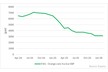
But more important, Rossouw notes, and a significant counterweight to such trade barriers, is the normalization of shipping rates.
Another season shipping fruit at the rates of 2021 or 2022, and they would have been done for, he says. "At the moment, shipping costs work out to approximately 2 US Dollars per carton. That's a ballpark figure, depending on the route. Three or four years ago, when that figure was 4 US Dollars upwards, it jeopardized the very sustainability of our business. Our margin was wholly subsumed by the increased shipping costs, and shipping lines were making huge profits. If we'd been forced to continue under that regime, we would have gone under, for sure."
Global negotiations at the highest level forced shipping lines' hand, as did some healthy competition, in the form of Hapag-Lloyd last year joining MSC and Maersk on South Africa's shipping routes.
"This goes to show," he observes, "that shipping rates have a more profound impact on our profitability than trade tariffs from the US and India or the US threat of sanctions against Russia."
 © Roslé Citrus
Rossouw points out that Russia takes easily double the amount of citrus exported to the USA, a solid 15% of the export oranges that South Africa grows. That's a lot of fruit jeopardized if the Rouble weakens because of possible sanctions instituted by the US against Russia. Being a Limpopo citrus grower, they are not allowed to send to the United States, so they would not be directly affected by US tariffs.
In the bigger scheme of things, however, he contends that it is not tariffs that sink companies but a disruption to shipping routes. "While unreasonably high tariffs do pose a threat to profitability, a shipping line running at a loss is perhaps an even bigger threat. It can bring world trade to its knees. So, certainly, we aim for a balance in which all players can manage to be profitable."
The weakening of the Dollar has sweetened export economics for Rand-based businesses. Shipping rates are paid in US dollars. Payments from clients in, say, Russia and the Middle East in their currencies gain value against the dollar, resulting in higher profitability for South African exporters.
"Shipping rates that are more in line with reality make a massive difference to our returns. Much more, I'd argue, than import tariffs." © Roslé Citrus
 For more information:
Charles Rossouw
Roslé Boerdery
Tel: +27 13 170 5335
Email: [email protected]
https://www.rosle.co.za/