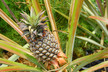
After a pineapple season that started with extremely low volumes and high prices, the market shifted after Easter to normal volumes and low prices. This week and next, supply will peak due to Natural Differentiated Flowering (NDF), but Ed Heijnen of Keelings International in Barendrecht expects volumes to drop sharply afterward. "From May to early June, pineapples were still selling at prices between €8 and €8.50. Currently, we're seeing levels between €10 and €12.50, and lower volumes are expected to be reflected in rising prices soon."
 © Keelings International
Specialism
Over the years, the number of pineapple importers has drastically decreased. "Pineapple is not such an easy product. After harvesting and packing, it's on the road for two and a half weeks, and then it has to be sold within five days and eaten within another five. That's a job for specialists; you can't just do it on the side. We've chosen this as our area of expertise and are continuing to grow into it. But if you don't represent the source, it becomes much more difficult," Ed explains. Keelings owns its own farm in Costa Rica, Las Brisas, which spans 900 hectares, of which 200 hectares are rainforest. "Our planting area continues to grow, although it's not easy to find more land in Costa Rica, especially within the protected area where our farm is located."
Ed is optimistic about pineapple consumption. "We're seeing particularly strong growth in the ready-to-eat (RTE) segment, where consumption is increasing by 15–20% annually. Sales haven't yet taken off in the Netherlands, but in Germany, along with France and Spain, there's a growing shift toward RTE," Ed says. "While green pineapples are losing market share, RTE is on the rise. It has effectively created a new SKU in the market. The numbers don't lie, and I expect market share to continue increasing steadily. The biggest barrier is availability, as it's difficult to grow pineapples for sea freight that have a coloured skin and high sugar content. Demand for crownless pineapples is also increasing, especially in Southern Europe."
 © Keelings International
Stopped with organic pineapple
According to the importer, the logistics situation remains challenging. "The entire supply chain has become more complex. Every link is under pressure, and capacity at the ports of Rotterdam and Antwerp is limited. Especially between December and May, delays were common. In recent weeks, however, the shipping lines have become more reliable again." As of 1 January, Keelings stopped supplying organic pineapples. "Not because we don't believe in organic, we still see it as an important part of our business. But with all the logistical challenges, the impact on organic pineapples is much greater. Delays affect them much more. Moreover, sales of organic products are not yet stable, especially in summer. That makes it easy for growers in Costa Rica to choose the US as a sales market, where transit times are shorter and risks are much lower."
The share of Fairtrade and RFA-certified pineapples has also decreased. "We still have Rainforest Alliance certification for our Costa Rican crop, but it's no longer used as a marketing tool and we've removed the green frog from our boxes," Ed continues. "That's a shame, of course, but it really comes down to money. If you can achieve the same end product with a lower cost structure using a different cultivation method, the choice is quickly made by growers."
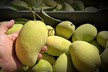
Last year, Keelings also launched a mango line. "We had a fantastic season from Peru with a favourable market. The West African season, however, has been more difficult. In Mali, the season was extremely short, starting later and ending earlier. The Senegalese season also faces many challenges, and I'm curious to see whether it will last through to the end of July. Sales aren't the issue and prices are very good, but volumes are extremely limited."
 © Keelings InternationalOffice in Seville
The importer has also launched a line of Peruvian avocados. "Our customer base demanded it, so we sought the right supply chain to scale up. But we have no ambition to expand our exotic range any further. With our small team, we want to establish something in the market that customers return to," Ed says. Keelings International now sells in more than 20 countries to a wide variety of retailers, wholesalers, and foodservice providers, with the Dutch, German, and Eastern European markets being the most important. Spain is also a growth market. "Eighteen months ago, we opened an office in Seville, and we're now receiving a growing number of shipments through the port of Algeciras, from where we supply Spanish and Portuguese retail and foodservice. Especially during a period like now, with enormous volumes, such a Spanish hub is incredibly convenient!"
 For more information:
Ed Heijnen
Keelings International
Escudostraat 6D
2991 XV Barendrecht
Tel: +31 (0) 6 10883195
[email protected]
www.keelings.com