Following a challenging spring for the African mango industry, renewed interest has emerged in the Senegalese campaign. The campaign began in a favorable context and is expected to continue until mid-to-late August, weather and logistical conditions permitting. Joel Peguy Kamte, owner of Kep Company, is monitoring market trends. His company specializes in selling tropical fruits and vegetables from Africa, focusing on products from Côte d'Ivoire and Senegal, as well as from other countries that could potentially be sources.
 © Joel Peguy Kamte, Kep Company
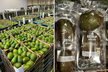
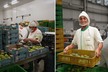
Quality control
Côte d'Ivoire: April brought challenges, but May was responsive
"The mango campaign in Côte d'Ivoire ended around mid-May," says Kamte, "but April was a particularly difficult month." The European market was flooded with products from Peru and Brazil, which caused many customers to reduce their demand for African mangoes. There has only been a limited recovery in demand since May. "We performed well that month, but the volume was lower than expected."
Click here to watch the video of the phytosanitary manager explaining how Ivorian mangoes are inspected from harvest to dispatch.
Senegal's market entry facilitated by an absence of competition
Paradoxically, Côte d'Ivoire's early closure favored a good start to the season in Senegal. "Between mid- to late May, there was a serious supply shortage in the European market. This allowed Senegal to enter the market immediately and achieve good results, as customers were ready to buy from the first arrivals."
Traditionally, the Senegalese mango was the final West African variety to enter the market, but it benefited from the absence of other origins this time around. "There were no alternatives, and customers trusted us despite the higher prices compared to Côte d'Ivoire - about an extra two euros per four-kilogram crate."
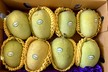
Demand is supported not only by the limited supply, but also by the mangoes' more appealing visual quality. This year, the Senegalese mango is much more colorful than in previous years. When I send photos to customers, I immediately receive orders. It is also a visually appealing product that will make a good impression on the market."
 © Joel Peguy Kamte, Kep Company
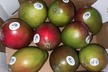
Good coloration of the Senegalese mango, shipped by sea
Market outlook through late August
Local producers expect the season in Senegal to last until August 15-20. Kamte plans to travel there by the end of the month to monitor the situation. "The outcome depends on the availability of ripe fruit and how the market responds."
Currently, prices in Senegal are higher than the Côte d'Ivoire average, but demand remains strong. Our last container of mangoes from Côte d'Ivoire sold immediately, confirming that demand for mangoes in Europe is high.
However, Kamte warns of possible developments: "A lot will depend on what Mexico does. They are currently shipping mangoes by air. Prices might decrease if they start shipping by sea, which is not their usual method. Otherwise, Senegal will continue to sell well."
 © Joel Peguy Kamte, Kep Company
Preliminary cutting to control the ripening of mangoes
Logistics: Netherlands European hub
The Kep Company exclusively ships by sea to the Netherlands, Spain, and Italy. Northern European ports are ideal for logistics. "Rotterdam and Algeciras take eight days, while Genoa takes 10–12 days. Many operators prefer to have containers arrive in the Netherlands and then distribute them by ground to the rest of Europe."
The highest demand remains concentrated in the Netherlands, which acts as a sorting hub for other European markets, including Italy. At the customers' request, Kamte evaluated the airborne option but later discarded it. "Although customers had initially shown interest, they canceled their orders when prices dropped in Mexico."
The Senegalese 2025 campaign is progressing favorably. The product is visually appealing, the market is not oversaturated, and the marketing window is clearly defined through mid- to late August. Attention remains high regarding both logistics and possible new competition dynamics. Mexico and Kenya will be under special observation in the coming weeks.
Kamte is open to the idea of expanding the offer to other African regions, even beyond Senegal. "Perhaps we could introduce a Kenyan variety in the next stages, but only if there is a real shortage of mangoes on the market. Much will depend on customer availability and interest."
For more information:
Joel Peguy Kamte - Owner
Kep Company
+39 3245444517 / +225 0171365153
[email protected]
kepcompany.com