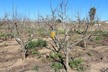
In 2025, the Chilean grape and cherry market is dealing with saturation, high volumes, and increasingly competitive markets, forcing exporters to diversify their destinations and adapt to an increasingly uncertain commercial scenario.
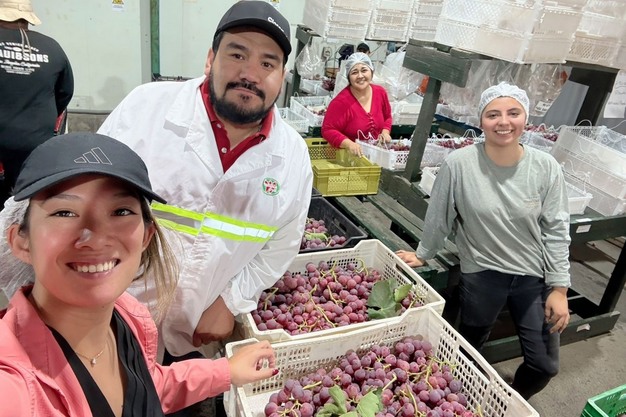
"This year, the markets started a little slower because there was fruit from other suppliers, such as Peru," says Yanming Ding, commercial manager of Valleyfresh's Chile office, referring to the start of the grape campaign.
 © Valleyfresh Global
"The oversupply, particularly of green grapes, led to significant price drops in markets such as the United States and South Korea. There was oversupply in the United States; a lot of fruit was shipped there, and the market became saturated during peak weeks," he says
The season's results show how excess volumes can take a toll on even traditionally stable markets. According to Yanming, compared to the previous season, "more than 50% more grapes have been shipped to Korea. This increase was not accompanied by sufficient demand, which was reflected in falling prices and pressure to look for alternative destinations."
 © Valleyfresh Global
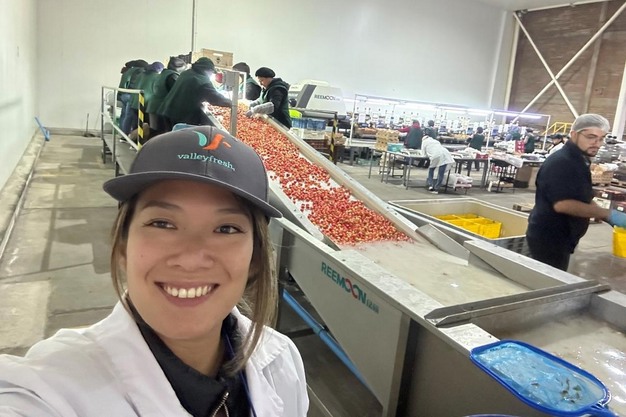
Faced with this scenario, Valleyfresh has opted for a clear strategy: diversification. "We support exporters by redirecting some volumes and shipping them to other destinations in Southeast Asia," he says. Markets such as Indonesia, the Middle East, Malaysia, the Philippines, Singapore, or Cambodia (the latter being unusual for many) have become important to keep the fruit supply flowing and spread the risks.
As for cherries, the situation has also made it necessary to make adjustments. Although more than 90% of Chilean cherries are intended for China, the company has opted to strengthen its presence in alternative markets. "We have many producers who are interested in accessing other markets, because the majority of producers in Chile only ship to China. Destinations such as Vietnam, India, and even the Middle East are being considered, although drawbacks such as transit times and logistics require acting with caution," says Yanming.
 © Valleyfresh Global
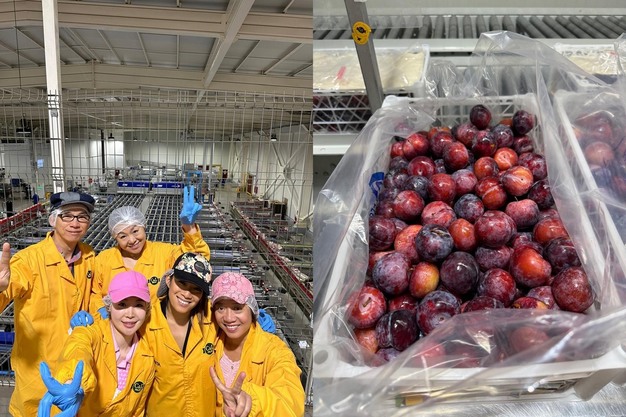
Regarding other products, the company also works with blueberries, avocados, kiwis, lemons, cherries, apples, plums, grapes, citrus fruits, dates, durian, asparagus, and pomegranates, and it is operationally present in Peru, Chile, Australia, New Zealand, and the United States. It also has sales offices in Indonesia, the Middle East and Japan.
What Valleyfresh is doing reflects a shift in focus for many companies in the sector, which has gone from relying on a few traditional markets to building broader, more resilient business networks. As Yanming aptly sums up, "If the U.S. becomes inaccessible, everyone is left reeling; you have to consider alternative options and not just stick with the usual channel."
 For more information:
Yanming Ding
Valleyfresh
Chile
Tel.: +56-9-8502-8141
[email protected]
https://www.freshmax.group