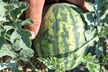
In the past, the European watermelon season did not begin until late May/early June, and that fruit was a typical warm-weather product. For several years now, however, importer Peter Smets of the Belgian company Smets Food Trading, which specializes in the oblong Dumara variety, has observed the season starting earlier and earlier. "That's mainly because, in Mauritania, they harvest watermelons in January and they're available from then on," Peter begins. "Even though it's still midwinter here, there's sufficient demand."
 © Smets Food Trading
"From April, the product is available in Morocco, and from the beginning of May, there are Greek and Italian watermelons." Peter sees concern for the environment also becoming increasingly important, so products are being sourced closer to home to keep transport lines as short as possible. "Much more used to be imported from overseas, now, we're sticking more and more to European and North African products," he says.
Climate change, too, is playing an ever-bigger role in supplies from various countries, Peter admits. "There are more and more weather extremes that affect availability, flavor, and quality. For example, it recently hailed in Morocco; something I've never experienced before. That abruptly halted the season in Zagora. Hail damages the melon itself and the plant's branches, preventing the fruit from getting enough nutrients. Plus, Moroccan melon supplies have declined recently because Morocco's government has severely restricted cultivation due to water shortages."
Stable market
Smets says watermelon sales went well last season. "There's currently enough supply. The market has been stable since mid-June, which is good for everyone," he explains. Predicting how things will develop is tricky, as it is not yet entirely clear what Italy and Greece will have to offer, Peter notes. "Those countries have many new cultivation areas, and grower prices are good, which sometimes leads to early harvesting."
"But watermelons don't ripen after being picked, so many unripe melons end up on the market. That disappoints consumers and temporarily reduces confidence in quality. That's obviously bad for the market. That's also why my sales from Italy and Greece are somewhat lower in June. To keep guaranteeing good quality, I'm always very critical of my suppliers," Peter says.
According to Peter, Turkey is growing more watermelons, and countries like Albania and Kosovo are testing out this product. "The weather, of course, always has an impact. Ultimately, the picture is only complete in September, when the season comes to an end. Then, we know what impact the various factors had. For now, there should be more than enough Dumara melons."
Challenging free market
The importer says the free market is changing. "That applies not only to watermelons, but the entire fruit and vegetable trade. Retail programs and economic dynamics are making the free market increasingly difficult. Our biggest challenge is finding the right customer for the right product, with the best quality and price," he points out.
That market is, nonetheless, growing. Smets Food Trading supplies importers and wholesalers in Europe who primarily focus on ethnic supermarkets. Peter sees rising Dumara melon sales throughout Europe. "That gets easier every year. When I started 30 years ago, I did two deliveries a week. Now we do 30 to 40. That's partly due to the increasing focus on flavor. We lost some of that for several years, especially in supermarket products. Dumara melons have seeds, which used to deter people from buying them. However, they're delicious, and that's what's changed shoppers' minds. They now appreciate the flavor more," Peter concludes.
For more information: Peter Smets
Smets Food Trading
Venrayseweg 118E
5928 RH Venlo
[email protected]
www.smetsfoodtrading.com