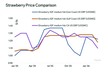
June constitutes the peak of the Greek watermelon season, and this year has ended with an accelerating export pace, as almost every week has widened the positive breach with the volume exported last season. According to official data provided by the Greek Ministry of Agricultural Development and Food, watermelon exports from 1/1/25 until 27/6/25 were 158.386 tons, which meant an increase of 34,6% compared to the last season.
Mr. Giorgios Karkavitsas, owner of the growing and packing company Geokosmos from Ilia, confirms the positive results of the season so far, despite some logistical challenges, and comments on what is yet to come: "Indeed, the season has developed very well. Increased temperatures all over Europe and a notable lack of stone fruits have set perfect conditions for increased watermelon sales. However, June was marked by logistical challenges. The 10-day-long strike in the Greek maritime lines affected the course of the season by causing a product stockout and grower prices to drop."
 © Geokosmos
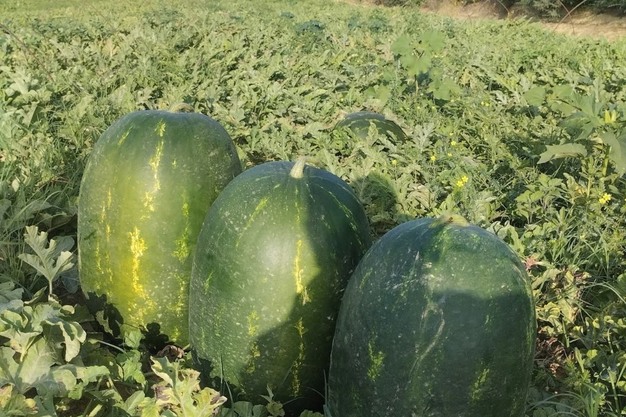
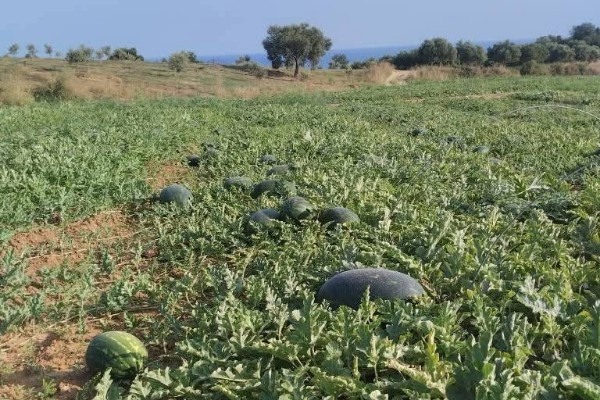
July is going to bring a sharp reduction in the availability of Greek watermelons. "Now the market is leaving behind this incident and is entering into a new phase. The stocks are decreasing, and the same applies to the producing hectares. After June, only 20–30% of the total watermelon growing area remains in production across Greece. However, yields remain high: We receive about 70 tons per hectare of Varela and Florida watermelons, and the fruit quality is very satisfying," Mr. Karkavitsas says.
The Greek entrepreneur highlights the increased competition that the Greek melons are going to face from now until the end of their season. "From now on, more watermelons from Hungary, Romania, and Italy are going to be available. It is not worth trying to compete with them. Only the transport cost of Greek melons to Italy reaches 2.000 euros. This is why June constitutes the peak of the Greek season and the Greek growers have moved their season beginning to mid-April."
 © Geokosmos
Finally, as Mr. Karkavitsas describes, the cultivation of seedless, yellow, mini, or other new types of watermelons remains limited in Greece. "There is some space for such watermelons in Central European markets, while in Greece, consumers do not perceive these fruits as melons," he notes.
For more information:
Giorgos Karkavitsas
Geokosmos
Tel: +30 262 302 2069