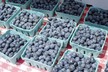
In 2024, the cost of producing highbush blueberries in Michigan surpassed $10,000 per acre, bringing average growers close to economic breakeven. Despite the high costs, approximately $240 per acre was included for management labor, reflecting income for growers who manage their own fields. Labor continues to be the largest expense, accounting for about 42% of total production costs due to increased wage rates.
Annual input costs such as pruning, fertilization, and crop protection represent around 29% of the total, while harvest-related expenses, including picking and fresh packing, make up nearly 56%. An additional 15% of costs stem from operating interest, land control, and establishment. Establishing a blueberry field, including planting and the initial nonbearing years, costs an estimated $23,956 per acre. Fixed costs associated with equipment, land, and packing shed overhead account for at least 12%, though the majority of costs are variable and susceptible to market shocks, particularly labor fluctuations.
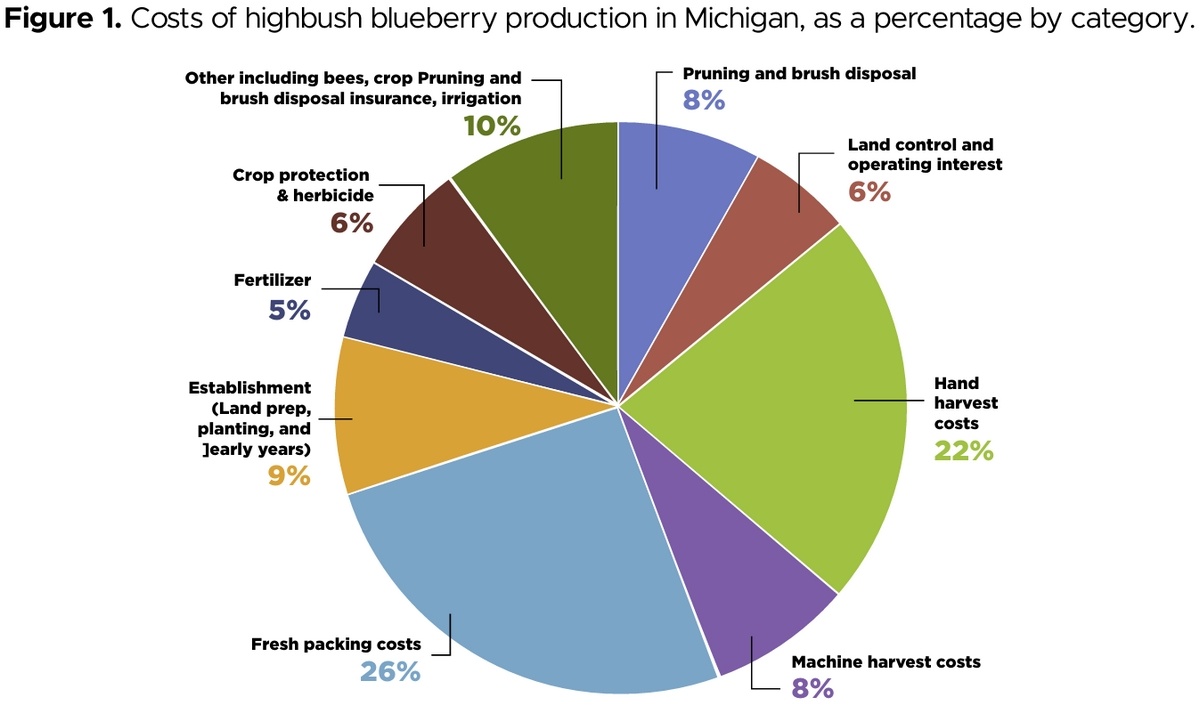
As the industry evolves, Michigan blueberry growers are increasingly targeting the fresh market. This shift includes the adoption of new cultivars and techniques aimed at maximizing yield and fruit quality. Mechanical harvesting for the fresh market is also gaining ground, now accounting for up to 20% of harvested production. Although as much as 75% of blueberries are grown for fresh use, sorting requirements and weather conditions often result in a portion being diverted to processing. Currently, about 54% of Michigan blueberries are sold as fresh, with the remaining 46% used for processing and freezing.
Growers are adopting high-input strategies that include the use of improved cultivars, mulching, foliar feeding, drip irrigation, and other technologies to increase returns. This approach reflects a broader industry trend toward maximizing profitability despite rising costs and variable yields.
Blueberries remain one of Michigan's top three fruits in terms of acreage and volume. The crop has deep historical roots in the region, having been used by Native American communities for both food and medicine long before European settlement. Today, Michigan ranks among the top blueberry-producing states in the U.S., with 87 million pounds harvested across 16,900 acres in 2023. Though official 2024 figures are pending, estimates suggest production totaled around 80 million pounds.
Blueberry fields in Michigan can remain productive for decades if well managed, with some fields currently in use for over 90 years. However, many older fields are being replaced due to declining yields and pest issues, especially the blueberry stem gall wasp. This insect targets vulnerable cultivars such as Jersey, prompting growers to invest in resistant varieties. For long-term planning, the average commercial field is assumed to have a productive lifespan of 33 years, including three nonbearing years.
To view the full report, click here.
For more information:
Michigan State University
Tel: +1 517 355 1855
Email: [email protected]
www.canr.msu.edu