This year, northern China has experienced frequent spring climate fluctuations that have significantly affected fruit production. During the critical blooming period, many apple and pear orchards were struck by cold snaps and strong winds. Some pear orchards even suffered a second wave of frost during the young fruit stage. As a result, both yields and fruit quality are expected to decline to varying degrees.
Since March, several unexpected frost events have impacted key production regions, particularly Shandong and Hebei, two major apple and pear growing areas in China. The frosts have affected both yields and marketable fruit quality. Frost-damaged blossoms typically show browning and shriveling of the pistils, along with wilted petals. Severely affected flowers fail to recover and eventually fall off. For fruit that has already set, frost damage can result in cosmetic issues such as scarring, russeting, and deformities, all of which lower the fruit's commercial value.
 © one day one
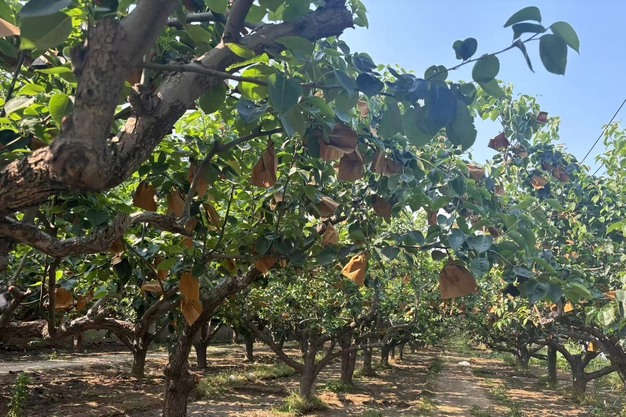
According to Xu Quancheng, General Manager of Onedayone Northern China, Ya pears and Snow pears in the company's Hebei orchards experienced two rounds of frost during the blooming and young fruit periods, causing substantial damage. Based on internal monitoring data, yields of these two varieties are expected to decline by approximately 40% compared to last year. Additionally, Crown pear orchards in Hebei were also impacted by frost and strong winds during the bloom stage. Observations during the bagging process indicate a moderate yield reduction, with fruit quality rates estimated to fall by about 15% from the previous year.
Currently, the bagging of Crown and Ya pears in Onedayone's Hebei orchards has been completed, while bagging for Snow pears is about to begin. Xu explained, "During the bagging process, we also assess fruit quality to help forecast seasonal volumes and pricing, and to refine future agricultural management strategies. Based on the severity of frost damage across different varieties, we expect prices for Ya pears, Snow pears, and Crown pears to rise to varying degrees this year."
Xu also expressed concern over the apple crop outlook. From late April to early May, Qixia—one of China's key apple-producing regions—faced frost and strong winds during the blooming stage, particularly affecting central blossoms. "During bagging, we observed that fruits from central flowers are generally smaller than last year," Xu noted. "This may indicate a potential decline in apple yields this season." Bagging in Qixia orchards is now nearly complete, and more precise yield estimates and targeted strategies will be determined after bag removal.
 © one day one
Despite clear indications of reduced yields for apples and pears this year, harvest is still some time away. In response to weather-related challenges, Onedayone has implemented mitigation measures such as strategic pruning, targeted fertilization, precise pest and disease control, and optimized timing for bag removal. These efforts aim to safeguard fruit quality and minimize the impact of anticipated production losses.
 © one day oneFor more information:
Maggie Peng
Onedayone Group
Tel: +86 18717865462
Email: [email protected]
www.onedayonegroup.com