Spain has emerged as a European leader in blueberry production and export, driven by sustained investment in research and innovation that enabled the adaptation of this cold-climate fruit to warmer growing regions.
Once considered a niche crop, blueberries are now one of the fastest-growing fruit sectors in Spain and globally. This growth has been made possible by plant breeding—a scientific and technological process that adapts species to new climates and soil conditions while improving fruit quality and yield. In Spain, breeding has played a crucial role in adapting blueberries to southern Europe's warm, mild conditions.
Blueberries are highly valued for their nutritional properties, especially their antioxidant content, including anthocyanins, which may help reduce risks associated with cardiovascular disease, cancer, and aging. This has led to their reputation as the "fruit of the 21st century."
Production and export strength
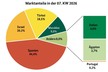
Spain is currently the world's fourth-largest blueberry producer and the top producer in Europe, with annual production exceeding 43,000 tons, representing 41% of the EU's total output. Blueberries are cultivated on over 3,700 hectares, a sixfold increase since 2012. Andalusia, and specifically the province of Huelva, dominates national output, accounting for 82% of the growing area and 97% of total production. This shift has revitalized the region's agricultural sector, traditionally centered on strawberries and cut flowers, and has helped strengthen rural economies.
Nearly all of Spain's blueberries are exported, with Germany, the United Kingdom, and the Netherlands together accounting for 75% of total export volume. This strong export orientation makes the crop a strategic pillar of Spain's agri-food sector.
Role of plant breeding
Blueberry farming in Spain only began recently, but its expansion has depended entirely on plant breeding innovations. These have led to varieties that are more resistant to local climate challenges, offer improved flavor and firmness, and have longer shelf lives—traits essential for global marketing and transport.
According to research by the Cerdà Institute Foundation for ANOVE, 100% of Spain's blueberry output between 1995 and 2018 originated from improved varieties. During that period, breeding-driven innovations added nearly 160,000 tons of cumulative production, averaging an annual increase of over 10,800 tons.
The impact goes beyond agriculture. Blueberry cultivation has generated an estimated 1,664 full-time equivalent jobs annually from 1995 to 2018, particularly in rural parts of Andalusia, Asturias, and Cantabria, demonstrating the broader economic and social value of investment in plant research and development.
Source: Blueberries Consulting